Bruce Willis is back as John McClane in Live Free or Die Hard, but this time the stakes aren’t just about blowing up buildings. The plot hinges on a shadowy syndicate waging digital war against the United States. They aren’t using bombs. They are using Internet attacks to cripple the nation’s infrastructure. McClane has to stop them and rescue his daughter, who has been taken hostage in the chaos.
It sounds like Hollywood drama. But reading that synopsis raises a nagging question. Is it actually possible for a group of hackers to cause real economic or physical devastation in the US?
The answer seems to be leaning toward “yes.” Cyber security is no longer just a niche IT concern. It is now ranked by government officials and media outlets as a threat on par with terrorism, nuclear proliferation, and climate change. The logic is simple. Commercial, private, and government systems are all plugged into the same global network. A break in one place can ripple everywhere.
The threat landscape has shifted dramatically. Hackers are no longer lone wolves in basements. They are organized. They operate in loose networks that resemble black markets. Stolen data is a commodity. “Carders” sell credit card information in bulk. Phishing scams are becoming more sophisticated. Malware—viruses, Trojans, worms—generates more revenue for criminals than the entire global computer security industry does for defenders.
These actors are everywhere. Many operate from countries with high-speed internet and lax law enforcement. Romania, for example, has become a hub for these activities. The lack of strict legal consequences makes it a safe haven for digital crime.
The threat isn’t just financial. It’s geopolitical. The British government recently released evidence showing that foreign intelligence agencies—likely from China, North Korea, and former Soviet states—were hacking into UK computers. The motive? Economic espionage. This isn’t just about stealing credit card numbers. It’s about undermining the economic power of other nations. Attackers steal industry secrets and trade data, then funnel that information to friendly or state-owned companies to gain a competitive edge.
Targeting key employees is a common tactic. A single infected email or USB drive can give attackers access to sensitive government secrets or corporate blueprints. The methods are varied. Virus-laden emails, infected CD-ROMs, or memory sticks are all vectors for entry.
Governments are waking up to the reality. The European Union, the G8, and other international bodies have established cybercrime task forces. In the US, local law enforcement agencies are setting up electronic crime units. The FBI supports these efforts through the InfraGard program, which facilitates information sharing between the bureau and these local teams.
Britain sees the danger. But should the United States be worried? The answer might lie in a small Baltic nation that faced a digital assault recently.
Cyber Attacks in Estonia

The spark was a statue. On April 27, 2007, Estonian authorities relocated a Soviet-era World War II memorial from a central square in Tallinn to a military cemetery. It was a decision rooted in history but loaded with present-day tension. Estonia had been occupied by the Soviet Union for most of the Cold War, and a significant Russian-speaking minority lives there today. The move didn’t just shift a monument; it shifted tempers.
Protests exploded. In Estonia, anger boiled over. Across the Baltic Sea, the Russian government issued sharp protests and veiled threats. The atmosphere was thick with geopolitical friction. Then came the silence of the offline world, broken by the hum of servers and the flood of malicious packets.
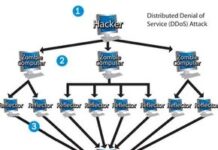
How Distributed Denial of Service Attacks Work
What followed were weeks of relentless cyber attacks. They targeted government portals and private websites alike. The method was crude but effective: distributed denial of service (DDoS) attacks.
Hackers didn’t need sophisticated exploits to break in. They just needed volume. They hijacked hundreds, sometimes thousands, of “zombie” computers—machines infected with malware and controlled remotely without the owners’ knowledge. These botnets pelted Estonian sites with thousands of requests per second.
Normal traffic for a website might be a few hundred hits. These attacks pushed that number into the millions. The servers couldn’t cope. They slowed down. Then they crashed. The goal wasn’t to steal data. It was to make the site invisible.
For the average user, the experience was simple: connection timeout. Error 503. Page not found. But for the Estonian government, it was chaos.
Was This a Cyber War?
The Estonian government compared the cyber attacks to a terrorist attack. The disruption was real. The economic and governmental functions were strained. At first, many observers assumed the Russian state was pulling the strings. Pundits labeled the events the first “cyber war.”
It turned out to be more complicated. Evidence now suggests the Russian government didn’t directly orchestrate the attacks. Instead, it fueled them with angry rhetoric. The hackers themselves were likely incensed private citizens, reacting to the statue’s removal and the Kremlin’s tone.
This distinction matters. A state-sponsored attack implies strategy. A citizen-led assault implies chaos. Both can cause damage, but the attribution changes everything.
Why Estonia’s Experience Mattered
The Estonian cyber attacks weren’t the largest in terms of raw data transferred. Other DDoS attacks have been bigger. But these were unique in their impact. For weeks, the cyber attacks consumed the attention of an entire government. They drew the world’s gaze.
Before Estonia, political grievances often spilled into hacker feuds. Indian and Pakistani hackers have launched barrages of viruses and DDoS attacks due to long-standing tensions. Israeli and Palestinian hackers have defaced each other’s sites in tit-for-tat retaliation. These were skirmishes.
Estonia was a battle. The attacks proved how vulnerable even a “wired” nation could be. Estonia is considered one of the most digitally advanced countries on earth. Its government runs mostly online. Its banks are digital. Its citizens expect seamless connectivity. When the lights went out, it exposed a critical weakness.
The government didn’t lose any core infrastructure. No databases were wiped. No secrets were stolen. But the cost of combating the attacks was high. It was time-consuming. It was expensive. It was a wake-up call.
The U.S. Cyber Security Question
Estonia weathered the storm. There was economic disruption. There was governmental friction. But there was no long-term damage. The country bounced back.
It raises a chilling question. How would the United States fare in such a situation? The U.S. is even more dependent on digital infrastructure than Estonia. Its power

The shakeup didn’t happen in a vacuum. It started with a quiet admission in April 2007. A Congressional Subcommittee on Emerging Threats, Cybersecurity, Science and Technology found out that the Departments of Commerce and State had been breached back in 2006. That revelation put the heat on Scott Charbo, the Chief Information Office at the Department of Homeland Security. His job was on the line.
Why? Because of 844 security-related incidents in just two years.
The list of failures at DHS was embarrassing. Classified emails traveled over unsecured networks. Personal laptops were plugged into government systems. Unapproved software sneaked in. Classified data leaked. Viruses spread. Firewalls sat open. The department earned a “D” on its annual computer security report card. It was an improvement over the failing grades from 2003 through 2006, but it was still bad. The entire federal government scored a C-minus, up from a D-plus the year before.
The government couldn’t ignore the gaps anymore.
New Roles and Large-Scale War Games
Response came quickly. DHS created a new position: Assistant Secretary for Cyber Security and Telecommunications. Greg Garcia took the role. The focus shifted from damage control to proactive defense.
This wasn’t just about fixing broken firewalls. It was about simulating the worst-case scenario. In early February 2006, the U.S. government joined 115 partners across five countries for Cyber Storm. This was a massive cyber war game. Major corporations, government agencies, and private security organizations all participated.
The goal? See what happens when critical infrastructure gets hit.
The simulation was brutal. Fake attacks caused blackouts in 10 states. Commercial software got infected with viruses. Online banking networks failed. The exercise tested more than just technical defenses. It looked at how agencies would manage misinformation spread by attackers. It was a stress test for national resilience.
Cyber Storm II was scheduled for 2008. Meanwhile, real work continued on the ground. At Barksdale Air Force Base in Louisiana, 25,000 military personnel worked on electronic warfare. They focused on network security and defending the country’s Internet infrastructure.
First Responders in the Digital Age
If a massive cyber attack hits the U.S., who steps up first?
Intelligence agencies move in. The Department of Defense mobilizes. The military deploys. So does the unit at Barksdale. But there is one specific group charged with protecting Internet infrastructure and defending against cyber attacks: US-CERT, the United States Computer Emergency Readiness Team.
Established in 2003, US-CERT plays a major role in the response chain. They monitor threats. They coordinate with partners. They help mitigate damage before it cascades.
The infrastructure is fragile. The response teams are ready. But are they enough?
Cyber Attacks in the United States

The United States has structural weaknesses in its digital backbone. Government efforts to patch these holes are ongoing, but they haven’t eliminated the risk. Yet, the doomsday scenario of physical destruction from cyber warfare is largely a myth. There is no record of anyone dying from a cyber attack. No one died in the Estonia attacks. No one has ever been killed because a computer was hacked.
The Real Threat is Financial, Not Physical
Terrorist groups talk a big game about launching internet-based strikes. But the actual threat comes from different quarters. Criminal gangs want money. They extort companies for ransom. Angry hackers want to make a statement. Estonia was a prime example of this kind of digital protest.
The primary concern isn’t death. It is economic damage. If hackers shut off power supplies, infiltrate a major bank, or crash the stock market, the financial fallout is real. But even then, the damage is rarely catastrophic in a physical sense.
Why Your ICBMs Are Safe
It is virtually impossible for cyber attacks to inflict large-scale physical casualties. Why? Because security, redundancy systems, monitoring software, and human oversight create a formidable barrier. Military systems are particularly secure. An 11-year-old in Beijing is not launching ICBMs. Nuclear weapons are not connected to the Internet. Critical or classified systems are air-gapped. They are disconnected.
Hackers can find it easy to gain entry into a system. Gaining entry is one thing. Doing actual damage while inside is another. Well-trained staff at utilities and vital systems can spot problems quickly. Proprietary systems often have manual overrides. Humans are still in the loop.
The Billion-Dollar Reality of Malware
The dangers remain tangible. Worms, viruses, and Trojan horse programs exploit security flaws every day. These threats cause billions of dollars in losses to private industry annually. The cost is high, but the consequence is financial, not physical.
Frequently Answered Questions
Has the US ever been hacked?
Yes. The United States has faced many types of hacking attacks over the years. Two notable examples stand out. The Office of Personnel Management hack in 2015 stole over 21 million personal records. The Sony Pictures hack in 2014 exposed over 100 million customer records. These incidents highlight the scale of data vulnerability, even if they didn’t result in physical harm.
Related Resources
For those looking to dive deeper into how these systems operate, several technical breakdowns are available:
- How Internet Infrastructure Works
- How Web Servers Work
- How Phishing Works
- How Spam Works
- How Computer Viruses Work
- How Identity Theft Works
- How Firewalls Work
- How Encryption Works
- How Biometrics Work
Further Reading and Official Sources
If you need to report fraud or understand the current threat landscape, these resources are essential:
- Hackers’ Attacks – Mirroring Security Blog
- Reporting Computer Hacking, Fraud and other Internet-Related Crime
- United States Computer Emergency Readiness Team
The conversation around cyber security continues to evolve. NATO has called addressing cyberattacks urgent. China is trying to unseat the US as the lead cyberpower. The threat is shifting. The danger is growing. But the apocalypse? That’s still fiction.