


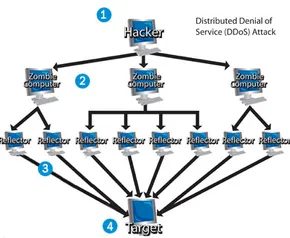
It starts with a command. A single line of code sent into the dark corners of the internet. Suddenly, thousands of machines—compromised, unaware, and effectively zombie-like—begin hammering a single target. The goal is brute force. The method is overwhelming volume. This is a Distributed Denial of Service attack, or DDoS for short.
Legitimate users see a website crawl to a halt. Then it vanishes. The server is simply too busy processing fake requests to answer real ones. It’s not a hack in the traditional sense; no data is stolen, no passwords cracked. It’s a digital traffic jam designed to cause a crash.
The Illusion of Innocence
The basic mechanics are crude. A cracker controls a botnet, a network of infected computers, and orders them to ping a specific server repeatedly. The traffic spike is the weapon. But clever attackers have evolved. They no longer just send the attack themselves. They use innocent systems as shields and mirrors.
This technique relies on something called reflection. The attacker sends a request to a third-party server, known as a reflector. Crucially, they spoof the source IP address in that request to look like it’s coming from the actual victim. The reflector receives the request, assumes it’s a legitimate query, and blasts a response back to the spoofed address—the victim.
Now the victim is getting swamped not just by the botnet, but by dozens or hundreds of reflectors. To the victim, it looks like the reflectors are attacking them. To the reflectors, it looks like the victim made the request. The zombie computers stay hidden behind this curtain of misinformation. The cracker remains completely invisible.
Famous Targets and Dangerous Names
This isn’t theoretical. Major players have felt the blow. Microsoft fell victim to a DDoS attack linked to the MyDoom worm. Amazon, CNN, Yahoo, and eBay have all been targeted. The attacks come with names that range from the technical to the darkly humorous.
- Ping of Death : Bots generate oversized data packets. When the victim tries to process them, the system struggles or fails.
- Mailbomb : A flood of emails sent to crash mail servers.
- Smurf Attack : A specific type of reflection attack using Internet Control Message Protocol (ICMP) messages. Bots send these messages to reflectors, which then broadcast replies to the victim.
- Teardrop : Bots send fragmented packets. The victim tries to reassemble them, but the fragments are malformed, causing a crash.
The Administrator’s Dilemma
Once the storm hits, the system administrator is often left with few good options. They could throttle incoming traffic. But that cuts off legitimate users along with the attackers. It’s a defensive move that hurts business.
Filtering is another path. If you know where the attack is coming from, you can block those IPs. The problem? Spoofed addresses make this nearly impossible. The zombies don’t use their real identities. They lie. The traffic appears to come from everywhere and nowhere at once.
Script Kiddies and Real Consequences
Not all attackers are sophisticated nation-states. Some are teenagers with too much time and too little oversight. On May 4, 2001, a 13-year-old brought down GRC.com, the site for Gibson Research Corporation. The irony was palpable: a site dedicated to internet security was taken down by someone who likely didn’t fully grasp the mechanics they were wielding.
Then there’s the case in Hanoi, Vietnam, in 2006. Police arrested a high school sophomore for orchestrating a DDoS against the Nhan Hoa Software Company. His motive? He didn’t like the website. No grand political statement. No financial gain. Just spite.
These stories highlight a messy reality. The tools to take down servers are accessible. The motivations vary from ideological to trivial. And the victims? They’re left cleaning up the wreckage, wondering how to stop a flood that seems to come from every direction at once.
What happens when the water rises higher? And who pays for the damage?


