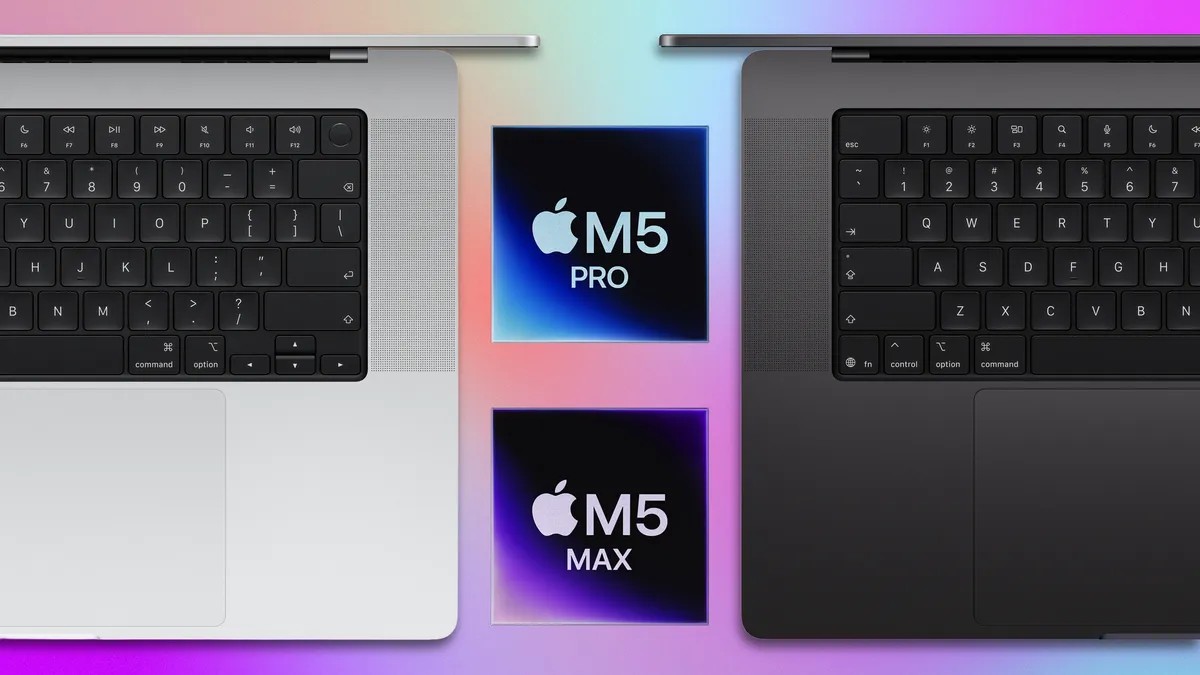
Apple has released updated 14- and 16-inch MacBook Pro models, featuring the new M5 Pro and M5 Max chips. This follows the earlier release of the base M5 chip in the MacBook Pro 14 late last year. The upgrades focus on performance improvements, particularly in graphics and AI processing, while maintaining the existing physical design. A new M5 MacBook Air model has also been released.
New Chip Architecture: Fusion Design
The core change lies in Apple’s new “Fusion” chip architecture. Instead of linking multiple system-on-a-chip (SoC) units, the company now combines two separate dies to scale performance. Though the exact configuration remains unclear, it’s highly probable that the GPU is the scalable component, allowing Apple to boost graphics processing without necessarily increasing CPU power. This makes sense given the increasing demand for high-end AI and graphics capabilities, which are currently outpacing the need for more CPU performance.
Performance and Connectivity Improvements
The M5 Pro and M5 Max chips deliver improved CPU and GPU speeds, alongside an updated N1 networking chip for faster Wi-Fi 7 and Bluetooth 6 connectivity. Battery life has been extended to up to 24 hours, building on the already excellent endurance of previous models. The chips also feature new neural accelerator clusters on the GPU, designed to enhance performance in AI-driven tasks like image and video generation.
Pricing and Availability
The updated MacBook Pros are available for pre-order starting today, with shipping beginning March 11th. Pricing starts at $2,199 for the 14-inch M5 Pro model and $2,699 for the 16-inch version. The M5 Max configurations begin at $3,599 (14-inch) and $3,899 (16-inch).
Core Renaming: Super, Performance, and Efficiency
Apple has rebranded its CPU core types to reflect performance changes. The fastest cores are now called “super” cores, while the older “performance” cores now function as a more balanced alternative to efficiency cores. Efficiency cores remain focused on power saving. This rebranding clarifies how Apple is prioritizing speed and efficiency within the chip design.
These upgrades demonstrate Apple’s continued focus on optimizing performance in key areas like AI and graphics, ensuring the MacBook Pro remains a top-tier choice for professionals who require high-end processing power. The new Fusion architecture signals a long-term shift in how Apple scales its silicon, prioritizing adaptable GPU performance.