Apple recently marked its 50th anniversary, a milestone that underscores the company’s remarkable journey from a humble startup to a tech industry titan with a market value exceeding $4 trillion. Its success isn’t about inventing technology first, but about refining it into elegant, user-friendly products that define entire categories.
The Early Years: Innovation and Near Collapse
Founded in 1976 by Steve Jobs and Steve Wozniak, Apple quickly gained traction with the Apple II, a pivotal computer that propelled the company to leadership in the American market. However, internal conflicts and product missteps—like the expensive and unsuccessful Apple Lisa—nearly derailed its progress. Jobs’ later push for the Macintosh, while visionary, led to his ouster from the company in 1985.
Apple teetered on the brink of bankruptcy in the mid-1990s, facing fierce competition from Microsoft and a string of failed product releases, including the Newton tablet. The turning point came with Jobs’ return in 1997, where he refocused the company and saved it from financial ruin. “Apple was in a perilous position when Jobs came back,” explains Tim Danton, editor-in-chief of PC Pro. “Ever since, its bets have paid off.”
The iPod, iPhone, and Beyond: Redefining Consumer Tech
The late 1990s and early 2000s saw Apple regain its footing with the iMac, Mac OS X, and most notably, the iPod in 2001. The iPod wasn’t the first MP3 player, but it was the first that worked seamlessly for everyday users. As Danton puts it, Apple’s secret is “one word: design.”
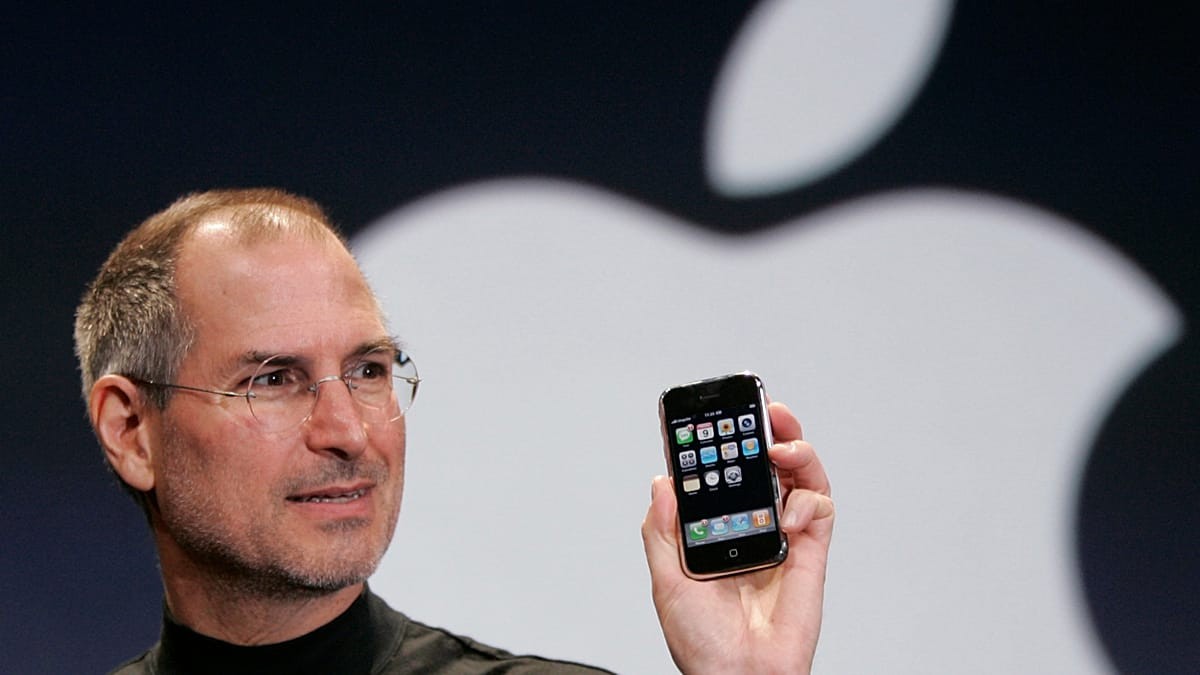
The iPhone’s 2007 debut and the subsequent launch of the App Store in 2010 further cemented Apple’s position as a trendsetter. The company continued to innovate under Jobs until his death in 2011, with Tim Cook taking the helm.
The Tim Cook Era: Expansion and AI Integration
Under Cook, Apple has expanded into services like Apple TV+ and Apple Music, and recently entered the mixed-reality space with the Apple Vision Pro headset. The company is now integrating artificial intelligence (AI) into its iOS 18 operating system, though it has taken a measured approach, allowing competitors to rush out imperfect AI solutions first.
“Apple can afford to wait and see,” says technology analyst Paolo Pescatore. “It prioritizes user experience over being first to market.” Future devices may include foldables, smart glasses, and even smart rings.
Challenges and Long-Term Outlook
Apple faces headwinds, including geopolitical tensions with China, regulatory pressures from the EU’s Digital Markets Act, and the slow adoption of its high-priced Vision Pro. Despite these challenges, experts remain bullish on Apple’s long-term prospects.
Danton believes Apple’s strength lies in its ability to lock customers into its ecosystem, fostering brand loyalty even among detractors. Moreover, the company’s privacy-focused approach may become increasingly valuable as data concerns grow.
Apple isn’t afraid to play the long game and plan years ahead. It will likely continue to shape the future of technology by focusing on user experience, design, and a closed ecosystem that few can replicate.
Apple’s success isn’t just about making gadgets; it’s about controlling the entire experience, and that control is what ensures its continued dominance.