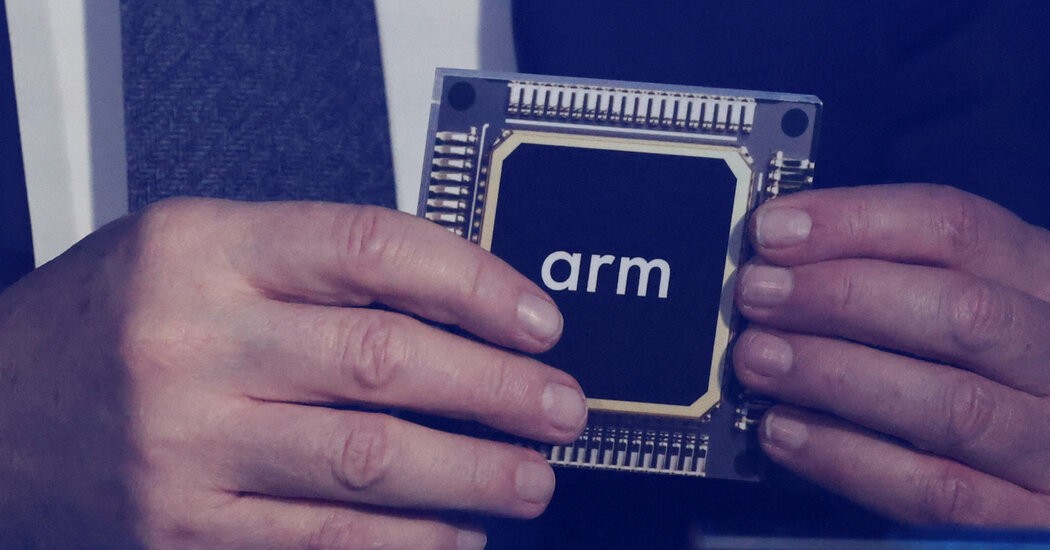
Arm Holdings, the British semiconductor and software design company owned by SoftBank, is breaking with decades of tradition by directly selling its own computer chips. This marks a dramatic shift for the industry leader, which has historically focused exclusively on licensing its technology to other manufacturers.
New AI-Focused Microprocessor
The company unveiled its first in-house silicon product on Tuesday: a microprocessor designed specifically for data centers handling artificial intelligence (AI) workloads. This move positions Arm directly against dominant players like Nvidia, which currently leads the market in high-performance AI chips. Meta, the parent company of Facebook, has already committed as the first customer, with OpenAI also signing on as an early adopter.
From Licensing to Manufacturing
For over 30 years, Arm has built its success by licensing its processor designs – essentially blueprints – to companies like Apple, Samsung, and Qualcomm. These firms then manufacture the chips themselves, paying Arm royalties for each unit sold. This model allowed Arm to become a ubiquitous force in mobile and embedded systems without ever directly competing in hardware sales.
The transition to selling its own chips represents a fundamental change in Arm’s business approach. Analyst Pierre Ferragu of New Street Research described it as “the most significant strategic pivot in the company’s history.” The move could disrupt the existing market dynamic, forcing Arm to compete head-to-head with established chip vendors.
Why This Matters
Arm’s decision reflects the growing importance of AI and the increasing demand for specialized processors. Nvidia’s success highlights the profitability of high-end AI chips, and Arm clearly intends to capture a portion of this expanding market. The company’s entry signals a broader trend toward vertical integration in the semiconductor industry. Companies are increasingly seeking to control more of the value chain, from design to manufacturing, to maximize profits and ensure supply chain security.
This shift also raises questions about potential conflicts of interest: Will Arm continue to license its technology fairly to competitors while simultaneously selling its own chips? The industry will be watching closely to see how Arm navigates this new terrain.
Arm’s entry into the chip market is a bold step that could reshape the semiconductor landscape, but its success hinges on execution and maintaining trust with its licensing partners.