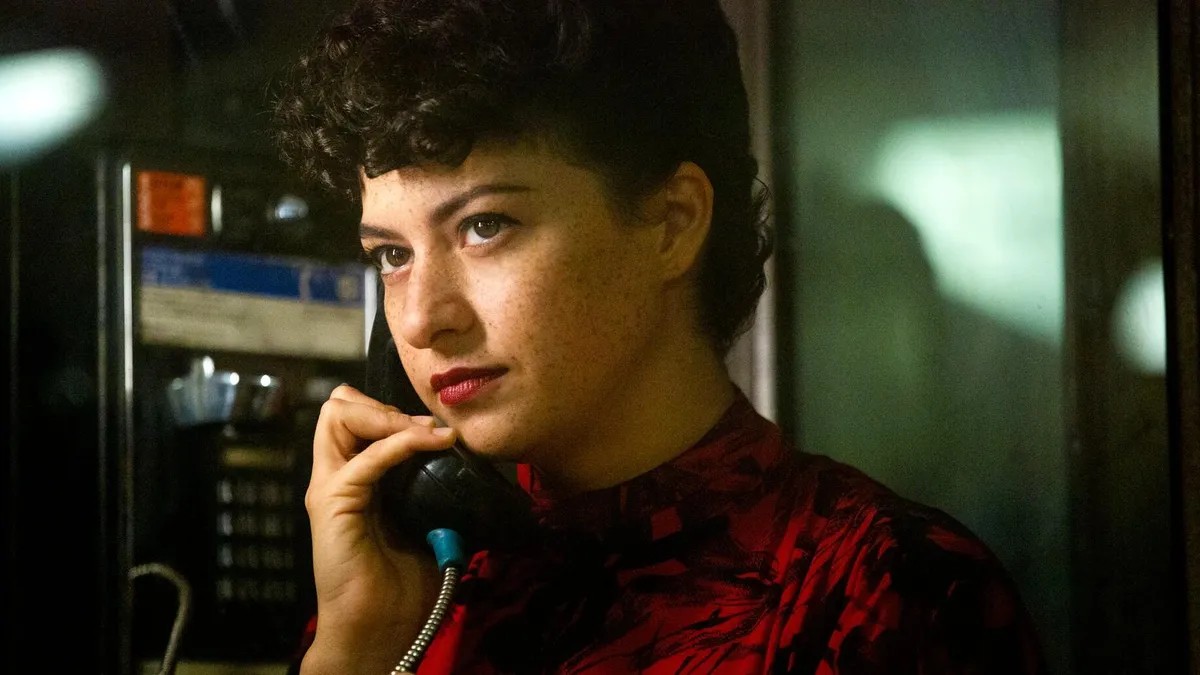
At first glance, Search Party appears to fit a tired television archetype: the “hipster comedy” centered on aimless, self-absorbed twenty-somethings navigating life in urban centers. For many viewers, this subgenre—typified by shows like Girls —can feel repetitive and alienating. However, beneath its quirky, Brooklyn-centric exterior lies one of the most inventive and genre-defying comedies of the last decade.
The Premise: A Mystery That Redefines Itself
The series begins with a deceptively simple hook. Dory (played by Alia Shawkat), a young woman feeling adrift in her own life, becomes obsessed with finding Chantal Witherbottom, a college acquaintance she sees on a missing-person poster. What starts as a brooding murder mystery quickly evolves into something far more complex.
Dory enlists a group of deeply flawed, often unlikable companions to join her quest:
– Drew (John Reynolds): Her “man-child” boyfriend.
– Portia (Meredith Hagner): A lovable but somewhat vacant aspiring actor.
– Elliott (John Early): A self-important and highly eccentric friend.
While the group begins as a collection of antiheroes—reminiscent of the character dynamics in Seinfeld —the show refuses to stay in one lane. As the seasons progress, the narrative shifts from a character study into an absurdist odyssey, moving through increasingly outlandish scenarios that keep the stakes high without losing their comedic edge.
A Masterclass in Satire and Performance
The success of Search Party is anchored by its sharp observational humor and a stellar cast that elevates the material beyond mere parody.
Alia Shawkat delivers a standout performance, moving beyond her comedic roots to provide a sense of emotional depth that grounds the show’s more surreal moments. Meanwhile, John Early provides much of the series’ kinetic energy, portraying the eccentric Elliott with an effortless, magnetic flair.
The show also benefits from a rotating door of notable guest stars, including:
– Jeff Goldblum
– Susan Sarandon
– Parker Posey
– Rosie Perez
This high caliber of talent reflects the show’s ability to tap into the cultural zeitgeist, blending high-concept storytelling with recognizable pop-culture energy.
Why It Matters: A Show Ahead of Its Time
One of the most striking aspects of Search Party is its longevity and adaptability. Originally airing on TBS before moving to HBO Max, the series managed to evolve alongside its audience. By the time it reached its final seasons during the pandemic, the show’s increasingly wild, surreal, and visual-heavy storytelling felt uniquely tailored to a world experiencing its own sense of absurdity.
The show’s ability to reinvent itself—transforming from a grounded mystery into a sprawling, unpredictable saga—is a rare feat in television. It avoids the common trap of “comedy fatigue” by constantly shifting the ground beneath its characters’ feet.
Search Party proves that even within a familiar subgenre, there is room for profound reinvention and genuine emotional resonance.
Conclusion
Search Party is much more than a hipster comedy; it is a brilliant, genre-bending satire that rewards viewers who look past its initial premise. By blending absurdity with sharp character work, it remains a wildly resonant piece of television that feels as relevant today as it did at its debut.