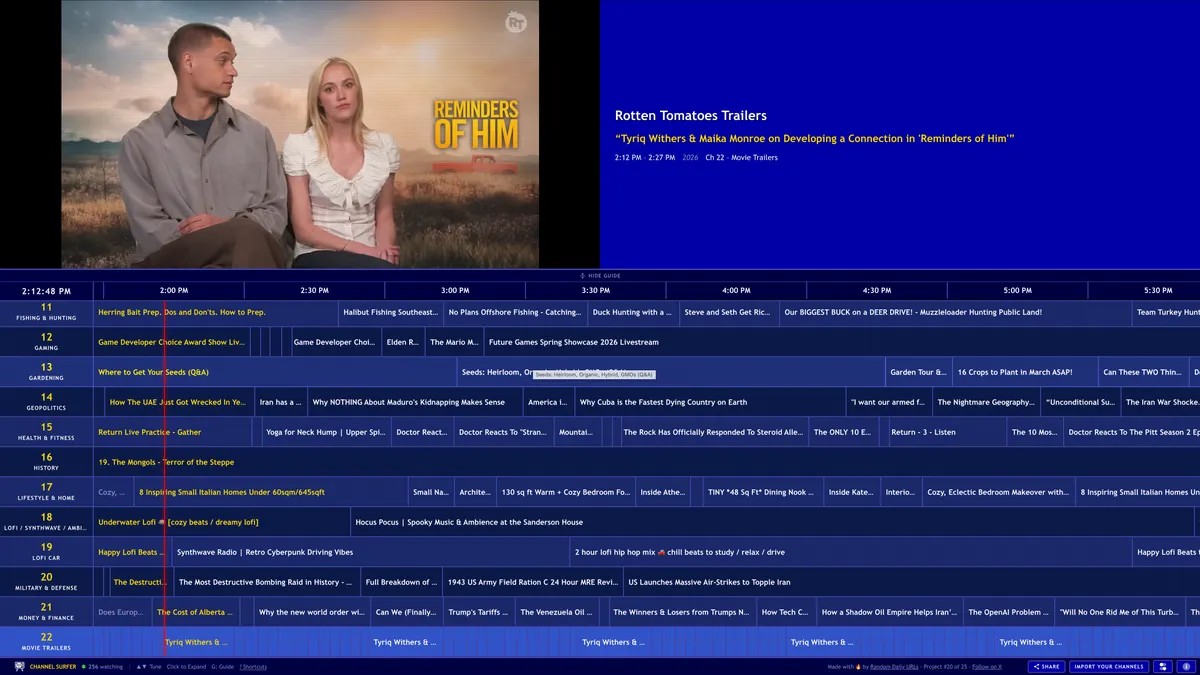
A new website, Channel Surfer, aims to bring back the traditional TV-watching experience to YouTube by presenting video feeds in a familiar Electronic Program Guide (EPG) format. The service, which launched recently, allows users to browse and “channel surf” through curated YouTube content organized into categories like sports, news, and AI.
The Problem with Modern Streaming
The core idea behind Channel Surfer is to address the paradox of choice in modern streaming services. While platforms like YouTube offer vast libraries of content, this can lead to decision fatigue. Users often spend more time scrolling through recommendations than actually watching videos. The traditional TV experience, where channels provide a pre-selected stream of programming, bypasses this issue. As developer Steven Irby explains, “I miss channel surfing and not having to decide what to watch. I want to just sit and tune in to what’s on and not think about what to watch next.”
How Channel Surfer Works
The website mimics the interface of a digital video recorder (DVR) or FAST TV, displaying up to 24 hours of programming at a time. Users can navigate through channels using arrow buttons or tap a channel name to start watching. Unlike a DVR, however, Channel Surfer does not offer recording capabilities. The content is currently manually programmed and limited to 40 channels, and the service is still in its early stages, with occasional glitches such as random playback restarts.
Early Traction and Future Implications
Channel Surfer quickly gained traction, attracting 10,000 users on its first day, according to its developers. This suggests that a demand exists for a more passive, curated viewing experience on platforms like YouTube. The site is a simple solution to a modern problem: the overwhelming freedom of on-demand video. The question now is whether Channel Surfer can scale and refine its programming to become a viable alternative to algorithmic recommendations.
Channel Surfer highlights a growing frustration with the “infinite scroll” model of modern streaming, signaling a potential shift toward more structured viewing experiences.