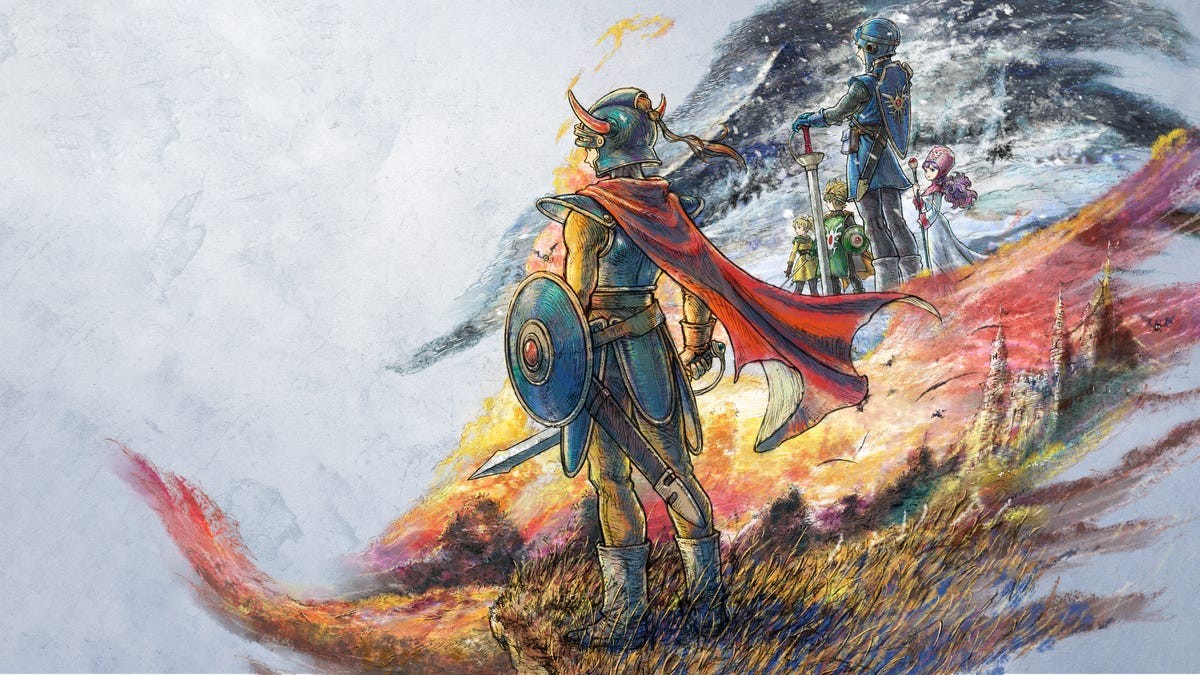
The release of Dragon Quest I & II HD-2D Remake isn’t just another retro revival; it’s a poignant reminder of how early role-playing games first captured the imagination. For many, including myself, the original Dragon Warrior (now Dragon Quest I ) on the NES wasn’t just a game—it was a gateway to a genre. This remake doesn’t attempt to reinvent the wheel, but instead, lovingly reconstructs those formative experiences for a modern audience.
The Legacy of a Genre Pioneer
Dragon Quest I & II HD-2D Remake is Square Enix’s second reimagining of their classic titles, following last year’s successful Dragon Quest III HD-2D Remake. These games are foundational to the Japanese RPG (JRPG) subgenre. While not a comprehensive review, revisiting these titles triggered vivid memories of discovering the power of narrative in gaming.
For those unfamiliar, the early 1990s were an era where RPGs were often discovered by chance, like a free copy of Dragon Warrior included with Nintendo Power subscriptions. The simple act of reading story beats instead of purely reacting to action was revolutionary. The original wasn’t about frantic button-mashing; it was about immersing oneself in a world through text.
Visual and Gameplay Enhancements
The remake retains the iconic art style of Akira Toriyama (Dragon Ball ) but elevates it with a striking HD-2D aesthetic. Character sprites are richer in detail, set against lush 3D environments. Voice acting, delivered with a distinctive British accent (a charming quirk), adds another layer of immersion.
Beyond visuals, quality-of-life improvements make the experience more accessible. Faster battles, warp travel, autosaves, and even the simple addition of running drastically improve usability. These tweaks don’t alter the core experience, but they streamline the classic formula for a modern audience.
Story Context and New Abilities
The remake also expands on the original narratives. Dragon Quest II, in particular, benefits from added context. The story of uniting the descendants of the first game’s hero feels more connected thanks to small but meaningful additions. The inclusion of new abilities—like multi-target attacks and damage reflection—adds strategic depth to battles, especially in Dragon Quest II, where the Prince of Midenhall relies on these techniques since he cannot use magic.
The Enduring Appeal of Simplicity
The genius of the original Dragon Quest remains intact. The final boss’s castle looms ominously nearby from the start, a subtle yet effective design choice that conveys a sense of impending doom. Despite these improvements, the remakes are still older games in terms of mechanics. The gameplay remains turn-based, and the story isn’t groundbreaking by today’s standards.
This remake is primarily for those who grew up with Dragon Quest or who are curious about the origins of the JRPG genre.
These aren’t titles that will redefine gaming in 2024, but they are faithful, lovingly crafted reimaginings of classics that deserve to be experienced. The Dragon Quest I & II HD-2D Remake is a nostalgia trip for veterans and an educational experience for newcomers. Whether it’s worth the $60 price tag now remains debatable, but it will likely become an essential purchase when on sale.
The game releases on Oct. 30 for PC, PS5, Nintendo Switch, Xbox Series X and S.