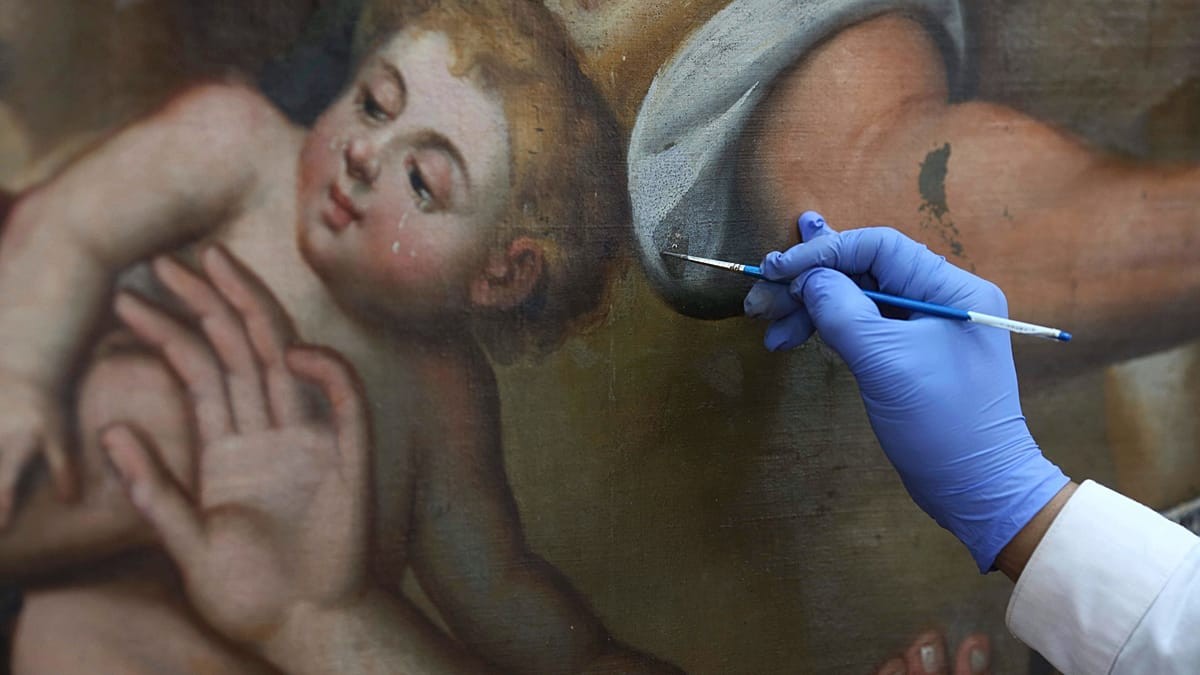
For centuries, the meticulous work of art restoration has relied on a blend of historical knowledge, scientific precision, and painstaking manual labor. Now, artificial intelligence (AI) and a shift towards sustainable materials are poised to revolutionize how damaged artworks are preserved, making the process faster, cheaper, and more environmentally responsible.
The Rise of AI-Powered Restoration
Traditionally, restoring a painting could take weeks or months, demanding expert hands to carefully fill in missing pigments and mend cracks. A new AI-driven method developed by MIT researcher Alex Kachkine dramatically accelerates this process. The technique involves analyzing a damaged artwork with AI, digitally reconstructing missing sections, and then printing a transparent polymer film with the restored image. This film acts as a temporary laminate, effectively ‘healing’ the painting in a matter of hours. In one test case, a heavily damaged 15th-century oil painting had over 57,000 hues restored in just over three hours – 66 times faster than conventional inpainting.
Crucially, the film is removable, addressing ethical concerns about irreversible alterations. As Kachkine explains, “Because there’s a digital record of what mask was used, in 100 years, the next time someone is working with this, they’ll have an extremely clear understanding of what was done to the painting.” This digital audit trail maintains transparency and allows for future adjustments.
Sustainable Materials: A Greener Approach
Beyond speed, a growing focus on sustainability is reshaping conservation practices. The EU-funded GREENART project is pioneering eco-friendly alternatives to harsh chemicals traditionally used in restoration. Researchers have developed hydrogels made from polyvinyl alcohol (PVA) polymers, incorporating bio-based components to create a more sustainable cleaning solution. These gels, already in use at institutions like London’s Tate Britain (where they recently cleaned Bridget Riley paintings for the first time in decades), offer controlled and faster dirt removal.
The shift extends to other materials as well. Scientists in Beijing are exploring cellulose derivatives—like cellulose ethers and nanocelluloses—as adhesives and coatings for paper, textiles, pottery, and even murals. These renewable, low-toxicity materials promise to reduce the environmental impact of conservation, offering a viable alternative to traditional, often hazardous, compounds.
Why This Matters
The convergence of AI and green chemistry in art restoration isn’t merely about efficiency; it’s about preserving cultural heritage in a way that is both effective and responsible. As climate change accelerates and the demand for conservation grows, these innovations provide a crucial toolkit for tackling new challenges. The ability to rapidly assess damage, digitally reconstruct lost details, and use sustainable materials ensures that future generations can continue to enjoy the world’s artistic treasures without compromising the environment or the integrity of the original works.