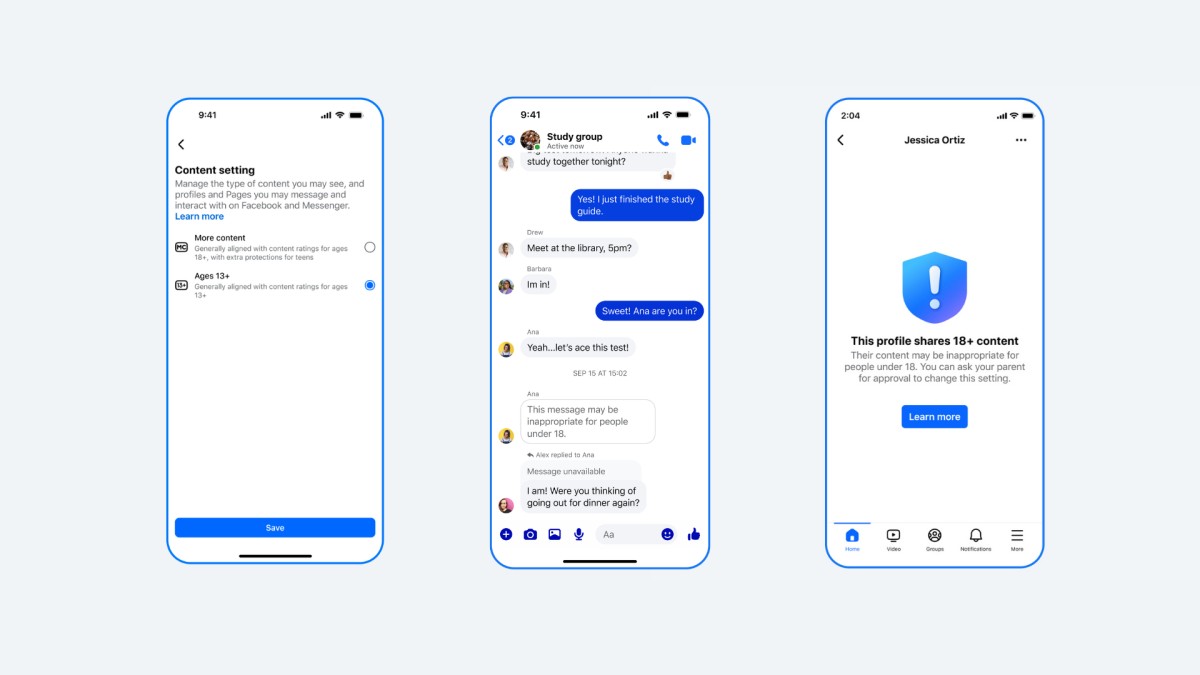
Meta finally did it. The teen account restrictions promised last year? They’re global now. Instagram. Facebook. Messenger. All of them.
The company claims the feeds are cleaner. Less repetitive. Less likely to spiral you into doom-scrolling over weightlifting or anxiety hacks. Meta says these posts get diluted in your feed. Shown alongside other things. Not on a loop.
They even brought in Alice. Formerly ActiveFence. A trust and safety firm that helped stress test the whole setup. Meta’s numbers are… specific. They say default settings for 13-plus users showed 68 percent less mature content compared to competitors. And if that content did slip through? It wasn’t nearly as intense as what you’d see in a movie rated 13 plus.
“Instagram Teen Accounts in the default setting saw 68% less mature content”
Is it better than before? Probably. It’s hard not to wonder how effective it really is, especially given the baggage. Remember last September? That report by Arturo Béjar and Cybersecurity for Democracy? It found most of those core safety features just… didn’t work. Meta denied the findings. Denied hard.
But they changed course anyway. October saw a revamp. Meta decided to compare their restrictions to a PG-13 movie rating. That was a bad move. The MPAA wasn’t having it. They sent a cease and desist. Called it false advertising. They settled in March. The dust settled, sort of.
So we’re here now. Global age detection. More parental tools. New content filters. The trial regarding social media addiction keeps moving. Meta keeps reconfiguring its settings. It feels like whack-a-mole.
One problem patched, another emerges. We’ll see if these defaults actually hold up under the weight of real usage. Or if kids find a way around it. They usually do.