Popular athletic footwear brand On is rapidly scaling up its automated production, opening a new robotic factory in South Korea. This move follows the success of its first such facility in Zurich, Switzerland, which opened in July 2025 after four years of development. The expansion signals a broader industry trend toward automation, raising questions about the future of manufacturing labor.
The Rise of Robotic Shoe Production
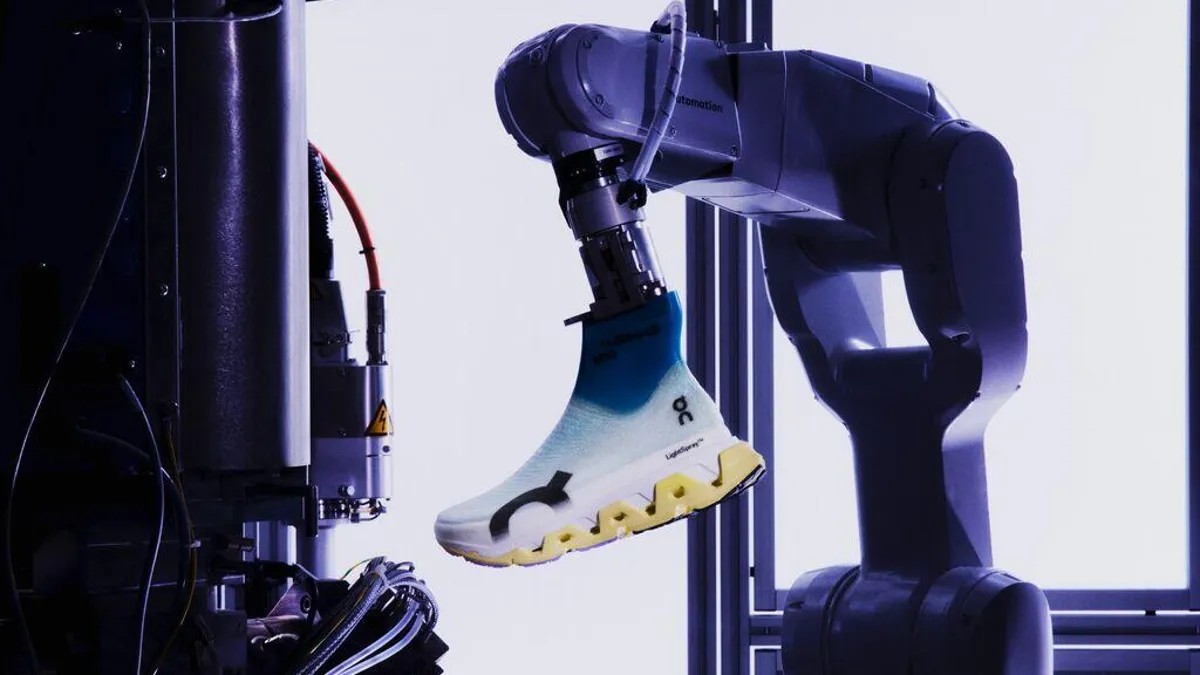
On first implemented robotic production with just four robots for its laceless LightSpray Cloudboom Strike LS shoe. The core process involves a robotic arm precisely applying On’s proprietary LightSpray material to create a lightweight, seamless upper in minutes – a process that significantly reduces waste and design time compared to traditional methods. The South Korea facility will add 32 more automated robots to the production line.
The decision to locate the new factory in South Korea is strategic. The country is a global leader in automation and robotics, providing On with access to advanced infrastructure and skilled workforce support. This expansion is part of a larger plan to establish production hubs across the Americas and further increase capacity in Europe.
LightSpray Cloudmonster 3 Hyper: First Product from the New Factory
Coinciding with the expansion announcement, On is launching the LightSpray Cloudmonster 3 Hyper, the first shoe designed entirely at the new Korean factory. Marketed as an ultimate training shoe for long runs and tempo workouts, the Cloudmonster 3 Hyper will initially be available in North America on March 5th, followed by a global release on April 16th.
According to On’s chief innovation officer, Scott McGuire, “The beauty of LightSpray is that we can precisely program each robot…to execute precisely choreographed movements to craft each shoe’s unique look and feel.” This level of precision is a key benefit of automated manufacturing.
Automation and the Future of Labor
The growing reliance on robots in manufacturing is not without debate. While supporters highlight increased efficiency, reduced waste, and potential for new applications (such as social robots assisting with children’s literacy), critics warn of potential job displacement, particularly in entry-level positions. Recent demonstrations at CES, including Hyundai’s Boston Dynamics Atlas humanoid robot, illustrate that automation is becoming increasingly sophisticated, though still imperfect.
The expansion underscores a clear shift in the footwear industry: automation is no longer experimental but operational, driving efficiency and reshaping the manufacturing landscape.
Ultimately, On’s expansion reflects a strategic bet on the future of robotic manufacturing, a trend that is likely to intensify as technology matures and costs decline.