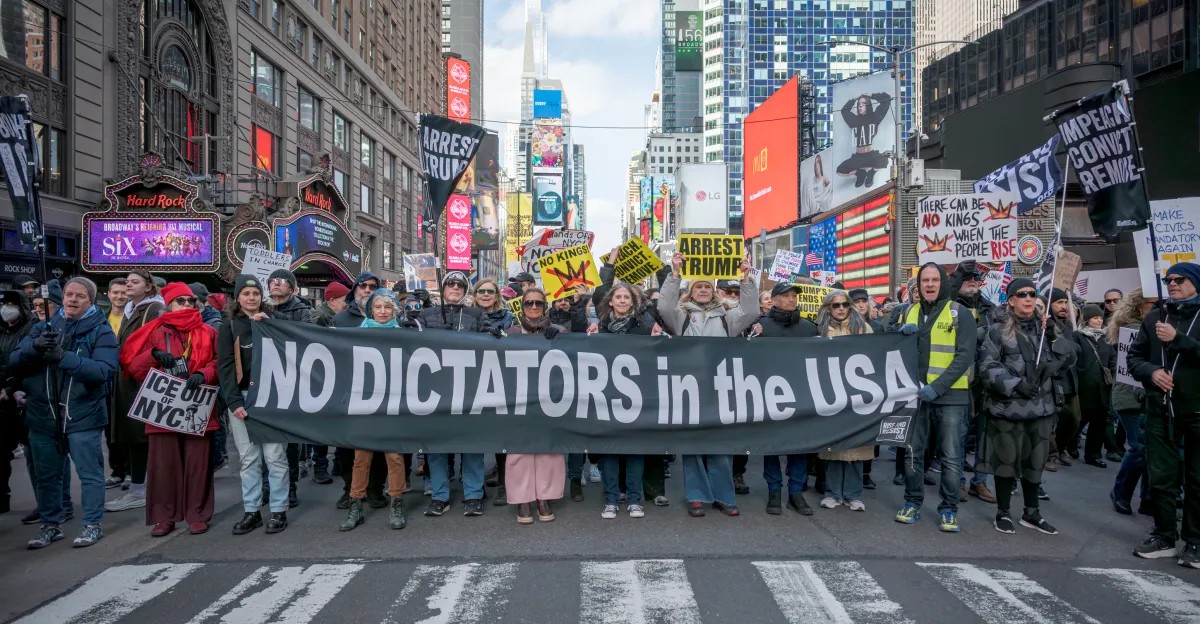
The current state of American democracy presents a striking paradox: the nation appears simultaneously under siege and remarkably resilient. While the executive branch has moved toward increasingly authoritarian tactics—threatening allies, targeting political opponents, and deploying unaccountable forces—the institutional and social guardrails of the country have proven harder to break than many anticipated.
Recent data from three major scholarly studies suggests that while Donald Trump’s first year caused significant democratic damage, the momentum of that decline may be stalling.
Measuring the Damage: Three Different Perspectives
Because “democratic health” is not a physical metric like temperature, researchers rely on expert surveys to quantify it. Three recent reports provide different, yet complementary, views on the state of the U.S. political system.
1. The Institutional View (V-Dem Institute)
The V-Dem Institute focuses on democratic institutions and the rule of law. Their findings paint a sobering picture:
– The U.S. saw a massive 22-point drop in its Liberal Democracy Index.
– This is the largest single-year decline in American history, bringing scores to levels not seen since the Jim Crow era.
– The decline is driven by the erosion of “legislative constraints”—the ability of Congress to check executive power.
2. The Civil Liberties View (Freedom House)
Freedom House measures how democratic rules actually affect the lived experience of citizens. Their data is more optimistic:
– The U.S. score dropped by only 3 points.
– While the administration has pressured media and academic institutions, Freedom House notes that the U.S. still maintains a robust, independent press and university system compared to global standards.
3. The Temporal View (Bright Line Watch)
The Bright Line Watch consortium tracks changes over time through multiple annual surveys. Their data provides the most critical insight: the crisis peaked early.
– Democracy scores plummeted in the first months of 2025, hitting a “nadir” (lowest point) in April.
– Since that spring low, the scores have stabilized and even begun a slight upward trend.
Why the Decline Stalled
The data suggests that the initial “blitz” of executive power grabs—including the aggressive use of agencies like DOGE to dismantle established departments—was met with significant resistance. The slowdown in democratic erosion can be attributed to three main factors:
- Institutional Friction: Many attempts to expand unilateral power were repulsed by the courts or stalled by administrative realities.
- Failed Repression: While the administration has attempted to bully media outlets and deploy federal agents to cities, these actions have often been successfully countered by legal challenges and public protests.
- The Ultimate Litmus Test: Elections: Perhaps most importantly, the 2025 off-year elections demonstrated that the “playing field” remained functional. The fact that the opposition could still compete and win suggests that the fundamental mechanism of democracy—the peaceful transfer of power through the ballot box—remains intact.
The Road Ahead: Midterm Vulnerabilities
Despite this cautious optimism, the threat to democracy has not vanished; it has merely shifted form. The administration is now pivoting toward tactics aimed at the upcoming midterm elections, including:
– Attempts to access sensitive voter data.
– Aggressive mid-cycle gerrymandering.
– Efforts to federalize election administration.
While many of these moves have been met by counter-efforts (such as Democratic redistricting in blue states), they represent a new frontier in the struggle over American governance.
Conclusion
While the initial shock of expanded executive authority caused historic damage to democratic institutions, the resilience of the electoral process and judicial pushback have prevented a total collapse. The current trend suggests a stabilization of democracy, though the fight over the integrity of future elections remains the primary battleground.