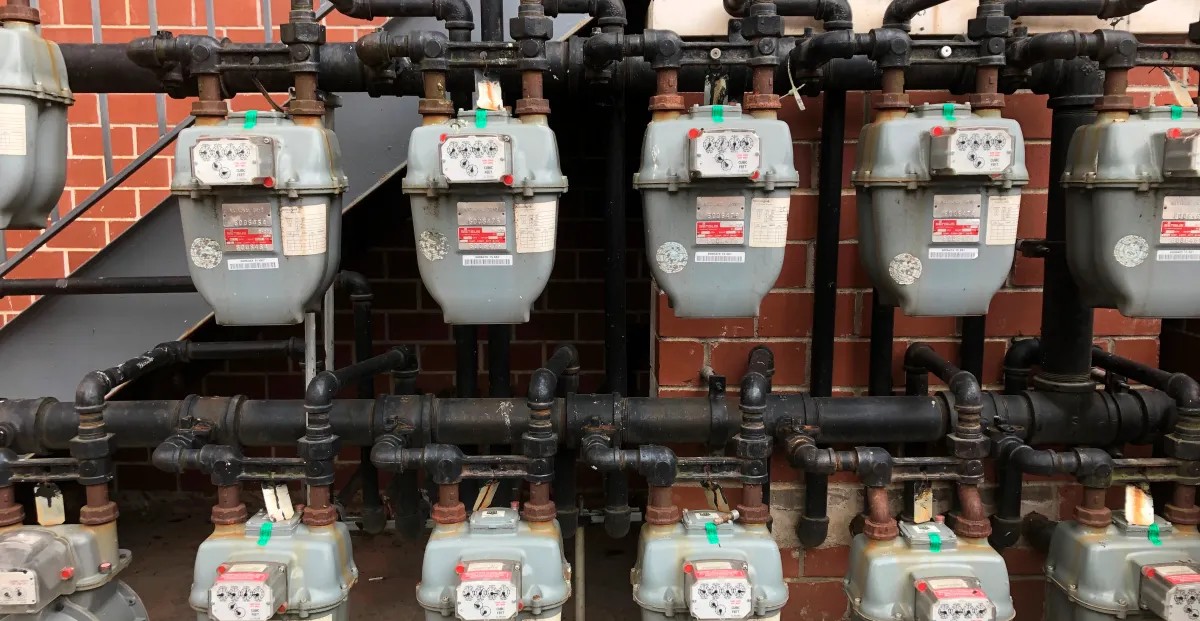
While headlines often blame geopolitical tensions or extreme weather for spikes in energy costs, a deeper, structural issue is driving up monthly gas bills across the United States. For decades, the primary driver of consumer costs was the price of natural gas itself. Today, the reality has shifted: infrastructure maintenance and pipeline replacement now account for roughly 70% of gas utility bills, while the actual cost of the gas represents only about 30%.
The “Sleeper Culprit” in Your Monthly Bill
A new report by the Building Decarbonization Coalition (BDC) highlights a growing disconnect between how much gas people use and how much they pay to deliver it. According to the study, gas utility bills are rising at an alarming rate—60% faster than electric bills in 2025 and four times faster than the rate of inflation.
This price surge is occurring even as residential gas demand has remained nearly flat since the 1970s. This creates a mathematical problem for consumers:
– A shrinking customer base: The total number of gas customers has grown by only 8.5% since 2000.
– Exploding infrastructure spending: Utility spending on pipes and delivery tripled over the last decade, reaching $28 billion in 2023.
– The “Per Pipe” Penalty: Because the infrastructure is being expanded or replaced while the number of users stays relatively stable, consumers are essentially paying more to maintain each mile of pipe than they were 30 years ago.
The Policy Shift: Accelerating the Costs
The transition toward more expensive bills wasn’t accidental. Starting around 2010, utilities began replacing aging, corroding pipelines at a much faster pace. To fund this, at least 42 states enacted policies—such as surcharges or “riders”—that allow utility companies to recover these massive infrastructure costs more quickly from customers.
The BDC report suggests that if utilities had maintained their pre-2010 investment pace, U.S. households could have saved an estimated $1,723 each through 2023. Instead, the industry is locked into a cycle of high-cost maintenance for a system that is increasingly being bypassed by newer technologies.
The Great Energy Divergence: Gas vs. Electricity
As gas becomes more expensive to maintain, a clear trend is emerging in the American home: electrification.
While the American Gas Association argues that gas remains a cost-effective option for heating and cooking compared to electricity, the math is changing. In 2025, heat pumps outsold gas furnaces in the U.S. for the fourth consecutive year. This shift is driven by two main factors:
1. Efficiency: Modern electric appliances, like heat pumps, are becoming increasingly efficient.
2. Climate Mandates: As states work toward carbon neutrality, there is a growing regulatory push to move away from fossil fuels entirely.
The Path Forward: Alternatives to the Pipeline
Rather than pouring billions into replacing aging gas networks, experts and lawmakers are increasingly looking at “non-pipe alternatives.” These include:
– Geothermal energy networks: Providing heating and cooling through the earth’s natural temperature.
– Sewer heat recovery: Capturing energy from wastewater.
– Enhanced electrification: Using heat pumps and smart demand-response programs to manage energy more efficiently.
Several states are already leading this transition. Minnesota is considering bills to allow utilities to build geothermal networks; Massachusetts is expanding thermal energy neighborhoods; and California is working to make heat pump installations faster and cheaper through legislative action.
“As that gas system continues to get more and more expensive, these clean-heat solutions get even better and more affordable,” says Kristin Bagdanov, co-author of the BDC report.
Conclusion
The rising cost of natural gas is less about the fuel itself and more about the aging, increasingly expensive system required to deliver it. As infrastructure costs continue to climb, the economic incentive for homeowners to switch to electric, renewable alternatives is becoming harder to ignore.