Top U.S. financial officials are raising urgent questions about whether the rapid advancement of artificial intelligence could inadvertently compromise the stability of the global banking system.
A High-Stakes Meeting with Wall Street
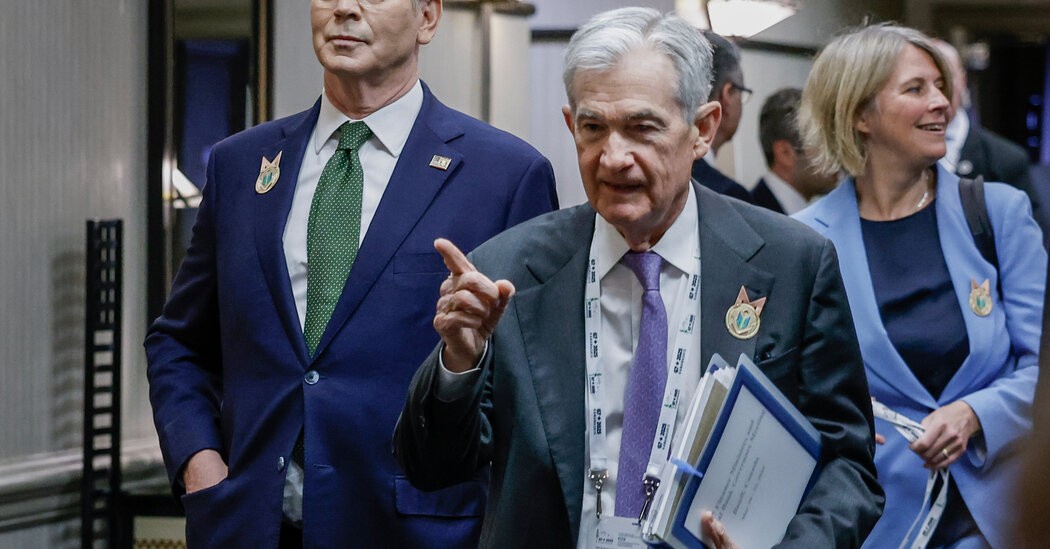
Following the release of a powerful new AI model, Treasury Secretary Scott Bessent and Federal Reserve Chair Jay Powell convened an emergency meeting with the CEOs of several major banks this past Tuesday.
The meeting was prompted by recent developments at Anthropic, an AI industry leader, which recently unveiled its latest model, Claude Mythos Preview. While the technology represents a massive leap in capability, its specific deployment has sent ripples of concern through the regulatory community.
The “Double-Edged Sword” of AI Capability
The core of the anxiety lies in the dual nature of advanced AI. Anthropic has restricted the use of its new model to a select group of companies, specifically tasking them with using the AI to identify and patch critical cybersecurity flaws within their own infrastructure.
While this is a proactive defense strategy, it highlights a growing systemic risk:
– The Offensive Potential: If AI can be used to find and fix vulnerabilities, it can just as easily be used by malicious actors to discover them at unprecedented speeds.
– The Speed of Attack: AI-driven cyberattacks could potentially outpace traditional human-led defense mechanisms, leaving banks in a race against automated threats.
– Systemic Vulnerability: Because the global financial system is deeply interconnected, a successful AI-driven breach at one major institution could trigger a domino effect across the entire sector.
Why This Matters for Financial Stability
This isn’t merely a technical debate about software; it is a question of systemic financial risk. When regulators like Bessent and Powell intervene, they are signaling that AI is no longer just a productivity tool—it is a potential structural threat to the integrity of the markets.
The move by the Treasury and the Fed suggests that regulators are moving away from passive observation and toward active oversight. They are now demanding that banks prove they have the necessary safeguards in place to defend against “AI-augmented” cyber warfare.
The primary concern for regulators is ensuring that the very tools designed to strengthen security do not become the instruments used to dismantle it.
Conclusion
The sudden involvement of the Treasury and the Federal Reserve underscores a shift in the financial landscape, where AI-driven cybersecurity threats are now viewed as a top-tier risk to economic stability. Moving forward, the banking sector will likely face much stricter scrutiny regarding how they integrate and defend against autonomous intelligence.