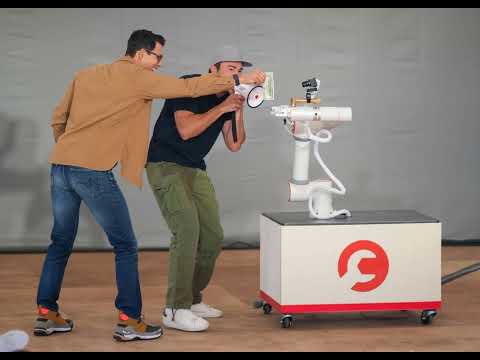
Rivian founder and CEO, RJ Scaringe, is expanding beyond electric vehicles into robotics with his new venture, Mind Robotics. This isn’t a side project but a strategic move aimed at reshaping the future of manufacturing, which Scaringe believes is currently underserved by existing robotic solutions.
Beyond Consumer Robotics: The Industrial Focus
While many robotics startups target domestic tasks like folding laundry, Scaringe’s Mind Robotics is focused on the industrial sector. He argues that current robotics companies either lack the experience in large-scale manufacturing or the AI and data infrastructure to create truly effective solutions.
“I made the decision to start a new company… I felt I could build a better company.”
The Evolution of Mind Robotics
The idea for Mind Robotics originated from Rivian’s plans for expansion. Scaringe realized that building multiple factories would require significant capital investment and a future-proof approach to automation. He observed that existing industrial robots are limited in their ability to perform complex, human-like tasks.
He decided to start a new company, Mind Robotics, raising $615 million in funding at a $2 billion valuation. The company is now focused on building robots tailored for industrial environments, prioritizing practicality over unnecessary complexity.
Prioritizing Functionality Over Imitation
Scaringe critiques the trend of mimicking human biomechanics in industrial robotics. He believes that complex movements like backflips, while impressive, are unnecessary for most manufacturing tasks. Instead, he advocates for minimizing complexity to reduce failure rates and power consumption.
“Mimicking human biomechanics in a manufacturing environment misses some of the fundamental points of manufacturing, which is, it’s all hand based.”
The Importance of Hands and Adaptability
Scaringe emphasizes the crucial role of robotic hands in industrial applications. He points out that different tasks require different gripping solutions, from handling heavy steel pipes to assembling delicate components. Unlike consumer robotics that aim for universal functionality, Mind Robotics plans to create modular, task-specific hand designs.
The Future of Industrial Automation
Scaringe envisions a future where robots are designed specifically for industrial settings, taking advantage of controlled environments and predictable workflows. He believes that factories can be optimized for robotic deployment, eliminating obstacles like stairs and uneven surfaces that complicate home robotics.
Design Philosophy: Approachable, Not Intimidating
Rivian’s design ethos of capability without intimidation will extend to Mind Robotics. Scaringe aims to create robots that are both functional and approachable, avoiding the stereotypical Terminator-like aesthetic. This design choice reflects his belief that robots should seamlessly integrate into human workplaces, not inspire fear or discomfort.
Conclusion: RJ Scaringe is betting that a laser-focused approach to industrial robotics – prioritizing practicality, modularity, and a human-friendly design – will disrupt a field dominated by either legacy automation companies or consumer-focused startups. His new venture, Mind Robotics, aims to fill a critical gap in the market by delivering robots that are built not to mimic humans, but to serve their needs in the factory of the future.