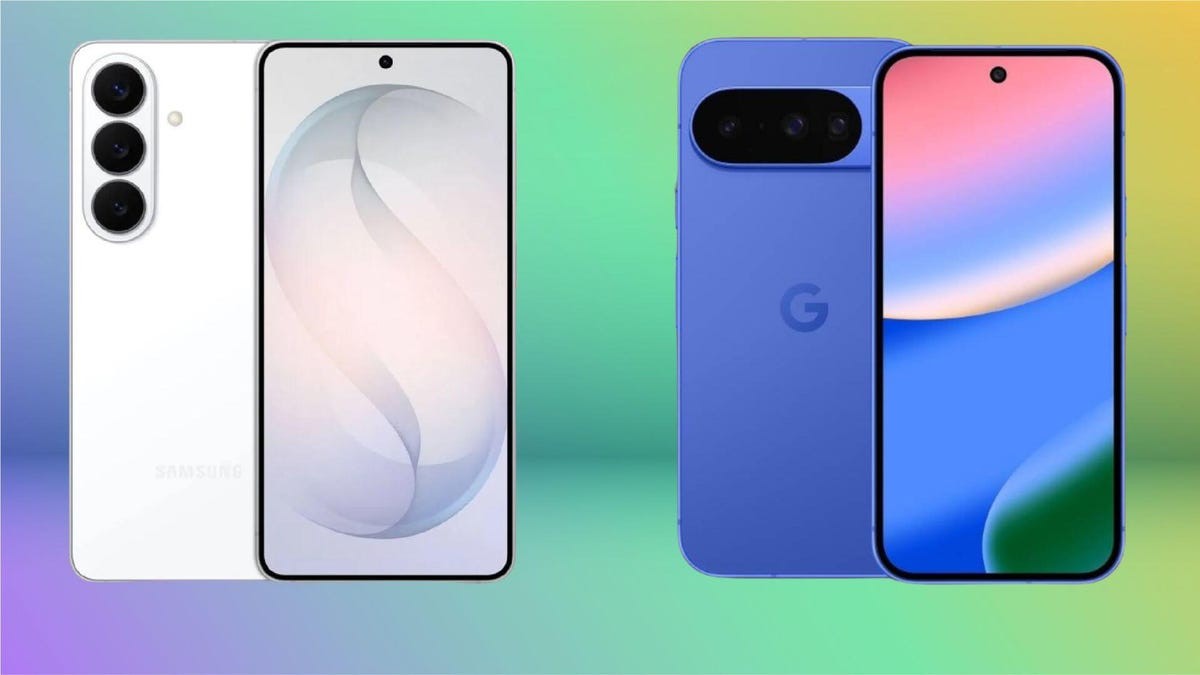
The flagship smartphone market has entered a new era of competition. With the recent launch of the Samsung Galaxy S26 and the Google Pixel 10, the gap between the two most prominent Android ecosystems is narrowing. While Samsung has increased its entry price, Google has upgraded its hardware to match Samsung’s versatility.
Choosing between them is no longer just about brand loyalty; it is a decision between raw performance and customization versus simplicity and smart assistance.
Design and Display: Immersion vs. Visibility
Both devices feature 6.3-inch displays, but they prioritize different user experiences:
- The Galaxy S26 offers a more immersive feel thanks to slimmer bezels and a much lighter build (167g vs. 204g). It also features a more advanced variable refresh rate that can drop to 1Hz to save battery, whereas the Pixel 10 only goes down to 60Hz.
- The Pixel 10 wins on outdoor legibility. With a peak brightness of 3,000 nits, it is significantly easier to read in direct sunlight than the S26’s 2,600 nits. Additionally, the Pixel includes built-in magnets for wireless accessories, a feature Samsung currently lacks in its base model.
Camera Capabilities: Versatility and Stability
Both manufacturers have leaned heavily into AI-driven photography, but their hardware approaches differ:
Samsung Galaxy S26
Samsung focuses on video stability and professional control. The new “Horizontal Lock” provides gimbal-like stabilization, making it ideal for creators filming in moving environments. Its camera array includes a 50MP wide, 12MP ultrawide, and a 10MP 3x telephoto lens.
Google Pixel 10
Google has closed the hardware gap by adding a 5x telephoto lens to the Pixel 10, offering better long-range reach than Samsung’s 3x zoom. While the hardware is impressive, Google’s strength lies in its software—features like the Magic Eraser and contextual AI assistance remain industry benchmarks for ease of use.
Performance and Battery: Power vs. Efficiency
Under the hood, these phones are powered by different philosophies:
- Processing Power: The Galaxy S26 utilizes the Snapdragon 8 Elite Gen 5, which outperforms Google’s Tensor G5 in benchmarks and 3D gaming. If you are a heavy user or a mobile gamer, the Samsung is the clear winner.
- Battery Life: Both phones received battery boosts this year. However, the S26 is more efficient during tasks like video streaming, largely due to its more optimized chipset and superior refresh rate management.
- The Storage Trap: While the Pixel 10 is $100 cheaper upfront, it starts at only 128GB. To match the S26’s base 256GB of storage, you must pay the same $899. In an era of high-resolution media, 128GB is increasingly insufficient.
Software: Customization vs. Simplicity
The “soul” of these devices lies in their user interfaces:
- One UI (Samsung): Designed for power users. With tools like Good Lock, users can deeply customize gestures and widgets. It is a feature-rich environment that allows you to make the phone truly yours, though it does come with more pre-installed apps (bloatware) that must be managed.
- Pixel UI (Google): The “vanilla” Android experience. It is clean, fast, and free of excessive third-party apps. It excels at contextual intelligence, such as surfacing booking details during a phone call, though it can occasionally feel slower when processing complex AI tasks compared to Samsung.
Both devices are future-proofed with seven years of OS and security updates, ensuring longevity regardless of which ecosystem you choose.
Summary Verdict
The decision ultimately comes down to how you use your device.
Choose the Samsung Galaxy S26 if you want a lightweight, high-performance powerhouse with superior battery efficiency and deep customization options.
Choose the Google Pixel 10 if you prefer a bright, easy-to-use interface with superior outdoor visibility and smart, contextual AI features.