After 15 years at the helm, Tim Cook is stepping down as CEO of Apple. On September 1, the leadership transition will see John Ternus, Apple’s Senior Vice President of Hardware Engineering, take the reins. While Cook will vacate the CEO role, he is set to remain with the company as Executive Chairman.
Cook’s tenure marks one of the most significant periods of growth in corporate history. He inherited a company defined by the singular vision of Steve Jobs and leaves behind a global tech empire with a valuation that has soared by approximately €3.3 trillion.
From Successor to Steward: The “Cook Doctrine”
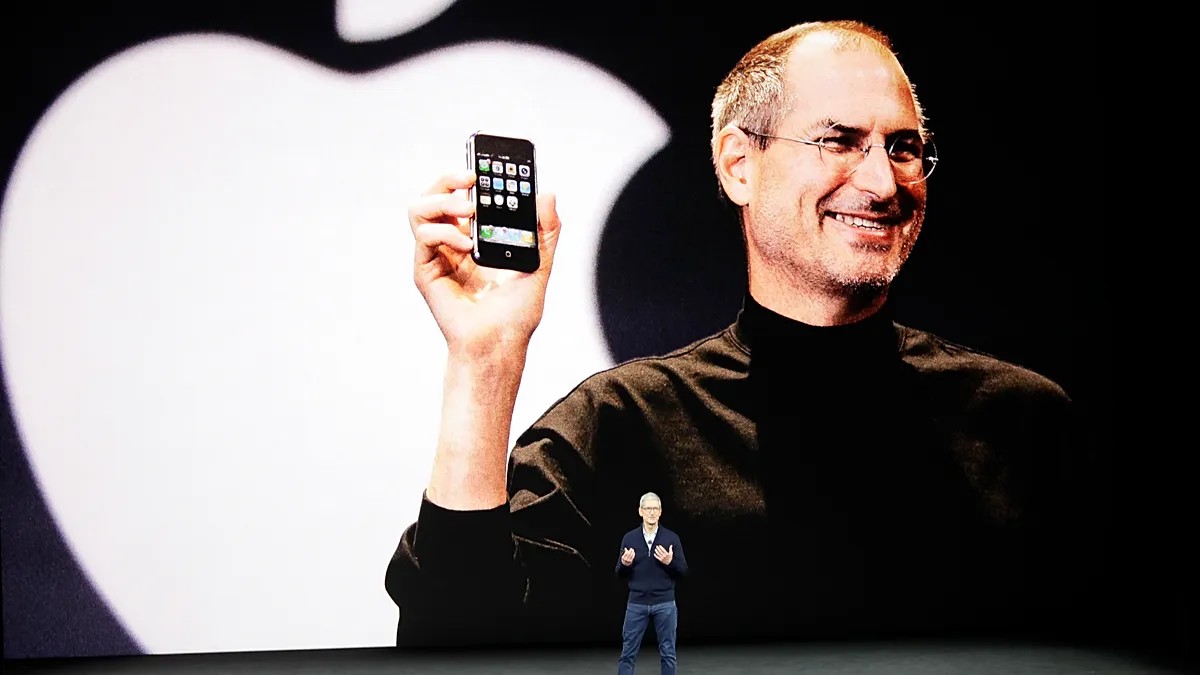
When Steve Jobs announced a medical leave in 2009, Cook—then the Chief Operating Officer—was thrust into the spotlight. It was during this period that he established what many now call the “Cook Doctrine” : the idea that while leadership might change, Apple’s core mission to create great products was immutable.
Transitioning from a brilliant but mercurial founder like Jobs to an operational expert like Cook was a pivotal moment for the industry. While critics initially questioned if Apple could maintain its “innovation engine” without Jobs, Cook’s primary mission was stability. He promised employees that “Apple is not going to change,” focusing on preserving the culture while professionalizing the massive global supply chain he had already mastered as COO.
Navigating Early Turbulence and Global Scrutiny
Cook’s early years as CEO were far from seamless. His first major product launch, the iPhone 4s, received mixed reviews from a media eager for a “revolution” rather than an evolution. However, the device introduced Siri and iCloud, laying the groundwork for the modern smartphone experience.
Beyond product launches, Cook had to navigate significant systemic challenges:
– Supply Chain Ethics: Following reports of labor concerns in Chinese factories, Cook took a stand on corporate responsibility, opening Apple’s supply chain to independent audits by the Fair Labor Association.
– Legal Warfare: He aggressively defended Apple’s intellectual property through high-profile patent battles against competitors like Samsung and Google.
– Economic Growth: Despite these hurdles, Apple’s momentum was undeniable, becoming the world’s most valuable company by 2012.
Building the “Seamless Ecosystem”
Perhaps Cook’s most enduring contribution is the transition of Apple from a hardware company to an ecosystem powerhouse. Under his leadership, Apple moved away from selling isolated devices toward creating a “seamless experience” where everything works in concert.
This strategy turned the iPhone into the central hub of a digital life. Key developments included:
– Continuity Features: Tools like AirDrop and Handoff allowed users to move tasks fluidly between Mac, iPhone, and iPad.
– Service Integration: The launch of Apple Pay, Apple Music, and AirPods ensured that users were deeply embedded in the Apple environment.
– The Ambient Paradigm: The introduction of the Apple Watch reinforced this vision, creating a world where devices act as extensions of one another rather than separate tools.
A Financial Titan in the Age of AI
Under Cook, Apple didn’t just grow; it shattered financial records. The company became the first to hit a $1 trillion valuation in 2018 and has since climbed toward the $4 trillion mark, joining the ranks of Nvidia and Microsoft as a global economic titan.
In recent years, Cook has steered the company through the complexities of the Artificial Intelligence (AI) era. While Apple was perceived as a “late mover” compared to Google and Samsung, the launch of Apple Intelligence in 2024 signaled a strategic shift. By integrating OpenAI’s ChatGPT directly into the operating system, Apple adopted a “wait-and-see” approach—prioritizing user experience and ecosystem integration over being the first to market.
Furthermore, Cook proved to be a master of geopolitical diplomacy. He navigated the volatile trade tensions of the Trump administration, successfully lobbying for tariff exemptions and diversifying manufacturing footprints into India to mitigate risks in China.
Conclusion: Tim Cook’s legacy is defined by his ability to transform Apple from a high-growth innovator into a stable, trillion-dollar ecosystem. He successfully bridged the gap between the era of the visionary founder and the era of the global digital infrastructure.