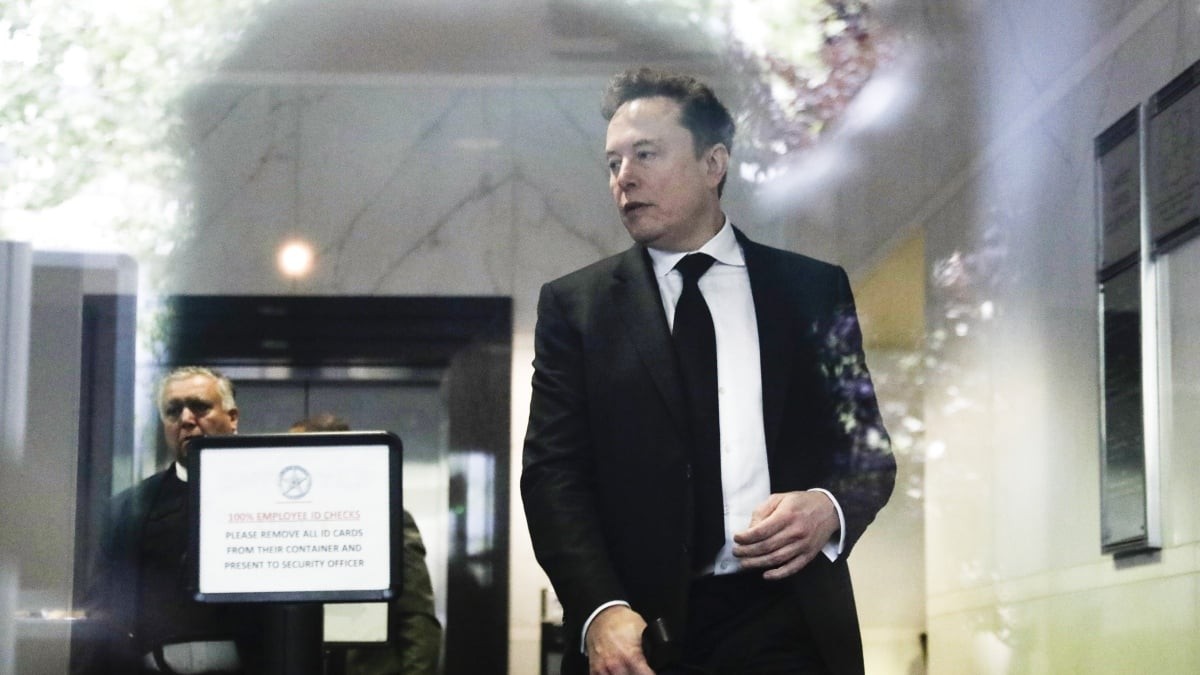
The legal battle between Elon Musk and OpenAI has moved from boardroom disputes to the federal courtroom, offering a dramatic glimpse into the tensions that define the modern AI industry. In a federal courthouse in Oakland, California, the world’s richest man took the stand in what has become a highly publicized clash over control, ethics, and the future of artificial intelligence.
While the trial promises complex legal arguments, the first week was dominated by Musk’s testimony—a performance marked by grandiose claims, personal revelations, and friction with the court. Here is a breakdown of the key moments and what they reveal about the broader conflict.
The Stakes: Charity, Humanity, and Precedent
Musk framed his lawsuit not merely as a personal grievance, but as a critical defense of charitable integrity and human safety. Under questioning from his attorney, Steve Molo, Musk argued that if OpenAI wins, it will set a dangerous precedent.
“The consequences of this case go far beyond me,” Musk stated. He warned that a victory for OpenAI could grant “license to loot every charity,” potentially destroying the foundation of charitable giving in the United States.
Musk escalated the narrative by invoking existential risks, repeatedly referencing the Terminator franchise and suggesting that OpenAI’s trajectory could lead to AI that “could kill us all.” He positioned himself as a savior trying to prevent a dystopian future.
However, this narrative faces scrutiny. Critics point out the irony in Musk defending charitable standards when his own charitable foundation has failed to distribute enough funds to maintain its tax-exempt status consistently over the past five years. This disconnect highlights a central tension in the case: whether Musk’s motives are altruistic or driven by control.
The Counter-Narrative: “Sour Grapes” and Ambition
OpenAI’s legal team, led by William Savitt, offered a starkly different interpretation of events. Their opening arguments painted Musk not as a guardian of ethics, but as a disgruntled former partner who could not accept losing influence.
“We are here because Musk didn’t get his way at OpenAI,” Savitt told the jury. He argued that OpenAI executives had the “nerve to go on and succeed without him,” a development Musk reportedly disliked.
Key points from OpenAI’s perspective include:
* Timing of Complaints: Musk did not object to Microsoft’s initial $1 billion investment in OpenAI in 2019. His objections arose only after ChatGPT’s massive success in 2022 and 2023.
* The “Bait and Switch” Claim: When questioned, Musk admitted he was fine with the 2019 investment but objected to a subsequent $10 million investment in 2022, calling it a deceptive tactic.
* Political Context: Savitt reminded the jury—located in a heavily Democratic area—of Musk’s recent employment by Donald Trump, suggesting political and personal biases may color his testimony.
Personal Revelations and Credibility Challenges
Beyond corporate governance, the trial uncovered personal details that impacted Musk’s credibility. During testimony, Musk identified Shivon Zilis, a key figure in OpenAI’s early days, as his former chief of staff. Under further questioning, he acknowledged that they live together and are the parents of four of his children.
This revelation drew laughter from the gallery but also raised questions about potential conflicts of interest. Musk insisted he did not recall Zilis sharing sensitive OpenAI information after his departure in 2019, despite their close personal and professional history.
Furthermore, Musk’s attention to detail came under fire. When asked about the acronym “TL;DR,” he defined it as “Too Long, Don’t Read.” The correct definition is “Too Long Didn’t Read.” While seemingly minor, this error became significant when Savitt highlighted contradictions in Musk’s testimony regarding whether he had read key legal documents. OpenAI argued that Musk claimed to have read entire documents in one deposition but admitted to only reading the first paragraph in another, undermining his reliability as a witness.
Conflict with the Court: Protocol and Temperament
Musk’s demeanor on the stand was often at odds with courtroom norms, leading to repeated interventions by Judge Yvonne Gonzalez Rogers. Musk expressed frustration with standard legal procedures, particularly “yes or no” questions, which he described as “designed to trick me.”
He compared these questions to loaded traps, such as asking, “When did you stop beating your wife?” The judge firmly shut down this analogy, stating, “We’re not going there.”
Tensions peaked when Musk accused his own lawyer of leading the witness—a legal concept that applies only to direct examination, not cross-examination. When Musk attempted to correct the opposing counsel on legal procedure, the judge reminded him:
“Let’s remind everyone in the courtroom that you’re not a lawyer.”
Despite this, Musk insisted he had taken “Law 101” in school. Legal experts suggest that his combative approach and disregard for procedural norms may have weakened his position, as it portrayed him as difficult and uncooperative.
Conclusion
The Musk vs. Altman trial is more than a corporate dispute; it is a clash of narratives about accountability, ambition, and the ethical boundaries of AI development. Musk’s testimony highlighted his view of himself as a protector against existential risk and corporate malfeasance, while OpenAI portrayed him as a former partner struggling with irrelevance. As the trial progresses, the jury must weigh these competing stories against the factual record, determining whether Musk’s concerns are grounded in legitimate oversight or personal grievance.