


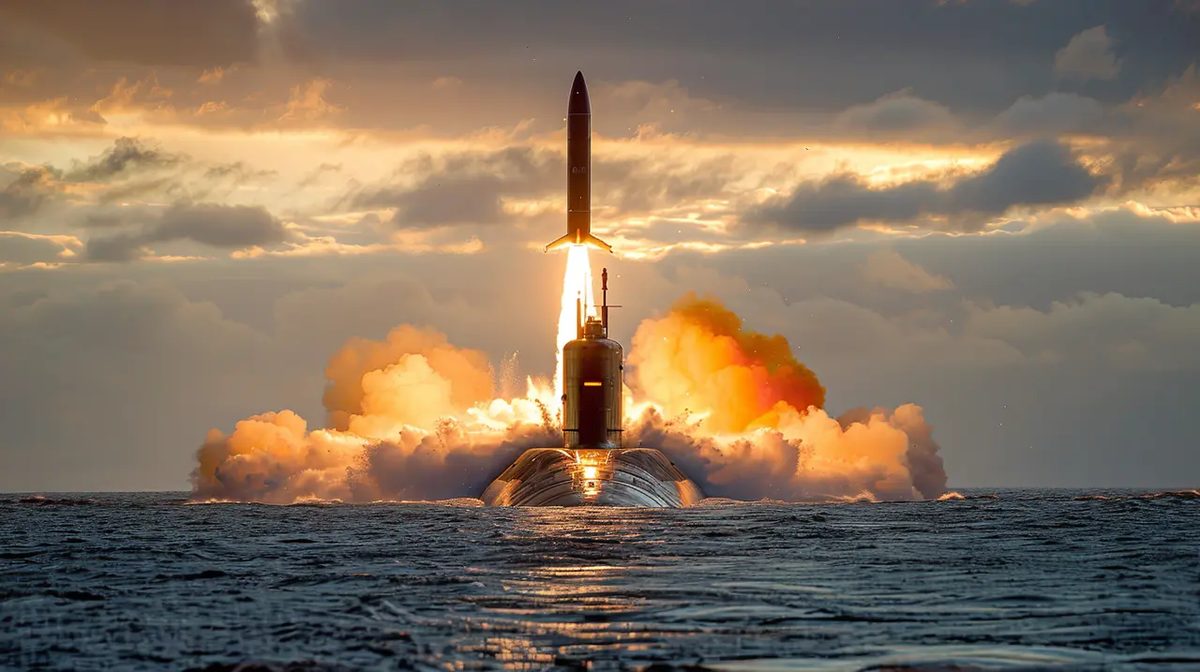
They are the most terrifying objects in modern warfare. Not because they are complex in a way that requires a degree in astrophysics to understand, but because they are brutally simple. A ballistic missile is an autonomous projectile. You give it a push. Then you let gravity do the rest.
It flies in a determined path dictated by the laws of ballistics once its initial propulsion ends. That distinction matters. It separates them from cruise missiles, which buzz like angry hornets, using continuous thrust to hug the terrain and avoid radar. A ballistic missile doesn’t care about hiding. It cares about height. It goes up. It falls down. It hits hard.
Since their debut in World War II, these weapons have evolved from clunky V-2 rockets into the central pillars of global geopolitical strategy. They carry everything from conventional explosives to nuclear warheads over thousands of kilometers. Understanding how a ballistic missile works isn’t just about military trivia. It’s about understanding why the world stays quiet most of the time, and what happens when that quiet breaks.
The Anatomy of the Flight
The flight of a ballistic missile is a race against physics. It is divided into three distinct phases. Get any of them wrong, and the mission fails.
First is the boost phase. This is the loud part. The rocket motors ignite, burning solid or liquid fuel to accelerate the payload to hypersonic speeds. This phase is short—sometimes just seconds for shorter-range missiles, minutes for intercontinental ones. During this time, the missile is visible to infrared satellites. It is vulnerable. If you can shoot it down here, you stop the whole thing. But the window is tiny.
Then comes the midcourse phase. The engines cut out. The missile coasts through the vacuum of space or the upper atmosphere. This is the longest part of the flight. It can last for tens of minutes. Here, the missile follows a parabolic arc, a giant curve defined by inertia and gravity. It is essentially a satellite in a temporary, deadly orbit. The payload, which might include multiple warheads or decoys, detaches and floats in the void. This is where things get tricky. If the warheads deploy decoys, missile defense systems have to figure out which dot is the death and which is the distraction.
Finally, the terminal phase. The warhead re-enters the atmosphere. It is moving at hypersonic speeds—Mach 5 or higher. The air friction creates a plasma sheath, making radar detection difficult. The missile steers toward its target. There is no second chance. The interception window here is measured in seconds, not minutes.
Types of Reach
Not all ballistic missiles are created equal. They are categorized by range, which dictates their role in a military doctrine.
Short-range ballistic missiles (SRBMs) travel less than 1,000 kilometers. They are the tactical tools. You use them against regional targets, enemy bases, or troop concentrations within a neighboring country. They are cheap, numerous, and hard to track on long-range radar.
Medium-range ballistic missiles (MRBMs) cover 1,000 to 3,500 kilometers. These are strategic regional weapons. They can hit countries across a continent or strike naval fleets in a theater of war. They offer flexibility without the massive infrastructure required for intercontinental weapons.
Intercontinental ballistic missiles (ICBMs) are the big ones. Range over 5,500 kilometers. These are designed for strategic strikes across continents. They are almost always nuclear. Their existence is the foundation of mutual assured destruction. If Country A has an ICBM, it can hit Country B no matter where Country B hides. That certainty is what prevents direct war between major powers.
Submarine-launched ballistic missiles (SLBMs) are the stealth option. Fired from underwater, they are mobile and hidden. A submarine can sit off the coast of an enemy nation, undetected, and launch a missile with little warning. This adds a layer of unpredictability to deterrence.
The Strategic Game
Why do nations build these weapons? It comes down to deterrence. An ICBM or SLBM guarantees a “second-strike” capability. Even if an enemy destroys your land-based silos, a submarine lurking in the deep can still fire back. This makes a first strike suicidal. It creates a stalemate.
But it’s not just about nuclear war. Regional powers use SRBMs and MRBMs to project power without committing large armies. It’s a way to punch above your weight. If you can threaten a neighbor’s capital with a missile from your border, you change the calculus of any conflict. It forces diplomats to pay attention.
This has sparked a technological arms race in reverse. Nations aren’t just building better missiles; they are building better shields. Systems like the US THAAD (Terminal High Altitude Area Defense) or the Aegis Ballistic Missile Defense System are designed to intercept warheads in their terminal or midcourse phases. It’s a cat-and-mouse game. As missiles get faster and more maneuverable, defenses must get smarter and faster.
The Proliferation Problem
The biggest risk today isn’t a superpower launching an ICBM. It’s the spread of the technology. Missiles are becoming accessible to non-aligned states and even non-state actors. The UN and the Missile Technology Control Regime (MTCR) try to restrict the transfer of missile-related tech, but it’s hard to stop.
Countries like North Korea and Iran have developed ballistic missile programs despite sanctions. They see these weapons as insurance policies. For them, the ability to strike neighbors or US bases in the region is the only thing that guarantees regime survival. This creates constant tension. Every test launch is a provocation. Every new missile technology is a signal.
The trajectory of these weapons is clear. They are getting harder to stop. Warheads can maneuver. Decoys are more realistic. And the launch platforms are more diverse. We are entering an era where the window between detection and impact is shrinking. The question isn’t if these missiles will be used, but who will have them, and when the deterrence fails.


