
We used to meet people through family introductions, workplace proximity, or just pure luck on a street corner. Those encounters still happen. But for the last twenty years, online dating has been quietly shifting from a niche activity to the default way humans find partners. Now, new software is altering the very nature of courtship.
Old-school dating sites demanded effort. You filled out lengthy bios. You scrutinized profiles of strangers, hoping for compatibility. You often paid monthly fees to access these digital billboards. It was a job.
Tinder changed the physics of that job.
Launched in 2012, this free mobile app stripped away the friction. It didn’t ask for essays. It asked for location data and a few scraps of Facebook info. Then it served you photos.
The mechanism is brutal in its simplicity. Swipe left if you aren’t interested. Swipe right if you are. You can process hundreds of faces a day. Treat it like a game. Do not overthink it.
A match only happens when two people swipe right on each other. Then, and only then, can you send a text. Or an animated emoji. Then you decide if there is chemistry.
The language has already shifted. “Swipe right” now means approval in casual conversation. “Swipe left” means rejection. The metaphor has leaked into the culture.
The app exploded among young adults. Then it spread. It is no longer just for the twenty-something crowd. It is a dominant force in how people form romantic connections.
But it does more than facilitate dates. It reshapes behavior. It changes economics. It alters social norms.
Here are ten ways a simple gesture is changing the world.
10: Inspiring Niche Competitors
Tinder’s success proved that the mass-market approach could work. This realization triggered a wave of imitation. Developers stopped trying to build general platforms. They started building for specific communities.
The result is a fragmented landscape of dating software. Each app targets a narrow slice of the population with high specificity.
For example, apps emerged for religious groups. Others focused on political ideology. Some catered to specific lifestyles or interests. The barrier to entry lowered because Tinder demonstrated the model.
This niche competition forces innovation. Generalists must improve their algorithms to compete with specialists who offer higher relevance. Users gain more choices. They find partners who share their exact values or interests.
The market didn’t just grow. It specialized.
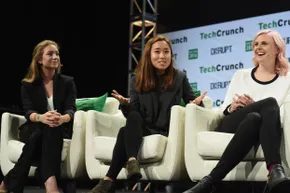
Tinder didn’t invent location-based dating. Grindr did that, launching three years before its rival. But Tinder took the concept and broadcast it. It’s massive now. Reports suggest the app boasts 9.6 million active daily users. They swipe 1.4 billion times a single day. That’s a lot of right-swiping.
People rarely stick to just one method of online dating. The market is crowded. Many newer apps try to fix the “infinite scroll” fatigue by narrowing choices. Hinge and Coffee Meets Bagel both limit matches. They pull from the friends of your Facebook friends. The goal is to filter out strangers. You get fewer options, but they have some connection to your social circle.
Happn takes a different physical approach. It highlights users who crossed your path within 800 feet in real life. JSwipe targets Jewish singles specifically. For gay and bisexual men, Grindr still has rivals. Scruff, Jack’d, Her, and Wing Ma’am all serve distinct niches within the LGBT community.
Some apps try to change the dynamic entirely. Loveflutter shows a personal fact before the photo. Personality comes first. Looks don’t blind you immediately. Bumble flips the script on initiation. Whitney Wolfe, a former Tinder executive, founded it to reduce harassment. Women must make the first move. It’s an attempt to remove the stigma of women starting the conversation.
Then there are the apps for sex, not dates. 3nder helps people find participants for threesomes. Mixxxer connects users for casual encounters within a one-mile radius. The intent is explicit.
Geography matters. Tinder dominates in the U.S., Canada, and the U.K. But the rest of the world uses different tools. Badoo rules in many South American countries. Momo is huge in China. YYC holds court in Japan.
9: Gamifying Dating

Old-school platforms like Match and eHarmony demanded legwork. You built detailed profiles. You hunted for compatible matches. It felt like data entry with emotional stakes. Tinder changed the equation entirely. It stripped away the friction. The interface is so streamlined it feels less like dating and more like playing a video game.
You set a few basic preferences. The app launches. A face appears. Swipe left to discard. Swipe right to keep. You can cycle through hundreds of profiles in minutes. A match occurs only when mutual interest clicks. Suddenly, you have chat privileges. Or you just add them to the pile. Treat them like digital collectibles.
The addiction is real. The mechanism mirrors mobile games. It hijacks the brain’s reward centers. Dopamine floods the system. Pleasure follows. Dating and sex already trigger this response. Tinder just amplifies it. The uncertainty is the hook. You do not know when the next match will land. Variable reward schedules are known to spike dopamine production. It is a psychological trap.
People delete the app to break the cycle. They reinstall it weeks later. Some users swipe for months without ever meeting anyone. They waste hours staring at screens. Productivity suffers. Real life is put on hold.
In Chicago, a group of friends turned the mechanic into a competition. They called it “The Tinder Games.” The rule was simple. See who could convince a man to buy them a pizza first. It was a social experiment gone wrong. A testament to how deeply the game-like nature has infected modern romance.
8: Easing LGBT Dating Concerns
You learn early on to treat online dating with skepticism. Check the profile. Meet in a coffee shop. Tell a friend where you are. Self-defense classes don’t hurt. But for some, the stakes are higher. Members of the lesbian, gay, bisexual, and transgender (LGBT) community face real hostility. Harassment. Violence. Just for existing.
LGBT youth are often disowned by families. This isolation creates layers of danger when looking for love. It’s not just about bad matches. It’s about survival.
Why Digital Profiles Matter for LGBTQ+ Safety
Sexual orientation and gender identity are usually built into dating app settings. This isn’t just convenience. It’s safety. It makes finding compatible partners easier and safer. OKCupid takes it further. It lets you hide your profile from straight users entirely.
For people in remote areas, these apps open up a wider pool. You aren’t stuck with who lives within walking distance. Survey data suggests around 3.5 percent of the population is gay, lesbian, or bisexual. About 0.3 percent is transgendered. That’s a lot of people. And that’s just the start. More people report same-sex attraction or activity. There are more identities than simple labels can capture.
Competitors and Binary Limits
Tinder isn’t the only game in town. Apps like Grindr, Scruff, and Jack’d target men. Her and Wing Ma’am focus on women. These platforms are built with LGBTQ+ users in mind.
But many mainstream apps lag behind. Tinder and others often force a binary male or female choice. You have to type in other identities in the bio. It’s messy. Some transgender users have reported being banned from Tinder feeds simply for existing. The company says it’s working on better options.
Filtering also varies wildly. Some apps don’t respect preferences. Users create multiple profiles just to cover their bases. It’s inefficient. It’s frustrating.
Hidden Dangers in “Safe” Spaces
Online dating allows quiet discovery. In places where being open is dangerous or illegal, this is vital. But the apps aren’t foolproof. People have been targeted for assault. Blackmail. Deportation. All because fake users identified them.
Some apps, like Scruff, include alerts for dangerous areas. It’s a small feature. But it matters. When your location can be used against you, privacy isn’t just a setting. It’s a shield.
7: Increasing Social and Political Awareness
The landscape is shifting. Awareness is growing. But the infrastructure still has cracks. You have to navigate them carefully. The tech is there. The community is there. The risk remains.
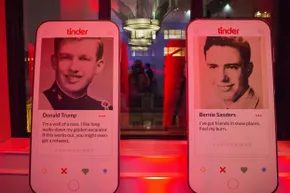
Swipe culture didn’t stay in the dating lane for long. Once the mechanic proved addictive—left for no, right for yes—developers realized it could map anything from policy preferences to party affiliation. The barrier to entry was essentially zero. You already knew how to use the interface.
By March 2016, the experiment went mainstream. Tinder noticed users campaigning for Bernie Sanders and Marco Rubio with such vigor they were getting banned. So, instead of fighting it, they partnered with Rock the Vote. The result was “Swipe the Vote.” A ten-question survey. Users swiped on issues. The algorithm matched them to the presidential candidate whose record aligned best. It turned political alignment into a quick, gamified sort.
The same logic crossed the Atlantic. Before the June 23, 2016 Brexit referendum, Tinder teamed up with the British nonprofit Bite the Ballot. The poll asked true or false questions about the EU and Britain’s relationship with it. The stakes were higher. The UK voted to leave by 52 percent to 48 percent. The vote became known globally as Brexit. Yet, among voters aged 18 to 24, 73 percent chose to remain. Age and digital native status clearly predicted the outcome.
This wasn’t an isolated incident. The Voter app, launched in 2015, operated on similar principles. Eight questions. Swipe left or right. It returned your closest matching political party and candidate. Users could dig deeper for precision. Enter your address, and you’d see local candidate matches. The data backbone was robust—public stances, speeches, voting records, endorsements, funding sources. Every app in this space included a voter registration link. Frictionless civic engagement.
Public health groups also hijacked the swipe mechanic. It usually violated terms of service. During Men’s Health Awareness Month in 2014, a Tumblr group created a fake “Nurse Nicole” account on Tinder. The goal: encourage men to get prostate exams and other health checks. The Marin AIDS Project in California did the same on Grindr. Fake accounts designed to drive HIV testing. A risky, creative workaround for hard-to-reach demographics.
Then there were the social experiments. Blogger Cristiana Wilcoxon, tired of vulgar come-ons, set up an account for a sexy-talking female cheeseburger named Patty. The responses ranged from funny to disturbingly explicit. Writer Joe Veix created an account for a golden retriever named Hero. Hero responded in barks. When listed as male, he got jokey and annoyed replies. Switch Hero to female, and the matches increased. So did the verbal harassment. The sexual language didn’t vanish. It intensified. The platform’s design amplified existing human behaviors, whether political, medical, or predatory.
6: Moving Us Further From the Desktop
The mobile shift wasn’t just about convenience. It was about context.

Mobile devices had already claimed the majority of digital attention by mid-2014. comScore data showed U.S. users spending 60% of their online time on phones rather than desktops. Half of that mobile engagement happened inside apps. We weren’t just checking email. We were reading books, playing games, ordering dinner, and calling rides. The smartphone became the central hub of daily life.
Dating wasn’t left behind.
Origins in the Skunkworks
Tinder didn’t stumble into existence. It was engineered.
Hatch Labs operated as a research and development arm for InterActiveCorp. The parent company owned giants like Match.com and OkCupid. The goal was simple: build innovative apps outside the usual corporate constraints.
Sean Rad and Joe Munoz met during an internal hackathon at Hatch Labs. They built a prototype called Matchbox. The concept was straightforward. Swipe right if you’re interested. Swipe left if you’re not.
The app launched quietly in Los Angeles. Beta testers were drawn from popular parties and college campuses. Word spread fast. It wasn’t just an app. It was a cultural event.
There was never a desktop version of Tinder. That wasn’t a mistake. It was a statement.
No Desktop Required
Tinder proved a smartphone app doesn’t need a web counterpart to succeed. You can browse dating sites on a phone. You can browse anything. But Tinder leaned all the way into the mobile experience.
Other dating platforms noticed. Many released their own apps. They had to. User expectations changed. If you wanted to reach the 60% of time spent on mobile, you needed to be in an app.
The playing field leveled. Smaller startups could compete with legacy sites. All it took was a simple interface and a willingness to live in people’s pockets.
This shift didn’t just change how we date. It changed how we interact with technology. We stopped waiting for computers to connect us. We used the devices already in our hands. The rest is history.
Or is it? The swipe mechanic became so dominant that it influenced more than just dating. It shaped how we consume news, shop for clothes, and even hire employees. But that’s a different conversation.
The shift in initiation dynamics
Old-school dating relied on men making the first move. It was the script. But online dating apps flipped that script by requiring mutual consent before a conversation even starts. You have to swipe right. Both parties have to say yes. This simple mechanic gives women agency in a way that bars and clubs never could.
Does this change the power dynamic? Yes.
Apps like Bumble force women to send the first message in heterosexual matches. Hinge and Coffee Meets Bagel try to curb harassment by matching people within shared social circles. The goal is to reduce the noise. The unsolicited graphic messages that women endure on the open internet are largely filtered out by these structures. It’s not perfect. Harassment still happens. But the friction to be creepy just went up.
A lifeline for the socially anxious
Traditional meeting spots favor the extroverted. The loud. The confident. Shy people and those with social anxiety are at a disadvantage. Bars are high-pressure environments. You have to perform in real-time.
Online dating removes that immediate pressure. Crafting a text profile or a message allows for editing. It allows for thought. Getting a “like” provides a small dopamine hit. It validates your worth before you’ve even spoken a word. For many, striking up a digital conversation is far less terrifying than staring at a stranger across a table.
Data backs this up. An OkCupid study showed that while straight men initiated contact far more often, the women who broke the mold and started the chat had better outcomes. They were 2.5 times more likely to get a response. The men they matched with were also rated as more desirable on average. Traditional gender expectations were actually working against women. When they stepped out of line, they did better.
Crowdsourced flirtation
Tinder and similar platforms have changed how people flirt. Texting is now a skill. And not everyone is good at it.
So, users get help. They screenshot their matches’ profiles or their own bios. They send them to friends. They ask for advice on how to respond. You can’t do this face-to-face. You can’t pause a bar conversation and poll your buddy group for three minutes.
Does this fake charm work? Sometimes. It doesn’t always translate to good in-person chemistry. The text game can be misleading. A witty DM doesn’t guarantee a great date. But it does break the ice. It filters out the incompatible. It’s a testing ground.
Impacting bar and restaurant revenue
The shift to digital initiation has real-world economic consequences. If fewer people are meeting in bars, then bars lose that initial foot traffic. The “third place” function of socializing is moving online.
This isn’t just about loneliness. It’s about where money changes hands. If the first interaction happens on a phone, the subsequent date might happen in a living room. Or a park. Or a movie theater. The traditional “dinner and a drink” model faces competition from lower-cost, lower-friction dates.
Venues that rely on the hope of a pickup are seeing their audience migrate. Apps don’t just change who talks to whom. They change where people spend their evenings. The revenue models of nightlife industries are adjusting to a world where connection starts with a swipe, not a tab.
The question remains: does this convenience come at the cost of spontaneity? Probably. But the efficiency is undeniable. And efficiency, in dating as in tech, usually wins.

Anecdotal reports suggest a clear shift in hospitality metrics. Bars and restaurants are seeing traffic changes. The cause? Dating apps like Tinder are driving up first dates. Venues are adjusting their strategies to cope.
Industry insiders note a spike in foot traffic. It happens during off-peak hours. This sounds like free money. It isn’t. New trends are actually hurting revenue per seat.
Staff report specific behaviors. People take seats. They wait. They don’t order. Some ditch their dates early. Others leave upon seeing them. Long, awkward conversations dominate these sessions. The dates are casual. They are longer. They are cheaper.
Couples order less. Sometimes just drinks. Fewer drinks.
Match.com data from 2015 offers insight here. Two and a half hours is the peak length. It makes a second date likely. This is good for romantics. It is bad for venue turnover. Occupied seats mean empty wallets.
Establishments are physically changing. They are adding two-person tables. Four-tops are being avoided. Couches are being replaced. Chairs are arranged for couples. The goal is simple. Accommodate more first dates efficiently.
It isn’t all negative. Some venues help their patrons. A bar in England posted signs. The heading read “Tinder Date Gone Wrong?”. It was in the women’s bathroom. Then the men’s. It instructed patrons on how to signal staff. They needed rescue. They had a bad situation.
3: Facilitating Hookups
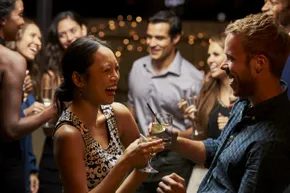
The stigma sticks hard. Tinder is widely branded as the go-to app for casual encounters, a label the company actively fights. This tension was obvious in 2015, when a Vanity Fair piece titled “Tinder and the Dawn of the ‘Dating Apocalypse'” sparked a backlash. The article popularized terms like “Tinder Kings” and “Tinderellas,” painting a picture of men collecting partners and women feeling ignored by those who only wanted one-night stands.
The app’s interface fuels this narrative. You get swipes on profiles with minimal context. Sifting through hundreds of matches to find someone with matching relationship goals feels exhausting. Yet, the data tells a messier story.
“80 percent of users were looking for something more than a hookup.”
Internal surveys suggest most users aren’t just hunting for flings. Anecdotes of serious marriages and long-term partnerships exist, even if they don’t trend on Twitter. The app is a tool. It adapts to whatever users bring to it. And users want wildly different things.
Why People Swipe
Research from 2014 offers a clearer picture of motivation. Dutch researchers surveyed users aged 18 to 30 and found six distinct reasons for signing up:
- Looking for love
- Seeking casual sex
- Meeting social needs
- Validating self-worth
- Seeking excitement/thrill
- Following peer trends
Love and casual sex were the top drivers, but demographics shifted the needle. Men leaned toward casual sex more often than women. Older users, regardless of gender, cited both love and sex more frequently than their younger counterparts.
This complicates the “hookup culture” narrative. Despite the perception that young people are having more sex, evidence suggests otherwise. Studies comparing General Social Survey data show Millennials have slightly fewer sexual partners than the Baby Boomers. These trends held steady even as Tinder launched.
The Geography of Dating
Location plays a massive, underreported role in dating outcomes. Jon Birger, an author who studies dating markets, points to a direct correlation between college graduation ratios and relationship stability. Women are graduating from college at higher rates than men.
People generally date within their education level. In regions where men outnumber women, the dating pool is tighter. Silicon Valley serves as a prime example. With fewer female graduates than male ones, young women in the 22-29 age group see a 33 percent marriage rate.
Contrast this with Manhattan. The reverse ratio exists here. More women than men graduate. The result? A mere 13 percent marriage rate for the same demographic. The imbalance changes the math. More women in the pool often leads to fewer relationships overall, even if sexual activity remains steady.
2: Enabling Cheating
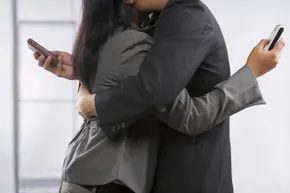
The ease of access creates new opportunities for infidelity. It’s not just about finding a partner; it’s about hiding one. The app’s discrete nature allows users to maintain active profiles while in committed relationships. Verification is sparse. Matches happen quickly. And the barrier to entry for deception is lower than ever.
The Myth of the Single User
The narrative that Tinder is purely a marketplace for lonely singles to find romance is crumbling under scrutiny. There is a persistent speculation that the app serves as a digital hunting ground for those already in relationships. This wasn’t just gossip. In the first quarter of 2015, research firm GlobalWebIndex crunched survey data and came to a startling conclusion: 42 percent of Tinder users were not single.
Tinder disputed this figure. They argued the methodology was flawed or that users were misreporting their status. But the numbers stuck in the public consciousness. Why? Because it felt true. It aligned with the darker corners of human behavior.
Beyond the Hookup
Non-single users aren’t always looking to steal a lover. Sometimes, they are looking for a party. Reports emerged of couples using the app not to cheat, but to facilitate threesomes. They swiped alongside their partners or even with single friends. The motivation wasn’t deception. It was inclusion. Or curiosity. Or just the game.
This dynamic birthed niche competitors. Apps like 3nder were created specifically to cater to couples seeking third parties. Tinder, by accident or design, became a hub for this activity too. The barrier to entry is low. The audience is massive.
The Cheating Statistics
Let’s be clear. People cheat. Always have. YouGov data from 2015 confirms this reality. 21 percent of men admitted to infidelity. 19 percent of women did the same. 7 percent just refused to answer. The silence there is telling.
Research by Cohen, McKinnish, and South suggests a psychological trigger. When people are presented with an abundance of potential mating partners, the perceived value of their current commitment drops. They become more likely to divorce. Or to cheat. Tinder amplifies this choice overload. It offers a seemingly endless stream of faces.
For non-single users, this is a tool. A convenient one. Whether they are seeking love, sex, or both, the app lowers the friction for finding a partner who is also looking. The number of cheating users might be small compared to the total user base. But even a small percentage of 75 million users is a significant number.
The Darker Side of Swiping
Tinder is not just a dating app. It is a platform. And platforms attract all types of users. Sex workers have used the app to find clients. This has been reported consistently since the early days. But the landscape is murky. Many accounts that appear to be sex workers are actually scams. Fake profiles designed to extract money or data.
Tinder’s terms of service strictly prohibit illegal activity. prostitution is banned. Harassment is banned. But enforcement is reactive. It relies on reporting and manual review. Technology helps facilitate these interactions. It also helps hide them.
Changing the Nature of Dating
The core function of Tinder is location-based matching. But its impact has shifted the entire ecosystem of courtship. It is no longer about who you know. It is about who is nearby.
This shift has consequences. It changes how we view commitment. It changes how we view availability. When every person in a five-mile radius is potentially available with a swipe, the concept of “exclusive” dating becomes complicated.
The app does not create these behaviors. It exposes them. It acceler

The Swipe Economy and the Psychology of Modern Dating
Online dating isn’t just a niche hobby anymore. It’s the default setting for finding romance among younger demographics. Pew Research Center data from mid-2015 paints a stark picture of this shift. By then, 15 percent of all adults had tried an online dating method. Nearly a third, or 29 percent, knew someone who had found a long-term partner through these platforms.
The numbers are even steeper for the 18 to 24 age group. In that bracket, 27 percent had used online dating. 34 percent knew someone who made it work. The velocity of this change is what’s really startling. Since early 2013, overall usage of dating apps tripled, jumping from 3 percent to 9 percent. For young adults, the increase was even more aggressive. Usage spiked from 5 percent to 22 percent in just a few years.
This isn’t just about efficiency. It’s about changing the fundamental mechanics of attraction. Apps like Tinder alter the pool of potential mates for anyone holding a smartphone. They remove a significant layer of guesswork from the initial pursuit.
Consider the signal-to-noise ratio. If you approach someone in a bar or on the street, you have no idea if they are open to conversation. They might be on a date. They might be hiding. On a dating app, the intent is explicit. Seeing someone there means they are actively looking. Mutual selection removes the first major hurdle: the awkward opening move. You don’t need to ask about their zodiac sign or their college major. The interest is already confirmed.
This shift has also changed what a “date” looks like. The traditional dinner-and-a-movie date is being replaced by something cheaper and lower-stakes. People are meeting for drinks. The goal is to test chemistry quickly without committing to a full evening of expense. App users frequently cite cost savings as a benefit. Chating via an app is free. It’s cheaper than buying rounds in a club or paying for cover charge entry.
But there is a psychological tax for this convenience.
Any technology that becomes ubiquitous eventually raises health concerns. With dating apps, the fear is that the sheer volume of choices paralyzes commitment. If there’s always someone one swipe away who seems slightly better, why invest in the person in front of you? The “grass is greener” syndrome gets a digital turbocharge.
There’s also the issue of validation. Social media taught us to equate likes with worth. Dating apps extend that logic to romantic desirability. If you rely on matches for self-esteem, a dry spell can trigger genuine anxiety. The external validation becomes a crutch. When it stops coming, the user feels a drop in status that has nothing to do with their actual character.
Then there’s the objectification. To succeed on these platforms, users must sell themselves. You are reduced to a static image. A headline. A few keywords. Judging someone’s looks is natural. It’s how humans have always operated. But this process accelerates judgment to a speed that bypasses personality entirely. Rejection becomes rapid. It becomes impersonal. It’s a metric, not a rejection.
Despite the fears, the data doesn’t yet show widespread psychological damage. We don’t have long-term studies proving that Tinder breaks hearts more than meeting at a bowling alley did in 1995. The jury is still out. Is this the end of relationships as we know them? Or is it just another tool? We’re still learning how to wield it.