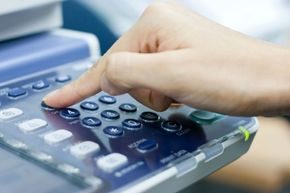
The office used to smell like burnt coffee and ozone. You could walk into any corporate floor in the early 2000s and smell that distinct, acrid heat coming from the laser printer in the corner. It was the soundtrack of business. Whirrrrrr-click. Whirrrrrr-click.
That sound is fading.
The smell isn’t gone from every room, but the printer itself is disappearing. We’ve moved past the era where hard copies were the only way to share information. In the past, you had three choices: dump a file on a shared network drive, wait for a dial-up modem to scream at you, or print it out and physically walk it to someone’s desk. Or mail it. If you had a good relationship with the postal service.
Now, the document lives in the cloud. It lives on your phone. It lives everywhere you have signal.
The numbers back this up. In 2005, the average office worker printed about 1,000 pages a month. By 2012, that number was cut nearly in half.
Who is still buying printers?
It’s not a total collapse, but the landscape has shifted. Home printing isn’t dead, but it’s shrinking. Older consumers, specifically those over 50, still print a decent amount of paper. For them, the transition to small screens is difficult. Reading fine text on a smartphone is a chore. They need the physical page.
Then you have Gen Z and Millennials. They rarely print unless forced to. If it can be viewed on a screen, they view it on a screen. This generational divide is a huge factor in the decline of traditional printer sales.
Forests are safer because of glowing screens, but they aren’t fully out of danger. The U.S. still prints billions of pages annually. In emerging markets where infrastructure is still catching up, printer sales are actually climbing. But in advanced economies? The market is flatlining.
The peak for home inkjet printers in America might have been 2010. Manufacturers shipped roughly 16 million units that year. Projections for 2016 were fewer than 10 million. That’s a massive drop in just six years.
The shift to consumer photo printing
While business printing is dying, retail printing is exploding. We are uploading photos from our smartphones to online services that mail them to our houses. But it’s not just photos. It’s personalized calendars. Drink coasters. Magnets. T-shirts.
We can’t make these things at home. We don’t have the equipment, and we certainly don’t have the supply chain to do it at a competitive price. So we outsource it.
But the mundane stuff? The clip-art laden presentations for binders? The quarterly reports printed for the board meeting? That’s disappearing. Fast.
Better, Faster, Obsolete?
We got better printers. They are faster. They are cheaper to operate per page. But they are becoming obsolete not because they failed, but because we stopped needing them. The tool didn’t break. The workflow just evolved past it.
Where does that leave the hardware? If you’re still buying a printer in 2016, you’re likely buying one for a specific niche use case. Or you’re just stubborn.
Inkjets remain the dominant home printer type worldwide. Monochrome laser printers are in decline as color models drop in price. The economics of printing have flipped. It used to be about the hardware cost. Now it’s about convenience. And convenience doesn’t always come with a paper tray.
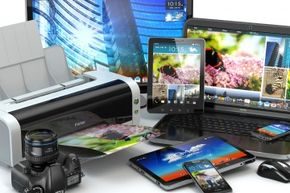
We are living in a paradox. Printers are technically better than ever. They are faster. They are cheaper to buy. Yet sales are flatlining in many markets. The blame game points squarely at better imaging apps, the internet, and our portable screens. We’ve stopped needing paper for the same reasons we stopped carrying physical maps.
Paper is heavy. It crumbles. It gets creased. It gets forgotten in a drawer. Digital storage? You can pull a document off your e-mail or a cloud app like DropBox in seconds. You just need a data connection. The barrier to entry is gone.
Think about photos. Who prints these days? Social media is the new refrigerator door. It holds more memories than a thousand glossy prints. You can scroll through years of images with a thumb flick. Every photo is tagged by date and album. Retrieval is instant. There is almost no logical reason to print them anymore. The convenience is undeniable.
But here is the catch. We will always need printers.
Digital files are just bits and bytes on a screen. They require power. They require battery life. They cause eye strain. Paper does not. You can read a hard-copy document on a long flight without worrying about finding an outlet. You can smell the paper. You can touch it. You can scribble notes with a ballpoint pen. It feels real in a way a screen never will.
This is why the multi-function printer (MFP) is the only device worth buying today.
Dedicated single-purpose printers are dying. The future is the MFP. It scans. It faxes. It prints. It is an imaging station at your desk. You create a hard copy for the tactile experience. You scan a digital copy for the cloud. You get both worlds.
The hybrid approach solves the friction. You can put ink and toner to paper for a permanent, touchable record. You can also send a PDF to your phone for easy retrieval. This blend of convenience means you have options for every file type. No matter how digital your workflow becomes, the option to print remains critical.
The market is shifting from volume to utility. We aren’t printing more. We are printing smarter. The MFP bridges the gap between the analog past and the digital future. It acknowledges that while we live online, we still need physical proof.
So don’t buy a basic printer. Buy the machine that does everything. It’s not about going back. It’s about having a choice. And that choice keeps the industry alive even when sales stagnate.
The role of scanning in the modern workflow
Scanning isn’t just a legacy feature. It’s the gateway to digital archiving. When you buy an MFP, you aren’t just getting a paper maker. You are getting a digitizer. This allows you to take physical documents and make them portable. You can scan a contract and email it instantly. You can scan a receipt and store it in a cloud folder.
This is where the multi-function printer (MFP) earns its keep. It transforms paper into data. It bridges the gap between physical ink and digital bytes. Without scanning, a printer is just a one-way street. With scanning, it is a loop.
Why touchscreens won’t replace paper
Screens are brilliant. They are bright and high-resolution. But they lack permanence. A PDF on a phone can be lost in a folder hierarchy. A printed document sits on your desk. It is visible. It is tactile. You can hand it to someone and watch them read it. You can sign it with a pen. You can file it away