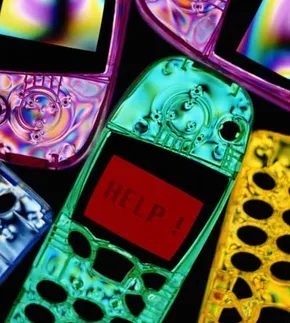
Shannon Haight thought she was just pulling into her office parking lot in Oklahoma when the world tilted sideways. It was early fall. A stranger approached, asking for directions. That was the last thing she remembered seeing clearly before he shoved her into his trunk and drove off. The man was wanted in another state for rape and kidnapping. He had her trapped in the dark, metal box.
But he made one mistake.
Haight didn’t panic. She reached into her purse and found a weapon. Not a gun. Not a knife. A cell phone.
Her fingers didn’t shake as she dialed her boyfriend. He heard the struggle. He heard her fear. He called 911. Less than an hour later, she was out of the trunk and the criminal was being booked.
This isn’t just a lucky break. It’s a pattern emerging across the globe. Wireless technology has stopped being a convenience. It is now a frontline tool in the war against crime. People with camera phones can capture evidence in real-time. Texting allows witnesses to stay hidden while still talking to authorities. The line between bystander and informant is blurring because the tools to bridge it are always in our pockets.
The Digital Patrol Car
The impact extends far beyond the average citizen’s smartphone. Police departments from Dallas to Denmark are rewriting the rules of engagement using wireless surveillance, GPS, and in-car computing.
In the past, an officer’s day was eaten by paperwork. Hours spent typing reports at the station meant less time on the street. Today, those same officers can draft detailed reports directly from their patrol cars. A study by a major wireless network provider claimed that a single officer equipped with a highly connected network produces the equivalent output of five officers working without one.
Why? Because data moves at the speed of light.
Officers use pocket-sized PDAs to verify IDs instantly. When a traffic stop happens, the officer types in a license number or scans a photo. Within minutes, the device confirms identity and flags any outstanding warrants. Before this connectivity existed, officers often had to wait days for central processing. In some cases, they had to release suspects who should have been held because the system was too slow to catch them.
“One study determined that a policeman assisted by a highly connected network equals the output of five police officers without one.”
This isn’t about making cops lazy. It’s about making them effective. Every minute saved on logistics is a minute spent preventing the next crime.
The Holy Grail: Live Fingerprints
There is one technology that many officers dream about but rarely touch. It is called a live-fingerprint unit.
Current forensic methods require lifting a print, sending it to a lab, and waiting days for results. A live unit changes the physics of the arrest. It scans a suspect’s fingerprint electronically, sends the data to the criminal database, and returns a match immediately.
Imagine pulling over a driver. Instead of taking them to the station and waiting for paperwork to clear, you get the result right there in the driveway. No guesswork. No delays. Just data.
We are entering an era where the physical evidence is digitized the moment it is touched. But how does this change the average user’s relationship with safety? And what happens when the cameras are watching everyone, not just the criminals?

You’ve probably taken a dozen selfies this week. Maybe you’ve documented dinner or tagged a friend in a bad haircut. But those 741 million phones globally with cameras are doing heavy lifting beyond social media validation. They are active tools in law enforcement.
Consider London. The 2005 terrorist attacks were partially unraveled because police analyzed cell phone images taken by witnesses. Further north, a man attempting to abduct four teenage girls was caught a month later. Why? The girls remembered his face and snapped a photo of his license plate. That image became the key to his arrest.
Real-Time Evidence for Dispatchers
The workflow has evolved. It’s no longer just about sending a photo to the police station days later. In cities like New York, amateur sleuths can now transmit digital video of crimes in progress directly to 911 call centers.
This isn’t just a file attachment. New technology embeds these images directly into the call record. Once recorded, the footage is forwarded to emergency crews en route to the scene.
Linking images to a specific call number makes retrieval trivial for investigators later.
This creates a continuous chain of evidence. Dispatchers see what first responders see. It reduces the lag time between incident and awareness.
The Wireless Camera Advantage
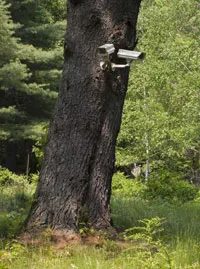
Cell phones are part of a broader ecosystem. They work alongside wireless surveillance cameras. Wired cameras have limitations. They require physical infrastructure. Wireless units can be planted anywhere.
They go in remote areas where digging trenches for cables is impossible. They mount on patrol cars. They cost significantly less than wired equivalents. Most importantly, they are movable. Police can reposition them to follow crime hotspots that shift over time.
In Dallas, officers use motorized wireless cameras. From a remote command center, they can pan and zoom. They look for details a static lens might miss. In Baltimore, live feeds allow officers to monitor for suspicious activity in real time. Several violent offenders have been caught in the act because the feed was being watched.
Los Angeles saw a 32 percent drop in crime after installing these wireless systems. The logic is straightforward. Surveillance deters crime. It monitors behavior. It captures license plates. It collects admissible evidence.
GPS and Location Tracking
Global Positioning Systems (GPS ) are standard in police vehicles now. They do more than just help officers navigate.
They optimize response times. Dispatchers can see which unit is closest to an emergency. They can tell a panicked caller exactly how far away help is. This transparency reduces anxiety.
If an officer is in trouble and cannot radio back, the GPS broadcasts their position. It tracks speed and location. This safety net is critical for officers working alone or in high-risk environments.
Tracking Individuals with RFID
Radio-frequency identification (RFID) tags are another layer. These wireless tags monitor parolees and individuals under house arrest.
Martha Stewart has used similar technology. For law enforcement, the tags relay signals about a subject’s whereabouts. If the subject enters a restricted zone, the system notifies police immediately. It creates a digital perimeter without the need for constant physical surveillance.
The Next Step in Wireless Evidence
If you lack a camera, your phone still has utility. Text messaging plays a role in investigations. How exactly does texting assist in solving crimes? That involves a different set of technical and procedural considerations.
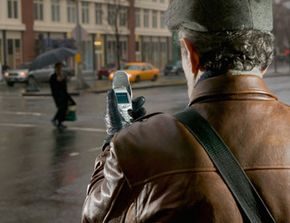

发短信已从年轻一代的休闲习惯演变为严肃的执法工具。 全球警察部门正在转向基于短信的举报热线,因为他们认识到,当人们不必被迫直接拨打语音电话时,他们会感到更安全,也更愿意分享信息。 这种方法提供了隐蔽性,这在绑架或入室盗窃等高风险情况下至关重要。 它绕过了电话中的个人对抗,允许证人保持匿名,同时仍然提供可操作的数据。
匿名举报系统与全球推广
Boston pioneered the direct approach with its “短信举报” program. Residents send a message containing the word “TIP” to a designated hotline. The system automatically answers a series of questions that prompt the user to provide information about the event. To protect senders, caller IDs and message numbers are encrypted and blocked, ensuring complete anonymity.
This model is attracting 国际关注. In China, dozens of cities have implemented a similar crime reporting infrastructure. In 2005, authorities tracked down 一名被绑架者及其两名绑匪 with considerable success. The breakthrough didn’t come from a complex digital footprint, but from a simple text message the victim managed to send saying 他被绑架了.
In 2007, the Netherlands approached the issue from a different angle. Instead of waiting for tips, the police took the initiative. 主动发起联系. After the boat was stolen, the law enforcement authorities sent a text message to the residents of the 受影响区域. A local woman noticed the stolen boat and immediately responded to the alarm, helping the police quickly find the boat and the thief.
积极威慑策略
警方并不总是使用短信作为被动收集方法。 在阿姆斯特丹,警察通过使用“短信炸弹”来打击手机盗窃。 当手机被盗时,警方会向该设备发送重复的消息:“这部手机已被盗。请将其带回给警察。” 这是一种心理策略。 谁愿意携带一个不断提醒他们拥有非法物品的设备? 它具有强大的威慑作用,有效地将被盗物品变成小偷的责任。
紧急警报与AMBER警报
In the United States, many residents 选择加入 emergency alarm systems. These platforms notify users of nearby criminal activity, missing persons and 逃犯 on their mobile phones. A critical part of the network is AMBER (美国失踪儿童广播应急响应) alerts. This system is designed to quickly find child abductors.
加入这些服务 usually requires a small fee per message, depending on your carrier and 当地设置. The Netherlands is experimenting with a state-funded alternative that removes the cost barrier entirely and remains free for users. If 手机能救命, it makes sense to keep them connected to these networks.
信号跟踪的局限性
依赖数字轨迹并不总是成功的保证。 美国军方在 2001 年付出了惨痛代价。军队试图通过追踪奥萨马·本·拉登的卫星电话信号来抓捕他。 他们逼近了这个位置,希望能找到目标。 相反,他们找到了他的保镖。 本·拉登很可能检测到了跟踪并放弃了手机以转移注意力。
尽管失败了,各机构仍在继续监控手机通话和电子邮件,以寻找恐怖活动的迹象。 技术已经发生了变化,但对它的依赖只会加深。 这是一场持续不断的猫鼠游戏,每条短信都带有潜在证据或欺骗的分量。