Static is the enemy of commuting. You know the drill. Set a preset station on the highway and enjoy the music until you reach the dead zone. The signal is blocked. The sound is distorted. You suffer from white noise and want something consistent. Most traditional AM/FM broadcasts can only reach about 30-40 miles from their source. When you drive across state lines, you’re playing a guessing game with the dial.
Now imagine driving from Tacoma, Washington to Washington, D.C. without touching the radio knob. The signal remains locked. The sound is sharp and clear. There are few or no ads. This is the promise of satellite radio (also known as digital radio ). It beams music and talk shows from space, providing perfectly clear, near-CD-quality sound at distances of more than 22,000 miles.
Things don’t always go smoothly. This technology took more than a decade to mature. In 1992, the Federal Communications Commission (FCC) reserved the “S” band (2.3 GHz) for national Digital Audio Radio Service (DARS) broadcasts. Only four companies applied for business licenses. By 1997, the FCC had chosen two winners: CD Radio (later Sirius) and American Mobile Radio (later XM). Each paid more than $80 million for the rights to the space.
The big merger of 2007
Although technology is developing by leaps and bounds, business is still struggling. Both companies have large debts. In February 2007, the companies announced plans to merge into a single entity. The logic is simple. Together, we can lower costs and offer more programming options at a lower price.
Skeptics objected. Critics warn about monopolies. They argue that eliminating competition will only raise prices and stifle consumer innovation. The US Department of Justice agreed, but the Federal Communications Commission (FCC) was reluctant to act. It wasn’t until July 2008 that the FCC reluctantly approved the merger. The new giant was named SiriusXM Radio.
Today, the service has a loyal following. Sirius XM has more than 18 million subscribers. Internal receivers can be found in the dashboards of many vehicle models and in portable devices sold by various electronics manufacturers. But how does it work in practice? Why is it different from the radio you listened to as a child?
How Satellite Radio Works
衛星放送はケーブルテレビの放送と考えてください。 ケーブル TV が数少ない地元局ではなく数百のチャンネルを提供しているのと同じように、衛星ラジオも考えられるあらゆるジャンルの数百の放送局を提供しています。 地元のニュースや交通情報は同じようには得られませんが、音楽はノンストップで流れます。
このシステムは、次の 3 つの主要なコンポーネントに依存しています。
- 衛星 : 地球を周回して信号を受信機に中継します。
- 地上リピータ : これらのリピータは、建物が空の視界を遮る可能性がある都市部で信号を増強できます。
- 無線受信機 : 信号をデコードするために使用される自動車またはポータブル デバイスのハードウェア。
現在、2 つの主要な宇宙放送局が独占しています。
- シリウス XM ラジオ
- 1 ワールドスペース
これらのシステムには類似点がありますが、各社は独自のテクノロジー計画を持っています。 XMとシリウスのサービスは1つのブランドに統合され、現在も別々のチャンネルラインナップとして運営されています。 これらのチャンネルのいずれかに登録すると、追加料金を支払って他のチャンネルの「ベスト」チャンネルにアクセスできます。 両方のサービスへのアクセスを含むフル パッケージの現在の価格は、月額 16.99 ドルです。
しかし、XM の詳細に入る前に、この変化がなぜそれほど重要なのかを理解しましょう。 従来の放送は地理的な制限があります。 衛星ラジオは無視します。 これにより、外出先でのコンテンツの消費方法が変わります。
XM Radio
XM Radio is a pioneer in this field. It offers more than 100 channels from the start. After the merger, the XM brand will remain and retain its unique channel lineup. For subscribers, this means access to a library of specific content that defines their viewing experience.
The device ecosystem is expanding rapidly. Automakers have begun to integrate receivers as standard or optional features. Portable devices allow listeners to take the experience outside the car, home or office. This versatility helped it maintain its user base even during the financial crisis of the late 2000s.
This technology uses high-altitude satellites to beam signals to low-gain antennas. This setting reduces distractions. In urban canyons, FM signals bounce off tall buildings and disappear, but satellite signals are usually stable. trade? You pay a monthly fee. You don’t get it for free. But for many, the silence is worth it.
What is the next step in this development? How do different systems differ in terms of quality and coverage? The following sections discuss specific technical differences. But for now the radio is clear. The signal is strong. And you’re still driving.

Although the XM and Sirius integration is technically perfect, if you drive a car with an XM radio, you still won’t get the full Sirius experience. The two networks are not yet fully integrated. Corporate bureaucracy is not the only reason for delays. It’s hardware.
XM operates in a different orbit than Sirius. To understand why, we have to look at the satellite itself.
Rock track
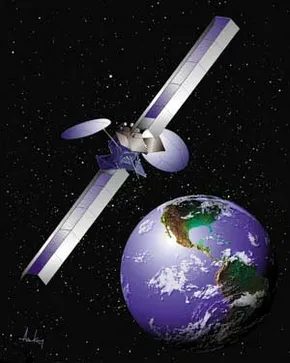
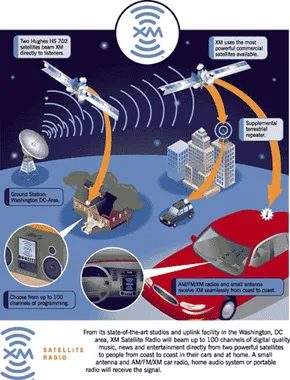
XM relies on four Boeing HS 702 satellites. They have people’s names. “Rock” and “roll” were the original combination. Later “rhythm” and “blues” replaced them. These satellites are in geostationary orbit (GEO).
GEO is about 32,223 miles above sea level. That’s 35,764 kilometers. This is the standard orbit for communications satellites. It holds the bird in place against the ground.
XM placed both satellites at 85 degrees west longitude. The other two are 115 degrees west longitude. This geometry spans the entire continent.
“Rock” was released on March 18, 2001, and “Roll” on May 8 of the same year. It should last for several years. it is not.
ソーラーパネルの欠陥
HS 702 モデルには設計上の欠陥があります。 太陽光パネルが効率的に機能していません。 出力電力が低下します。 衛星は信号強度の要求に追いつくことができません。
XM はバックアップが必要であることを認識していました。 より強力なパネルが必要です。 より優れた信頼性が必要です。
「リズム」は 2005 年 2 月 28 日にリリースされました。 「ブルース」は 2006 年 10 月 30 日にリリースされました。 これらの代替品は、負荷に対処できるように設計されています。 彼らは太陽電池アレイを改良しました。 彼らは冗長システムを持っています。
「リズム」と「ブルース」がヒットしたとき、XM は保守派を打ち砕きました。 「ロック」と「ロール」は沈黙していた。 彼らは空から落ちてきたわけではありません。 彼らは軌道上に留まります。 新しい衛星が故障した場合のバックアップとして機能します。 それは暗闇に浮かぶセーフティネットです。
From space to dashboard
The signal path is simple. US ground stations transmit data to active GEO satellites. The satellite reflects it back.
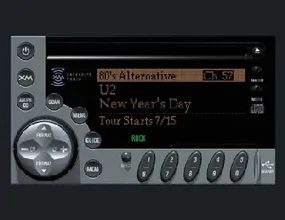
The car radio receives the signal. It is a stream of digital data. The radio translated it. There are more than 170 audio channels inside.
But it’s not just the sound. Metadata is sent with the sound. Song name. artist. to school. The dashboard shows updates in real time. You can know what will be played before the chorus starts.
城市盲点
视距信号存在问题。 高楼挡住了他们。 城市创造阴影。 在市中心地区,卫星信号可能会消失。
XM 通过地面中继器解决了这个问题。 地面发射机填补了这一空白。 他们从卫星离开的地方开始。 即使在密集的城市峡谷中,您也可以获得持续的覆盖范围。
天狼星使用不同的轨道设置。 他们的卫星处于更高的椭圆轨道上。 物理原理不同。 硬件不兼容。 这就是集成陷入困境的原因。 你不能简单地交换芯片并期望信号合并。 还没有。

The hardware wars started long before subscription fees. XM put the custom chipset into the hands of manufacturers in October 2000. These are not off-the-shelf components. These are proprietary dual integrated circuits designed by STMicroelectronics. This unique approach has enabled XM to secure partners such as Pioneer, Alpine, Clarion, Delphi, Sony and Motorola. They made the radio. These antennas are small (about the size of a car phone), but powerful enough to pick up signals from space.
Money moves fast. General Motors invested about $100 million in XM. Honda also signed an agreement to install XM radios in its vehicles. By early 2001, select GM models will be equipped with the XM. It’s not just the reception. It’s all about distribution.
XM subscription model
The barrier to entry for listeners is $12.95 per month. You get access to more than 170 channels for this price. Music, speeches, news, anything goes. The deal also includes XM Radio Online, a streaming service with more than 80 channels. Advertisers also need to do well. No channel had more than 7 minutes of commercials per hour, and many channels had no commercial breaks.
The contents are shocking. XM partners with USA Today, BBC, CNN, Sports Illustrated and The Weather Channel. In addition to these third-party feeds, XM has also built its own music channels to fill its schedule.
Sirius Radio
Sirius took a different path to the sky. Instead of a geostationary orbit, they used three SS/L-1300 satellites in a tilted elliptical constellation. Logic is simple geometry. In an elliptical orbit, each satellite flies over the continental United States for about 16 hours a day. There is always at least one satellite above. They completed the first three-satellite loop on November 30, 2000. The fourth satellite is placed on the ground as a backup satellite, ready to be launched if one of the active satellites fails.
By 2006, the strategy had changed. Sirius acquired a geostationary satellite (GEO). What is the reason? Superior signal transmission. This new GEO device is designed to complement the elliptical fleet, rather than replace it. According to this report, the project is still in progress.
Ground games are similar to XM. The satellite sends the program down and the receiver locks onto the channel. However, satellite signals can get stuck in urban canyons. That’s why Sirius uses terrestrial repeaters in dense areas to improve signal transmission.
How Sirius hardware works
The price is the same as XM, $12.95 per month. Sirius doesn’t just sell radio heads. The company manufactures car equipment, home entertainment systems and portable sets.
The receiver is divided into two different parts. The first is the antenna module. It takes the signal from a satellite or repeater and amplifies it to remove noise. Then transmit a clean signal to the receiving module. Inside the module is a circuit board consisting of eight chips. Its job is to take a high-frequency signal at 2.3 GHz and convert it to a lower intermediate frequency. Sirius also offers an adapter for those who don’t want to rip out their stock radios.
I want TV — Siriusly
In March 2007, Sirius sought to expand its use cases. They launched the Sirius backseat TV. It’s not just sound anymore. Sirius partners with car manufacturers to offer Nickelodeon, Cartoon Network and Disney Channel. What’s in it? Requires a TV with a special Sirius receiver.
The idea is a real family warfare. Parents sitting in the front seat can listen to their favorite Sirius radio station. Children in the back can watch TV. It’s a way to make money on the free time of passengers who have already paid.
WorldSpace
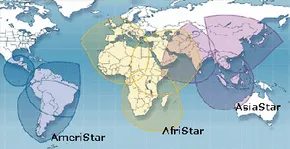

1worldspace has long had a geographic crown in satellite broadcasting. The company beat its competitors to the starting line, launching two of its three satellites into geostationary orbit before the competition even considered it. AfriStar was launched in October 1998 and AsiaStar was later launched in March 2000.
The third piece of the puzzle, AmeriStar, is not yet available. It should also cover parts of South America and Mexico. Until then, the service is not available in the United States. The company invested in Sirius XM Radio and signed a deal to share technology development, but that doesn’t mean you’ll hear it on your local dashboard.
The strategy is global. It’s not just continental. The goal is to reach places that traditional radio stations cannot reach. Millions of people live in the projected listening area of 1worldspace, but there is no signal from standard AM/FM stations. The company claims to have around 4.6 billion potential listeners across five continents.
Technology that supports signals
Each of the two functioning satellites transmits three different signals. These beams overlap, each covering an area of about 5.4 million square miles (14 million square kilometers). That’s a huge footprint.
Each beam has more than 60 programming channels. Transmissions take place in the 1,467 to 1,492 megahertz (MHz) portion of the L-band spectrum. This frequency range is reserved exclusively for digital audio broadcasting. result? Crystal clear sound and multimedia programming with more than 50 channels per beam.
Broadcasters do not speak directly from the studio to the satellite. They uplink to centralized hub sites or individual feeder link stations within the global uplink beam. The satellite then retransmits the signal on one, two or all three beams.
Receiver hardware and data rates
Special equipment is needed to receive this signal. The ground receiver receives the broadcast and transmits CD-quality sound via a detachable antenna. The hardware uses STMicroElectronics’ StarMan chipset. This proprietary chip handles the decoding of digital signals.
The data rate is important in terms of how fast you can actually receive data. The receiver can pick up data at a rate of 128 kbps. This is enough for high-quality audio and possibly some metadata, but don’t expect heavy video streaming.
This service goes beyond borders. It targets a corner of the world that most radio stations ignore. Why? Because there is a huge untapped market. People living in rural India, remote parts of Africa and remote areas of South America currently have no commercial radio. 1worldspace’s geostationary coverage fills this gap, eliminating the need for a constellation of low-orbit birds.
This is a game of scale. Billions of potential listeners. A technology stack that prioritizes audio clarity over data density. and a satellite architecture that can cover an entire continent with just three beams.
The question is not whether the technology works. it works. The question is whether users will adopt it when it is not available in the US, and whether it will be economically viable to cover such a large and sparsely populated area. The satellites are already in place. The signal is ready. The rest depends on the receiver on the ground.