Everyone knows the giants. Facebook, Twitter, LinkedIn, MySpace. You’ve probably logged in at least once, maybe twice. But general social media is becoming too loud. Too crowded. You’re just a number in a sea of data. That’s why niche social networks are gaining traction. They offer something the big players can’t: focus.
A niche is a specialized slice of the whole. So a niche social network targets a specific segment of the population. Users who feel lost in the shuffle of Facebook find a home here. These platforms connect people with shared hobbies, professions, or obsessions. Because the group is smaller, community guidelines are stricter. You’ll see specific tones of voice. Harassment is banned. Spam is deleted. Some groups are so tight-knit that they develop their own shorthand. Inside jokes become currency.
Then there’s the business side. Social networks run on ads. A niche network is an advertiser’s holy grail. Why? The audience is already segmented. A pet lover network is a direct line to pet food buyers. In 2006, advertisers spent $280 million on social networks. By 2010, that figure was projected to hit $1.9 billion. The money is flowing into the specifics.
Which sites are drawing the crowds? Let’s look at five notable examples.
5: Kaboodle
Kaboodle isn’t for everyone. It’s for shoppers. Founded in 2005, the site has over 12 million monthly visitors and more than 800,000 registered users. It doesn’t sell anything. It helps you find what to buy.
Think of it as a collaborative wish list engine. You can pull products from any e-commerce site and add them to your profiles. No more juggling five different tabs to track a pair of shoes or a toy for a seven-year-old who has everything. You create lists. You share them. You get feedback.
The platform also features “style boards.” Users curate looks, blending items into visual collages. Other users can “heart” these boards. It’s a feedback loop. Dozens of blogs on the site highlight trends. Polls let you ask the community questions like, “What shoes go with this dress?” The site is supported by paid ads. It’s a community built entirely around the act of discovering and recommending products.
HoffSpace
Not all niches are practical. Some are pure fandom. HoffSpace is dedicated to one man: David Hasselhoff.
The site is, in a word, bizarre. Members use handles like “The Hoff Dog” and “Hoff the Wall.” They post tribute videos. They plan meetups. It’s a digital shrine. The site also aggregates Hasselhoff’s tweets. Fans stay updated on what their idol is doing next. It’s not about connection in the traditional sense. It’s about worship.
4: Ravelry
If Kaboodle is for shoppers, Ravelry is for makers. It’s a social network for knitters and crocheters. The site is massive. It hosts millions of patterns. Users upload photos of their finished projects. They discuss tension, yarn types, and needle sizes. It’s a technical forum wrapped in a social layer.
“Ravelry allows users to share their creations and discuss techniques in a way that general social media cannot.”
The community is supportive but detailed. You don’t just post a picture. You post the pattern, the yarn brand, the hook size, and the gauge. It’s data-heavy. It’s practical. It’s where you go when you need to know if a pattern is beginner-friendly. The site’s search function is legendary. You can filter by yarn weight, fiber content, and difficulty level. It’s less about chatting and more about solving problems together.


Ravelry didn’t just appear; it was built because founders couldn’t find the tools they needed. Launched in 2005, this platform serves as a centralized hub for knitters, crocheters, spinners, and dyers. The goal was simple: organize, share, and discover within a community that was previously fragmented. It’s not just a repository; it’s a living ecosystem where users track their yarn usage, post photos of works in progress, and ask technical questions in forums. You want to know how to handle double-pointed needles? Or perhaps you’re debating the merits of the latest Star Trek series? The forum covers it all.
Currently, the platform operates on an invitation-only model, supported by ads rather than subscriptions. This exclusivity hasn’t dampened its growth. With over 350,000 registered users, it remains a critical resource for artisans. Small business owners credit the site with launching their careers. Take Maggie Simser of Dyed in the Wool Handmade, for instance. By leveraging Ravelry’s affordable advertising, she turned a hobby into a business. When users incorporate her hand-dyed yarn into their projects, that data syncs to their public profiles, creating organic visibility for her brand without a single direct marketing dollar.
The mechanics of imeem’s music-sharing model
If Ravelry is about tangible crafts, imeem is about digital streams. Founded in 2003, this social network revolves around music discovery and sharing. Users create “social mixtapes”—personalized playlists that they can share with the community. Unlike passive listening, imeem encourages interaction. You can rate songs, browse by highest ratings or most discussed tracks, and join fan groups for specific artists.
The business model here is precarious. The site relies on private investors and pays licensing fees to recording labels every time a song is streamed or embedded. It’s a high-cost structure that many music-focused social networks struggle to sustain. Yet, it draws about 25 million visitors a month. Musicians use the platform to upload tracks for embedding on blogs, share tour dates, and connect with fans. Directors have also started using it to host short films, adding a layer of visual content to the audio-centric site.
For creators, imeem offers detailed statistics. You can see who is viewing your profile, how popular your playlists are, and whether anyone has embedded your music elsewhere. It’s a way to measure influence in a space where traditional royalty checks might be thin.
The enduring relevance of Classmates.com
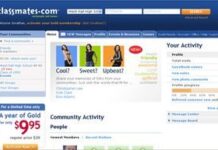
In an era dominated by broad platforms like Facebook, Classmates.com persists by sticking to its niche. Launched in 1995, it connects current and former classmates from high schools and colleges. Basic access is free, allowing you to search for alumni. But to see contact details or send messages, you need a paid “gold” membership. This paywall has helped the site maintain 4.6 million paid users and 40 million registered accounts.
Why do people pay for this? Because finding someone you lost touch with after graduation requires precision. Facebook’s algorithm might surface a random high school friend, but Classmates.com allows you to filter by class year and specific institutions. Users utilize the site to organize reunions, share alumni news on message boards, and network in specialized interest groups covering topics like the military, sports, or business. The message center protects privacy by keeping personal email addresses off the table.
While some predicted its demise in the face of free social giants, Classmates.com continues to generate revenue and retain members. It proves that specificity matters. If you’re looking for a general connection, a broad network works. If you’re looking for a specific person from a specific year and place, niche tools still hold the key.
The long tail of online communities
These examples illustrate a broader trend in internet infrastructure. You don’t always need a global network. If your hobby is obscure, there is likely a specialized site for it. Whether it’s tracking historical documents on Footnote, finding bird-watching enthusiasts on Birdpost, discussing beer on Coastr, or geeking out over Disney on DisFriends, the internet supports fragmented interests as well as mass appeal.
Other notable mentions include Library Thing for book lovers, ComicSpace for comic enthusiasts, deviantART for digital artists, and Dogster or Catster for pet owners. The pattern is consistent. General networks offer scale; niche networks offer depth. For users, this means better tools, more relevant content, and communities that understand the specific language of their passions. The question isn’t really which platform is bigger. It’s which one actually helps you do what you love.
Flixster launched in 2006 as a free haven for cinema fans. It isn’t just a database. It is a community. You get profiles for actors, gossip, news, video clips, and forums. But the real engine driving the site is the user base. Over 15 million unique visitors hit the site monthly. They have generated nearly two billion movie ratings.
Private investors and ad revenue keep the lights on. No paywall. No premium tier. Just data and attention.
Building a Personal Cinema Profile
When you sign up, you aren’t just a number. You build a profile. Rate movies. List favorite actors. Curate your video watchlist. The system suggests other users with similar tastes. This discovery feature is key. It turns passive viewing into a social activity.
Specialized forums break discussions down by genre. Some threads stay strictly about film. Others drift into pop culture or random chatter. There is also a user-built wiki. It covers the history of cinema. Topics range from independent films to comic book adaptations and summer blockbusters.
Users are encouraged to write their own articles for the wiki. This crowdsourced content creates a living archive of film history, maintained by fans rather than critics.
The wiki isn’t static. It evolves. If a user notices an error or wants to add context, they can edit. This decentralized approach means the information is often more current than traditional databases. It also fosters a sense of ownership among contributors.
The Facebook Connection
Flixster’s standout move was integrating with Facebook. At the time, social networking was exploding. Flixster saw an opportunity to piggyback on that traffic. Users could add the Flixster app to their profiles. They could start rating movies directly from their news feed.
Here is the interesting part. Facebook publishes Flixster activity to the user’s feed. Your friend rates The Dark Knight? You see it. You take a quiz? Your friends see the result. This visibility creates a feedback loop. It attracts more users. It keeps existing users engaged.
Social proof matters. If ten people you follow rate a movie highly, you are more likely to watch it. If they trash it, you might skip it. Flixster leveraged this human behavior to drive traffic. It wasn’t just about finding showtimes. It was about sharing opinions in real time.
On the Go with iPhone
The iPhone app extends this functionality beyond the browser. You can view trailers. Rate movies. Search for local showtimes. The location-based search is particularly useful. You aren’t stuck planning your weekend from your desktop. You can decide on the spot.
This mobile presence was crucial. Moviegoing is an impulse-driven activity. People often decide to go out in the evening. Being able to check times and ratings instantly removes friction. It makes the decision easier.
The app doesn’t just dump you in a list of theaters. It contextualizes the information. You see ratings. You see trailers. You see what your friends are watching. It ties the social and practical aspects together.
Why This Matters
Flixster wasn’t the first movie site. It wasn’t even the first social movie site. But it combined several elements effectively. It had depth (wikis, forums). It had breadth