



In 2007, the world of technology was lively. Apple had just released the iPhone, and suddenly everyone wanted to know if Google would follow suit with its own hardware. The rumors are strong. Does the search giant really make a mobile phone? Or will they stick to their roots and just create apps for existing devices? There are whispers that Google could partner with traditional phone manufacturers. Some believe it will remain purely software-centric.
Google executives took a hard line. They said no to hardware. They claim that they are not interested in handset game. Many people believe in them. But some skeptical tech reporters are still paying attention. At the beginning of 2008, the truth was revealed. Google doesn’t make phones. But they definitely build the software to do it. Enter Android.
Different strategies to dominate mobile
The secret of the iPhone is its closed ecosystem. Apple has exclusive control over the hardware and operating system (OS). It was a walled garden. Google wanted something else. They don’t want to be the only company selling Android smartphones. They want their operating system to work on devices from any manufacturer.
It also refused to grant exclusive rights to a single operator. This move brought Android on par with Symbian and Windows Mobile. It’s about universality, not exclusivity.
The first device to usher in this new era was the G1. Manufactured by HTC in Taiwan. In the US, T-Mobile is the first carrier to support this platform. When this operating system entered the US market, other mobile phone manufacturers also saw the potential and started announcing their own Android plans.
Buying Direct: Nexus One Era
In January 2010, Google changed the rules again. They released the Nexus One. This is the first Android smartphone that can be purchased directly from Google without going through a carrier. HTC still makes the hardware, but Google handles the sales.
The pricing model is simple, but important. You can get this phone for $179 if you sign a two-year contract with your carrier. Or if you want to own the device outright without a contract, you’ll pay $529. This direct-to-consumer approach is a bold move for a software company.
Why open source changes everything
What makes Android so different from competitors like Symbian and Windows Mobile is its foundation. Built on an Open Source platform. It’s not just a buzzword. This means that Google allows developers to view, modify and improve large parts of the source code.
The idea is simple. When developers find missing functionality, they can build it and add it to the operating system. The software continues to develop under the guidance of the community and Google itself.
Filling the Gaps
When Android was first released, it wasn’t perfect. It lacks Microsoft Exchange support, which is a big problem for business users. The company relies heavily on Exchange for email and calendar synchronization. Android is incomplete without native support.
But the open source model worked its magic. Third-party developers don’t wait for Google. Build an app that syncs Exchange features directly to your phone. The chase happened quickly. Android may have started later than other systems, but it is much more adaptable and extensible.
The foundation has been created. Hardware partner identified. The software is now ready for the real world. In the rest of the story, we scale this experiment to millions of users.
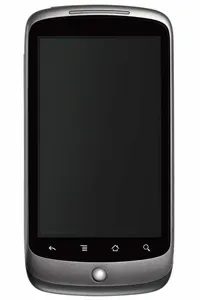

The smartphone world in the US is changing, and Android is at the center of it. The HTC G1 was the first Android device to arrive in the United States. Verizon launched the Motorola Droid to much fanfare and became the bombshell of the carrier wars. But there is another beast in the room. The Nexus One.
This isn’t just another phone on the web. This is Google’s first serious foray into smartphones. The first is something you can buy directly from the search giant instead of a carrier or third-party manufacturer. This distinction is important. This marks a change in how Google manages its mobile ecosystem.
Hardware development and design
When Google first distributed Nexus One devices to employees, the devices were barebones. No branding. It’s just hardware. It is a test and probably a statement. As soon as this phone was released, the HTC logo appeared on the back. The design is not subtle.
Dimensions are specific. 4.7 inches high. 2.4 inches wide. The thickness is 11.5 mm, which is less than 0.5 inch. Weight with battery is 4.6 ounces. Light for its time. At its core is a 3.7-inch AMOLED screen. Active matrix organic light emitting diode. This means deeper blacks and better contrast than LCD screens on other phones. The resolution is 800 x 400 pixels. Contrast? A stark 100,000 to 1.
It’s getting hot under the hood. 1 GHz Qualcomm processor. 512 MB of RAM. 512 MB built-in flash memory. Google offers a 4GB microSD card, but if you need more space, the slot supports cards up to 32GB. This is a modular storage method that is flexible, but limited by the slot itself.
There are plenty of connection options. GSM/EDGE networks with frequencies 850, 900, 1800, 1900 MHz. Wi-Fi is compatible with 802.11b and 802.11g. Supports Bluetooth 2.1, A2DP stereo. Additional GPS receiver. It covered the bases.
Camera and software basics
The camera has a 5 megapixel sensor and LED flash. Digital zoom is available, but only 2x. The maximum video recording resolution is 720 x 480 pixels and 20 frames per second. It’s not very cinematic, but it was practical at the time.
The software is Android 2.1 and the development code name is “Éclair”. This version contains significant changes. Multiple contact information. Multiple sync apps. For developers, this means they can build applications that handle multiple email accounts from a single interface. It simplifies the user experience, or at least promises to do so.
Participating in the Android ecosystem requires more than just hardware. Requires a Google account. free. Anyone can use it whether they have a mobile phone or not. With this account you can use Gmail, Google Calendar and Google Docs. The platform is designed to work seamlessly with these services. It is more than just an operating system. This is your gateway to Google Web Tools.
As the hardware develops, Google adjusts the operating system. If they don’t, someone else will. This is the power of open source.
This flexibility is its greatest appeal. If Google falls behind, the community will fill the gap. This architecture enables adjustments in ways that proprietary systems cannot.
HTC G1: Origin
To understand the Nexus One, we have to look back at the HTC G1. It was the pioneer. The screen is 3.2 inches. LCD touch screen. It is equipped with a GPS receiver, an accelerometer and an electronic compass. The camera has 3.2 million pixels. WiFi and 3G connection are standard.
The design is unique. The screen slides sideways. Below is a full QWERTY keyboard. Physical keys. At that time, typing on a mobile phone was still a novelty. There are places to expand the storage space.
There are flaws that bother reviewers. There is no normal headphone connection. A USB adapter is required to use the headphones. Mobile phones have media players, so why not include a connector in them? This design choice drew criticism. But it proves the concept. Android could work. It could connect Can be expanded.
G1 showed potential. The Nexus One is an showed the refinement. Both are built on the same architecture, but have changed the way they operate. The hardware is faster. The display is now even better. The branding got clearer.
Google’s Android architecture
Android’s underlying architecture determines how these devices work. This is an open source system. This means that the code will appear. Can be changed. Clear. Developers are not blocked by proprietary walls. They can see how the kernel interacts with the hardware. How to place the application layer on top of it.
This openness allows for rapid iteration. When new chips come out, drivers can be written on them. If you need new functionality, you can create a fork. Google maintains the master branch, but it also maintains a community branch.
This architecture supports the diversity of hardware we see. From the sliding keyboard of the G1 to the sleek, button-less design of the G1

Android is more than just an operating system in the traditional sense. There’s a reason Google calls this a software stack. It’s layered. Each level groups specific programs that keep the device running. Break one layer, and the whole thing gets shaky.
At the bottom sits the kernel. Google built this foundation with Linux version 2.6. This is more than just code. This is the engine room. It handles memory management. It controls security settings. It controls the power. It communicates with the hardware via drivers. The driver is an interpreter. Without these, the software cannot communicate with the silicon. Take the Nexus One for example. It comes with a camera. The Android kernel contains special camera drivers. This controller allows user commands to reach the physical lens sensor. No driver, no photos.
On top of the kernel is the library layer. Think of these as an instruction manual for handling your data. The media framework library here? Tells the device how to play audio, video or images. Other libraries handle 3D acceleration for devices with an accelerometer. There is also a browser library. These are not apps you click on. These are the underlying logic that makes your application possible.
On the same level as the libraries is the Android runtime. This is where the magic happens for developers. This includes the Java core libraries. This is because Android app programmers use Java to build their tools. However, it also includes a Dalvik virtual machine.
What is a virtual machine? It is software that emulates another device with its own operating system. It can run on hardware with completely different operating systems. Android uses this concept to run each application as its own process. Why is this important? There are three reasons. First, isolation. No application is dependent on other applications. Second, stability. If one app crashes, it shouldn’t drag down the others. Third, simplicity. This reduces memory management headaches.
Next is the Application Framework. This layer controls the basic functions of the phone. Resource allocation. Telephone services. Switching between processes. Tracking physical location via GPS. Developers have full access here. You can use these tools to build more complex functions. Think of it as a toolbox. The framework provides the hammer and screwdriver. The developer builds the furniture.
At the very top are the applications. This is the user layer. Phone calls. Web browsing. Contacts. For regular users, this is all you see. You can interact with these applications through a user interface. No one else will touch this level unless they want to install something.
Only Google programmers, third-party developers and device manufacturers are familiar with the following layers: They tune the kernel. They create new libraries. They build the framework. Just wipe.
You can change the way your Google smartphone works by downloading applications. It’s that simple. But when things go wrong, it’s helpful to know what’s going on behind the scenes. Or when you wonder why a certain app keeps draining your battery.
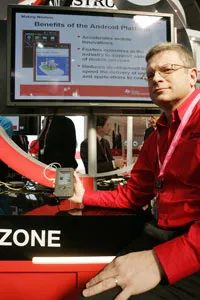
Your smartphone needs more than e-mail and basic browsing. The iPhone proved that a strong app library can inspire customers. Android pays attention.
Google released Android to developers a few months before the launch of the HTC G1. They provide a limited software development kit (SDK) and publish the Android Developer Challenge. The total prize pool for this tournament is $10 million.
Top developers earn $275,000 for their apps. Here is what won:
-
Compare prices and read store reviews with the CompareEverywhere and GoCart tools. Scan the barcode. These applications identify the item and aggregate information from different sources.
-
Life360 combines social networking and local news. It creates a neighborhood. Share the latest information with your team. Sends emergency alerts, such as tornado warnings. Even if you are far away, you will always receive information.
-
Locale Uses GPS. Mark frequently occurring locations on Google Maps. You can configure phone settings for each location. The ringtone changes automatically according to your location. No more loud rings in movie theaters.
-
Ecorio Track your carbon footprint. Suggest ways to reduce your environmental impact. Plan your trip with Google Maps. Ecorio recommends carpooling and public transport.
-
Softrace encourages an active lifestyle. Users organize competitions using Google Maps. Participants travel to their destination. They compete and compare times.
Many other applications won prizes in the $275,000 category. Some iPhone developers are interested in Android. Android can catch up to iPhone in terms of app quality.
How do developers build these apps? The development process is explained in the next section.
Building Android Applications
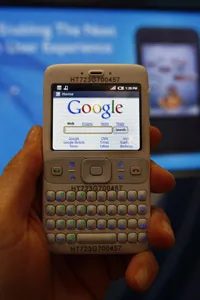
If you understand Java, you’re halfway there. This is the first hurdle for anyone who wants to build an Android app. After learning the language, the next step is to download the Android Software Development Kit (SDK). This is more than just a code folder. It’s your gateway to the Android Application Programming Interface (API).
The SDK comes with utilities. Sample apps. A phone emulator. Emulators are important. These emulate the hardware and software of a particular device. In this case, the Android emulator replicates a phone running the operating system. You don’t need to flash a physical device to test the code. Build the app. Run it in the emulator. See how it behaves on real hardware before you push it to users.
Google’s developer site offers extensive tutorials. It covers the basics: testing. Debugging. Step by step instructions. There is also a “Hello World” application to help manage the architecture. Experts can skip the primer. Jump straight into building.
But Android offers something that iOS doesn’t. This allows complex applications to run in the background. Apple restricts iPhone apps to foreground. Want to switch to another app? The previous one no longer works. Do you want to come back? It continues. This limit defines what you can build for iOS. Android gives developers more freedom. Background processes are fair race.
Google has divided its platform into four core components. Not all applications use all of these. But they form the basis.
- Activities : Every screen visible to the user is an action. A map application can have a main map view. Trip planning screen. A route overlay. Each of these is a separate activity.
- Intents : These are the mechanisms to move from one activity to another. Are you planning a trip? The purpose interprets the input and activates the route overlay. Android also supports Broadcast Intent receivers. These are triggered by external events. Move to a new place. Incoming call. Applications can react without user initiation.
- Services : The services work independently. There is no user interface. Consider a fitness app like Softrace. You are in the middle of a race. You want music. Switch to media player. Start a song. Softrace keeps tracking your pace. If this is just one activity, it will suspend or terminate the moment you left. The service keep things running in the background.
- Content Providers : They allow applications to share data. One application can read and write data managed by another application. This allows developers to create powerful suites. Apps that work together. It is more complex than a single component
could be alone.
There is more to consider. Graphics rendering engine. process management. User interface support. Google provides guidance on these details on its developer site.
The path for the Google Phone has not been smooth. Some vendors quickly adopted this operating system. Others rejected it. The landscape is fragmented.
Google Mobile Phone Vendors
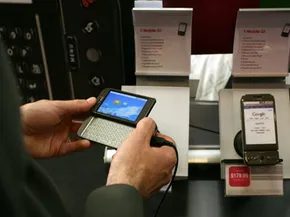
How #Android carriers shaped the smartphone war: From Sprint’s resistance to Global Dominance
When we look at the smartphone OS ecosystem, we’re really looking at two very different forces. On the other hand, there are also mobile phone manufacturers. They make the hardware, the physical device that is in your hands. On the other, there are the service providers. Major carriers like AT&T and T-Mobile. In some cases, these groups may conflict. A manufacturer might lock in exclusively with one carrier. In rare cases, a carrier even manufactures its own hardware. The lines blur, but the tension remains.
The Android story didn’t start in a vacuum. It starts with the hardware. The first mobile phone with the Android operating system was the HTC G1, manufactured by High Tech Computer Corporation. The technology press was active even before the phones hit store shelves. Bloggers and journalists speculated endlessly about who would be next. Would Motorola jump in? What about Samsung? Eventually, they did. Dell has also joined the fray. The floodgates have opened.
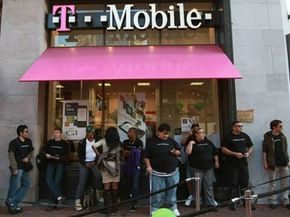
But without a network, the hardware is useless. In the United States, T-Mobile is a pioneer. The company launched the HTC G1 on the 3G network in October 2008. The price was $179 with a contract. It wasn’t a free phone, but it was accessible. T-Mobile also allows existing customers to pre-order a month in advance. The result? Chaos. Demand was insane. Orders exploded past the 1.5 million units in stock. T-Mobile was suddenly forced to cancel pre-order sales. They simply couldn’t keep up with the hype.
Not everyone is on board with this mobile revolution. In fact, some carriers fought it tooth and nail. Sprint CEO Dan Hesse has openly expressed his disdain for the platform. He once famously said that Android “wasn’t good enough to carry the Sprint brand.” That’s a harsh critique for a nascent OS. He left the door open and hinted that Sprint could work with Android in the future, but his skepticism was clear.
This attitude drew criticism from Hop-On CEO Peter Michaels. Michaels accused him of hypocrisy. He noted that Sprint is actually a founding member of the Open Handset Alliance, the consortium that developed Android. How can you help build an open platform and still refuse to support it? Michaels argued that Sprint’s actions contradicted his own claims. He also noted that Sprint has made it difficult for cheaper, smaller handset vendors to join its network. It feels more like a closed club than an open alliance.
However, the company’s attitude can change quickly if the market demands it. Hesse eventually changed his mind. Sprint did come around. They started supporting Android devices like HTC Hero and Samsung Moment. This opposition collapsed under the weight of consumer demand and competitive pressures.
By 2009, the tide had turned completely. Verizon launched two major Android phones: the Motorola Droid and the HTC Eris. The Droid, in particular, became a cultural phenomenon. This proves that Android can handle the enterprise-grade features that Verizon’s business customers demand. Then, in early 2010, AT&T announced that it would sell Android phones from HTC, Motorola, and Dell. The major carriers had all capitulated.
Android is becoming popular among major carriers around the world. It’s not just about mobile phones anymore. This is about infrastructure. If Android succeeds, Google’s dominance in web search can be replicated on mobile devices. Imagine a world where mobile operating systems are as ubiquitous as a Google search on the web.
Things have changed since the early days of the carrier war. Open platforms win. However, the dynamics between hardware manufacturers, software developers and network service providers remain complex. Now that airlines have fully embraced this ecosystem, you have to wonder who will rule the future.
You can find out more about the development of mobile platforms and related topics by clicking on the links on the following pages.
The Android ecosystem is starting to take shape
Android’s first rollout wasn’t just about one device. This sends a signal to the industry about the fragmentation of the mobile world. Google offers more than an operating system. They provide a platform for carriers and manufacturers to compete.
Nexus One is the flagship of the concept product. Released in early 2010, the product was the first to be sold directly by Google through its online store, bypassing most carriers. The move surprised the giants of the telecom industry. This enables direct contact with consumers and eliminates the need to wait for carrier approvals or updates.
But the Nexus One is only part of the story.
Carrier Wars and Device Options
Sprint and AT&T are launch partners for these early devices. Sprint is positioning its Android products as high-speed, data-first alternatives to traditional voice-centric plans. AT&T is trying to push the idea from a smartphone perspective that Android is an open alternative to the walled garden it built with the iPhone.
Motorola is not idle. In late 2008, reports surfaced that Motorola was cutting back on work on other operating systems to focus entirely on Android. This is a big deal. Motorola has been the king of mobile phones for decades. If they’re betting on Android, everyone else should take note.
Verizon also joined the conversation. Although they didn’t release an Android device right away, the marketing of the Motorola Droid marked a change. Verizon is known for its conservative approach to updates. Bringing full-touch, application-intensive devices to your network means you’re betting on the future of mobile computing, not just mobile calling.
Global expansion
The interest is not limited to the United States.
NTT Docomo, Japan’s largest telecom operator, develops Android-based mobile phones. This shows that Android is not just a Western trend. It has global appeal. This OS could really have some staying power if the tech-hungry Japanese market adopts it.
Huawei is also preparing to deliver Android devices alongside Symbian models. This is a sign of a future where manufacturers are no longer limited to a single operating system. You can offer a wide range of options for different customer segments.
Why it matters now
Looking back, these early efforts defined the next decade of mobile technology.
How Android is changing the market:
– Open Source Appeal: Manufacturers can customize the operating system to create unique experiences.
– Carrier Independence: Direct sales models like the Nexus One force operators to improve their services.
– Developer Ecosystem: Google Market (now Play Store) provides an integrated platform for developers to reach millions.
Which devices led the charge:
– HTC Dream (G1): The first commercial Android phone. Although clunky by today’s standards, it was revolutionary at the time.
– Motorola Droid: Brought a physical keyboard and the Verizon network to Android.
– Nexus One: A pure Google experience that shows what the OS is capable of without carrier bloatware.
The early days were messy. Sprint called Android “not good enough yet.” Developers complain about fragmentation. Users dealt with inconsistent updates. But the momentum is undeniable.
The infrastructure is under construction. The carriers were waking up. Manufacturers are changing gears.
By 2010, the question was no longer whether Android would survive. It was how quickly the other platforms would have to react.
The foundation has been created. All that remains is the execution.


