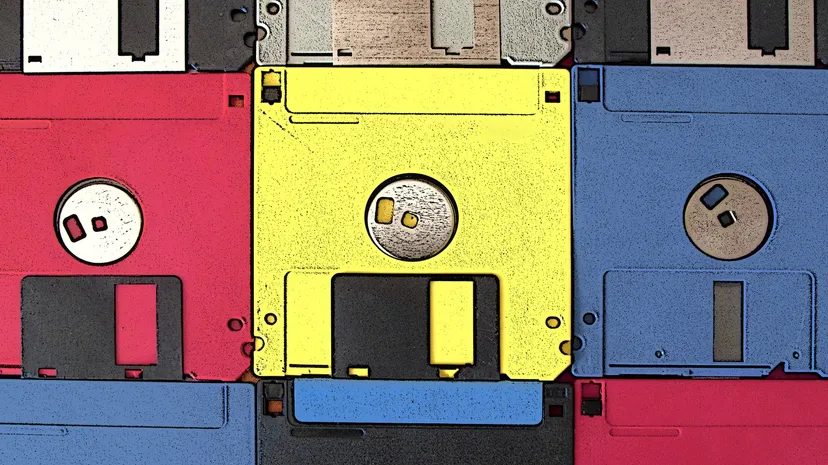
You probably remember the weight of it. That stiff, square plastic shell. For over two decades, the floppy disk drive (FDD) wasn’t just an option. It was the primary way we moved data onto a computer. Before CD-ROMs took over the landscape, this was the standard. If you touched a PC in the nineties or early 2000s, you interacted with this technology daily.
But how does it actually work? And why did it stick around so long?
At its core, a floppy disk drive reads and writes data to a small, flexible piece of plastic coated in magnetic material. Think of it like audio cassette tape, but for binary code. The drive spins the disk and moves a read-write head across the surface. It captures that magnetic flux and turns it into the ones and zeros your computer understands.
Understanding the inner mechanics of an FDD reveals why it was so resilient. And so fragile.
Inside the Drive
The mechanism is surprisingly simple. There is no complex laser array like in a CD drive. Just magnets and spinning metal.
The disk itself is a circular piece of metal-coated plastic. It spins at a constant speed. A stepper motor moves the read/write head back and forth across the disk. This head detects magnetic fields on the disk’s surface. It also applies those fields to write new data.
This design kept costs low. It also made the technology accessible to everyone.
Why It Mattered
Before the FDD, moving data meant using serial ports or parallel ports. Those were slow. Unreliable. The floppy disk changed the game. You could physically hand someone a copy of your work. You could boot a computer from a disk even if the hard drive failed.
This portability made it a key component of personal computing. Schools used them for assignments. Offices used them for backups. Gamers used them to install titles.
The Cool Facts
There are a few details about FDDs that most people forget.
- Formats varied. You likely used 3.5-inch disks. But 5.25-inch disks were huge and common earlier.
- Capacity was tiny. A standard 3.5-inch disk held 1.44 MB. That is nothing by today’s standards.
- They wore out. The magnetic coating degrades over time. Data rot is real.
The technology is gone. The drives are mostly in trash heaps or museum exhibits. Yet the concept of removable storage lives on. USB drives, SD cards, cloud storage. They all descended from that simple plastic square.
We still rely on the idea it pioneered. Taking data with us. Keeping it physical. Even if the medium has changed.