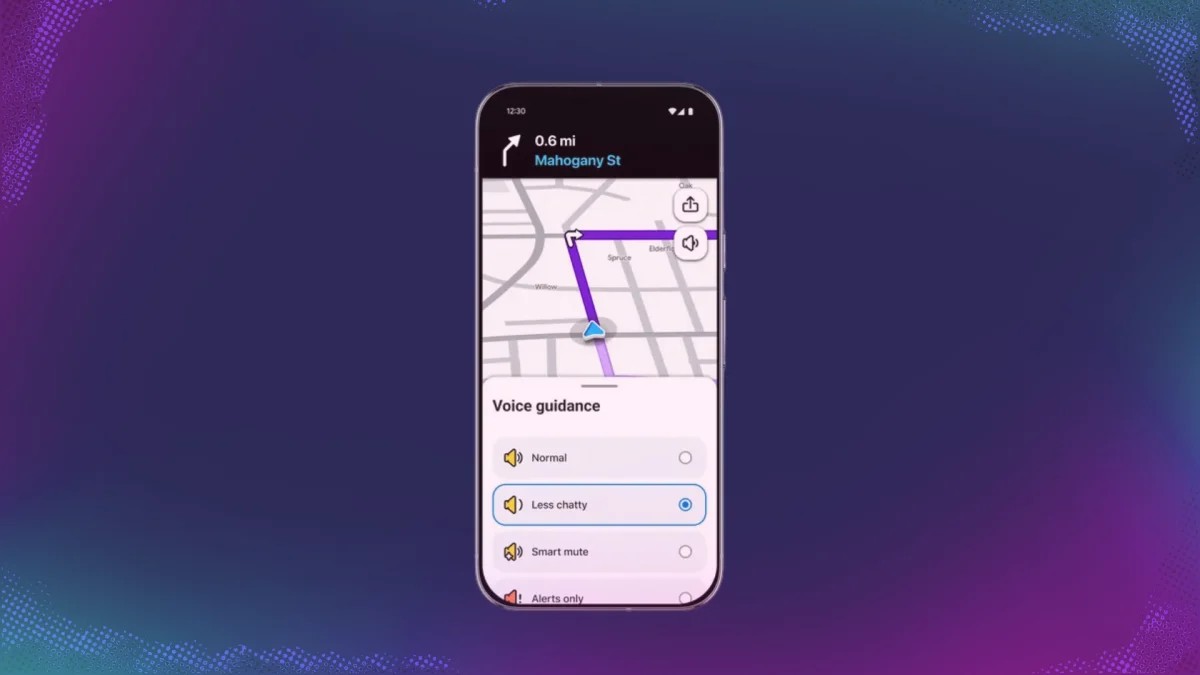
The update drops. It lands on iOS and Android. Waze is shifting gears again.
Google owns the map data. Now they own your commute patterns.
The biggest shift is personalization. An AI engine digests your past drives. It studies traffic flow. It then spits out routes that fit you, specifically. Big Tech is watching. Of course. You can toggle this tracking off in settings. Privacy-conscious users have a way out. The rest of us just get home faster.
“An option that analyses your previous driving trips.”
There is also a beta test. It feels like Google Maps crossed with Siri. You ask aloud. “Where is the parking near the cinema?” Or maybe you need food that is actually open right now. The app answers with a list. No typing. Just talk.
Silence is Golden
Here is the part you actually care about. The chattering voice. That tone that screams instructions during a podcast cliffhanger? It’s getting muted.
The new mode is literally called “less chatty.” It cuts the small talk. Only real hazards trigger a voice alert. Turns. Dangers. Nothing else.
Try listening to a true-crime revelation again. Will it interrupt? Hopefully not. It’s a relief for the easily annoyed.
Riding Solo
Motorcyclists get a separate playbook. This mode launches first in Latin America and Asia-Pacific markets. Think Mexico, Brazil, Peru. Then Argentina. Malaysia. The Philippines.
It is not just code. Humans fix the maps too. Editors mark narrow streets. They flag raised crosswalks. Potholes get special attention. The AI handles the surface considerations. Riders see data that cars ignore. A narrow street matters to a bike. It is fatal to miss it.
The Competition Watches
Google Maps is already busy. They rolled out 3D navigation in March. Gemini powers that ship. Waze is playing catch up on features while leading on community reporting.
Who wins? The one you trust.
For now, the choice is quieter navigation. Or safer biking. Or letting the algorithm know your life a little better. Pick one.