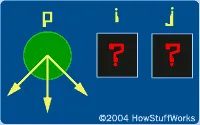
It’s a quirk of C that often trips up beginners but feels like magic once it clicks: you can have a dozen pointers all staring at the same memory address.
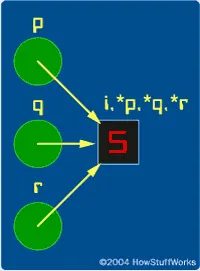
Consider this scenario. You declare an integer i. Then you declare three pointers p, q, and r. You assign them all to the address of i.
Look at that last line. r doesn’t need to know about i directly. It just points to whatever p is pointing to. And p is pointing to i. So r is also pointing to i.
The assignment operator here copies the address, not the value. When you do r = p, you aren’t copying the integer inside i. You are copying the memory location that p holds.
After this code runs, i essentially has four names. You can access it via i. You can access it via *p. You can access it via *q. Or you can access it via *r.
There is no technical limit on how many pointers you can stack up like this.
Why This Matters
This isn’t just academic syntax. It changes how you think about data flow.
In languages with strict object references, copying an object often creates a new instance in memory. In C, copying a pointer is cheap. It’s just a memory address. Fast. Tiny.
This allows multiple parts of your code to manipulate the same data without duplication. Change *p and *q sees the change immediately.
You are creating aliases for memory.
The Risk of Alias
Here is where the “cool aspect” becomes a liability.
If p, q, and r all point to i, any of them can modify i.
Now i is 10. *q is 10. *r is 10.
But what if you forget that r is also watching i? You might assume i is stable because you haven’t touched it directly. You only touched *q.
It’s a shared resource. And shared resources are where race conditions and unexpected overwrites live.
How to Prevent Unintended Side Effects
If you want to ensure one pointer doesn’t accidentally overwrite data meant for another, you use const.
Now r can read i. It can point to it. It cannot change it.
This is how you enforce boundaries in a language that trusts you to manage memory manually.
Where This Fits in Systems Programming
You see this pattern everywhere in systems code.
Kernel structures often have multiple pointers to the same control block. Device drivers map the same hardware register to different logical names.
Understanding that pointers are just labels for addresses helps you debug these issues. When memory corrupts, trace the pointers. Who else