Randy Conrad was a Boeing engineer. He grew up in the Philippines. He went to college in the United States. But his mind was back in high school. He wanted to find an old classmate. The internet was young in 1995. The phrase “online social network” didn’t exist yet. The dot-com crash was still years away. The web was barely a whisper. Conrad tried to track down his friend. He failed.
He sat down with his son. They decided to build a better way. Their solution became Classmates.com. It was the first big social networking site. That was before MySpace. Before Facebook. Before the web became what it is today.
Why Classmates.com Still Matters
The site isn’t dead. It still pulls in over 16 million visitors a month. That is a lot of traffic. Facebook and MySpace have more members now. Classmates.com doesn’t have that scale. But it keeps getting new users. Why? Because it does one thing well. It helps you find people you knew once. It departs from modern social networks in a major way. Most features are locked behind a paywall. You cannot see the full picture unless you pay.
How Classmates.com Works
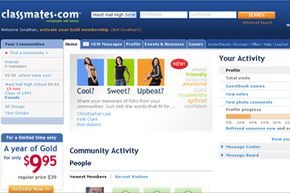
Creating a basic profile is free. You visit the site. You tell it where you went to school. If you are in the United States, you pick your state. Then your city. Then the school itself. This leads to a form. You enter your name. Your graduation date. Your birthday. Your email address. You create a password.
Then comes the catch. The site asks you to buy a membership package immediately. The price depends on how long you sign up for. Shorter terms cost more per month. Longer terms are cheaper. If you refuse to pay, you can still build a profile. You upload a photo. You write a short bio about what you’ve done since graduation. You invite friends to join.
You can also enroll in MyPoints. This program lets you trade virtual points for real products. You get points by shopping at specific vendors. You get points by signing up for marketing campaigns. Your data might be shared with these companies. It is not required. Classmates.com lets you opt out.
Once your free profile is done, you can add more details. What were you like in school? What do you do now? What do you like to do? You can take quizzes. You can look at who else from your school is on the service.
But the main goal is reconnecting. The site has a search engine. You can view classmates from your school. You can filter by graduation year. You can view their profiles. Unless you upgrade to a Gold membership, you won’t get far. You will hit walls. You will see limited information. You will need to pay to see more.
The Business Model Controversy
This model makes sense for revenue. Many social networks struggled to make money in the past. Classmates.com has a clear path. It is not vague. But it has led to complaints. People criticize the marketing strategy. They feel misled by the free sign-up process. We need to look closer at what you can actually do on the site. And why some people hate how it sells access.
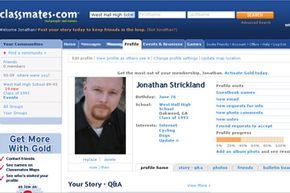
The free tier on Classmates.com is basically a brochure. You can build a profile. You can dress it up. You can scroll through other people’s pages. You can even jump into group discussions on the message boards. That’s it. That’s the ceiling.
Want to actually talk to anyone? You’re out of luck.
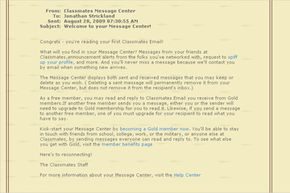
Messaging requires a Gold membership. Period. Leaving a note on someone’s public bulletin board also triggers the paywall. It’s a two-person game though. If either you or the recipient holds a Gold subscription, the message goes through. It’s a clever, if frustrating, way to nudge upgrades.
Location tracking is another locked gate. You can pin your own spot on the map. You just can’t see where anyone else is unless they’ve paid up.
“Having to pay to access basic features might annoy some users.”
The Gold tier unlocks the real utility of the site. Event planning tools let you draft invitations for reunions. You get to see who viewed your profile and what they wrote. Private photo albums. Private message boards. It’s the full suite.
The structure feels less like a social network and more like a dating app. On standard social sites, messaging is usually free across the board. Classmates.com borrows the dating site model. Contact is the premium feature. You have to pay to initiate.
Even with a full membership, your reach is limited. You might upgrade only to find your target hasn’t. People create profiles and leave them there. Ghost profiles are common. You can’t force an upgrade on someone else.
This paywall isn’t the only friction point. The complaints pile up.
Complaints About Classmates.com
The Email Deception That Led to Lawsuits
Email is the backbone of Classmates.com, but for many users, it was also the source of their biggest frustrations. The site’s marketing engine relied on sending out messages to non-members, pretending that old classmates were trying to find them. Some people ignored these nudges as simple spam. Others felt targeted and misled.
Anthony Michaels found himself in the second category. He received a notification claiming high school friends were actively searching for him. The message felt personal. It felt urgent. So, he bought a Gold membership to reconnect.
The reality? No one was looking.
Michaels sued Classmates.com for false advertising in 2008. The core issue wasn’t just annoyance. It was the discrepancy between the claim and the data. If friends weren’t searching, the premium service offering access to those searches had no value. This lawsuit highlighted a recurring theme: the gap between marketing promises and platform reality.
Billing and Cancellation Headaches
Billing disputes formed the other major pillar of user complaints. The pattern was consistent. Users signed up for trials. They expected a clear off-ramp. Instead, they faced automatic renewals.
Many users reported being charged for full memberships after attempting to cancel multiple times. The system kept the credit card on file. It renewed the subscription without clear consent or easy cancellation paths. This wasn’t just a technical glitch. It was a friction point designed to retain revenue at the expense of user trust.
For those caught in this cycle, resolving the issue required extra effort. The site didn’t make it easy to disappear.
Customer Support: A Maze Without a Map
If you had a problem with Classmates.com, finding help was an exercise in patience. The contact page linked to Classmates Media Corporation. From there, users hit a wall.
The only direct line of communication was an online form. You had to input your name, email, phone number, and the details of your grievance. That was it. No chat support. No immediate callback promise. Just a digital black hole where tickets went to die.
Finding a phone number was nearly impossible. This lack of direct human contact amplified the frustration of billing errors and false advertising claims. When things went wrong, you were left waiting.
BBB Ratings and the Social Network Shift
The Better Business Bureau had historically given Classmates.com low marks. But by August 2009, the rating had jumped to an A+. This wasn’t magic. It suggested the company had adapted. They became better at processing complaints. They improved their response time.
For members stuck in the billing loop, this was good news. Resolution became more likely. But the broader context was shifting.
Facebook and MySpace were rising. These platforms offered free social networking. They had network effects that Classmates couldn’t match. Why pay to send a message to an old friend when you could do it for free on a platform that connected you to your entire current social circle?
The Legacy of Classmates.com
Classmates.com deserves credit for pioneering the online social networking model. It proved that people wanted to reconnect with their past. It showed that digital spaces could bridge physical distance and time.
Critics might call its business model outdated. The paywall for basic connectivity felt archaic compared to the free tiers of modern giants. Yet, the site succeeded in its core mission. It helped long-lost friends find each other.
The legal battles and billing quirks were growing pains. They reflected a company trying to monetize nostalgia in a pre-social media dominance era. The lessons learned there influenced how later platforms handled privacy, billing, and user communication.
For now, the site exists in a niche. It’s not the primary hub for social interaction. But for those specific moments of reconnecting, it still holds a place. The question remains whether the model can survive without the unique pressure of being the only option. Probably not. But it got us there.