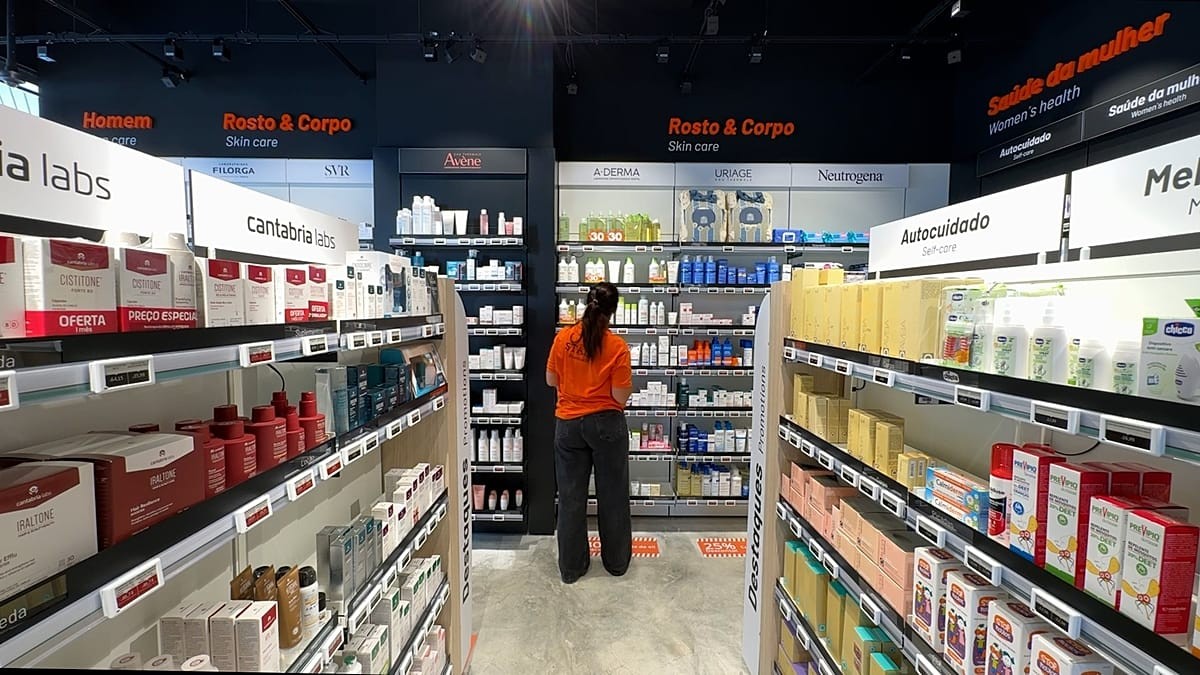
No queues.
No staff.
Just products waiting on shelves inside a Lisbon store.
It feels weird at first.
Pharmacist Catarina Dias runs this place called Pharma&Go, sitting in the Parque das Nações. Her goal? Free her pharmacists from retail drudgery.
“More and more, we are investing solutions to keep pharmacists focused on clinical work,” Dias told Euronews, “and reduce the time on commercial tasks.”
She built it for convenience. Open 24/7.
Walk up.
Tap a card at the door.
The system links that card to you. Or rather, to whoever walks in with you. Once the door seals behind you, the tracking begins. Grab a shampoo. Walk out.
Charged automatically.
“There are no tills, no friction, no complications,” says Dias.
Hundreds of cameras and sensors watch every move. Artificial intelligence connects the physical object leaving the room to the digital purchase.
Simple?
Yes.
The customer comes in and stays as long as they want, or grabs what they need and leaves in under a minute
Some people rush.
Others linger for half an hour, reading labels like novels. The store doesn’t care.
Open in November, the foot traffic has been climbing. Every month beats the last. The initial fear of robots watching us is fading, replaced by habit.
Errors exist. Below 2 percent.
Most mistakes aren’t tech failing. They are human awkwardness.
Like this one. A man held the door open for a lady entering behind him. A gesture of polite chivalry in Portugal.
The AI didn’t understand manners.
It assumed they were a unit. His card paid for both their carts. The tech didn’t know they weren’t shopping together. It only saw two people entering through the same digital gate.
Dias expected young digital natives to run the place.
She was wrong.
People in their seventies and eighties master it effortlessly.
No steps to climb.
No lines to wait in.
Just tap, enter, buy.
For older folks with bad knees or bad patience, it’s actually easier than a normal shop.
The space covers 90 square meters. Sensei and Glintt built it, funded privately. Dias applied for public grants from the Recovery and Resilience Plan, hoping the government would recognize the innovation.
They declined. Said it wasn’t innovative enough.
Disappointing?
Sure.
She sells dermocosmetics. Baby cream. Vitamins. Nothing that needs a doctor’s note, obviously. Prescription drugs stay behind the traditional counter.
Dias thinks the future looks bright.
The machines are getting better at knowing when we are friends. And maybe, one day, when we’re just being polite.
For now, you still might owe a stranger’s toothpaste bill if you hold the door.