Here’s a paradox that feels like it shouldn’t hold water.
Talk to senior programmers. Some are buzzing. They’re shipping code they’re actually proud of. They say AI helps them write their best work ever.
Talk to other senior programmers. They’re shaking. Terrified. One avionics dev told me the planes we’re flying on are history’s gnarliest tech debt. He says don’t ever board again.
Same tools. Same jobs. Opposite experiences. How do you reconcile that?
The answer lies in the history of labor vs. capital. It goes back to the Industrial Revolution.
When labor drives automation, it’s for quality. Workers use new tools to build better things.
When capital drives automation, it’s for throughput. Make more stuff. Inferior stuff. That’s the goal.
The Economics of Sweat
Automation is a depreciating asset. Once it hits the balance sheet, its value drops. Instantly.
To get a return, capital must mobilize it. It has to be used. Often. Relentlessly.
Assets don’t sweat themselves. You need humans.
So you pair machines with workers. Humans are the bottleneck. Always. Machines win on stamina and speed. To maximize the asset, you must squeeze the human.
Think of Modern Times. Chaplin in the gears. Or Lucy and Ethel stuffing chocolates into boxes at impossible speeds.
The machine runs at the limit. The human tries to keep up. If the human slips, the machine doesn’t slow down. It doesn’t care.
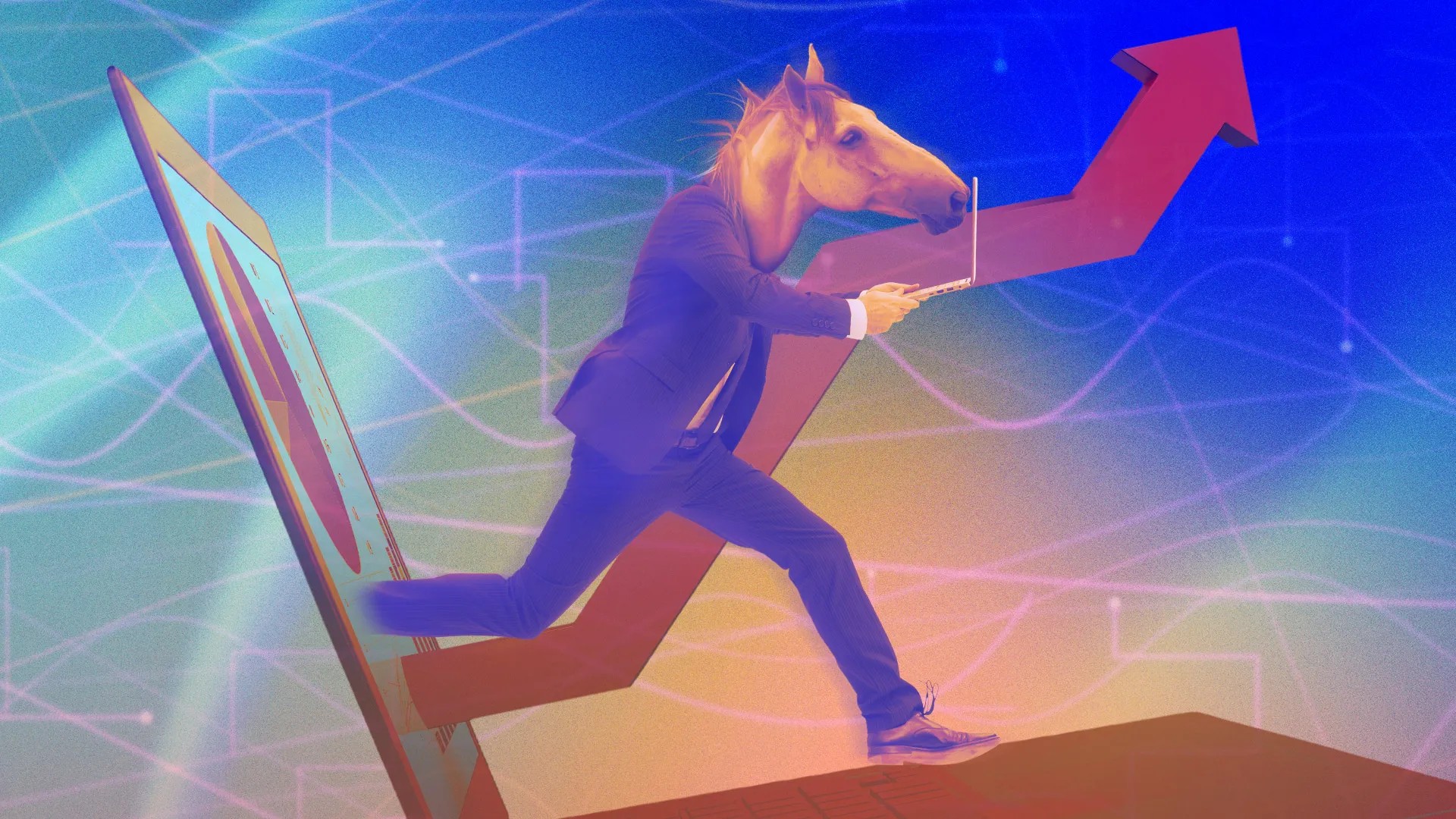
This creates two types of workers. Centaurs and reverse centaurs.
Centaurs: Humans Leading the Machine
In mythology, a centaur has a human head on a horse’s body. Intellect guides power.
A “centaur” worker uses AI as a tool. They decide when to use it. They decide how. This is labor-driven automation.
These are the coders who are happy. They’re riding the bicycle. They’re using spell-check. They’re in control. Skilled workers are best at knowing when to apply a new tool.
Reverse Centaurs: Machines Leading the Human
Now imagine the inverse. The machine directs the human.
The human isn’t guiding. They’re a peripheral. A helper. They do what the AI can’t do alone.
These are the terrified coders. They aren’t AI-assisted. They’re AI-assisted by force.
They work in shops where colleagues have been fired. They live in fear. Their job? Marking the AI’s homework. At superhuman speed. For hours on end.
They’re called “humans in the loop.” A euphemism.
They’re actually accountability sinks. Moral crumple zones.
When the bad code slips past and wrecks a plane or kills someone, who gets blamed? The human in the loop. The designated sacrificial lamb.
AI is a Pathological Business Model
The happy coders using AI? They’re being sold $100 bills for $1.
The industry is hemorrhaging money. Trillions spent. Billions earned.
Unit economics are terrible. Every new customer loses the company money. Every usage burns cash. Newer models lose more than old ones.
Investors call it a financial bubble. AI companies are running the most efficient money incinerators in history.
They’re running out of fuel. Speculators are getting scared. Customers realize those $100 bills are worthless.
The industry faces a choice. Cut costs. Or cut people.
Making AI cheaper is a losing game. Better models keep emerging. Switching costs rise. Staying in business means spending more on R&D forever.
So they look at the other lever. Revenue.
The only way to increase revenue is to fire workers. Replace them with chatbots.
That’s the pitch to investors. We’ll replace trillions in wages. You and the former employers split the savings.
This means AI’s success depends on creating as many “reverse centaurs” as possible.
The Danger of Speed
Helping workers do better things doesn’t turn losses into profits. It helps them. It doesn’t scale for capital.
To scale, you need to replace humans. Put the survivors in harness. Mounts for their chatbot overlords.
A reverse centaur isn’t just helped. They are used up.
Look at Amazon warehouses. Most automated in history. Highest injury rates in the sector.
Not a coincidence. A consequence.
You make a nine-figure bet on automation. You run the machines as fast as humanly possible. That speed is limited by biology.
Push workers to the limit. Hour after hour. They’ll slip.
They’ll make a mistake.
And the forklift won’t care.
If AI companies survive this bubble, it won’t be through better code. It’ll be by forcing us to absorb their mistakes. By making us mark the homework of machines that never sleep, never tire, and never care if they kill someone.
The question isn’t whether AI is useful. It’s who pays the price for its use.