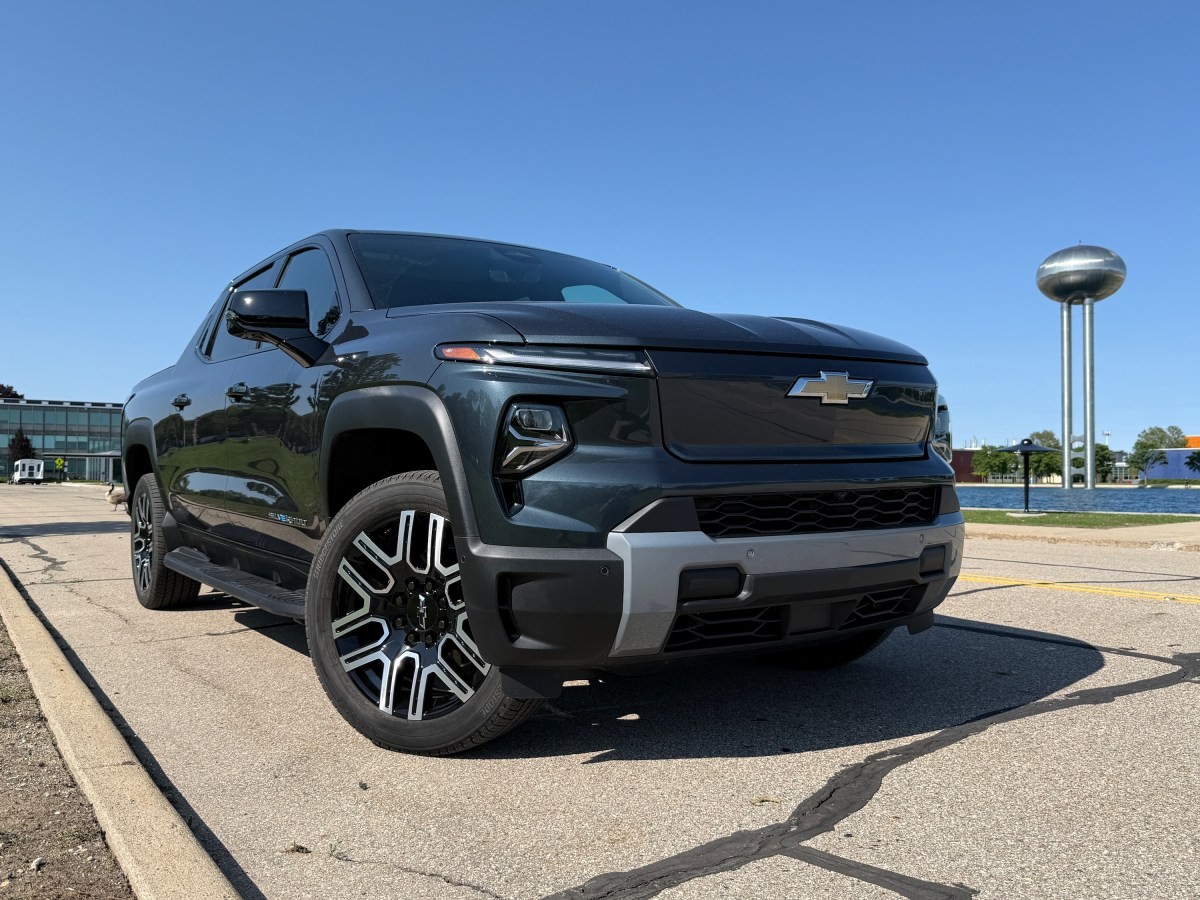
My dad had an S-10. I spent my youth pretending to drive it from the passenger side. Doesn’t make me a truck guy though. I prefer hatchbacks. Cargo beds? Not really my vibe. Then I spent a day driving the Silverado EV through Detroit. Things changed. Chevy might just have built their first convert.
It drives like a car. Feels like one, too. The bed is huge. The front trunk, bigger. My long legs stretch out in the back seat with room to spare. Cabin silence. It powers your house if the grid goes down. Hauls. Tows. Handles freeway merging without your hands on the wheel. Over 400 miles of range. Dream stuff. American pickup heaven.
And nobody wants it.
GM sold roughly 14,000 of these across the U.S. and Canada last year. The gas-guzzling Silverado? That number tenfold. Just for one quarter. After sitting in the driver’s seat, I don’t get it. It feels like the right tool. So where is the disconnect?
Is it the face? It looks a bit like the old Chevy Avalanche. Polarizing heritage. Four doors. A short bed that flips into the cabin. A sloping “sail” roof to cut drag. I liked the look. But maybe truck guys don’t.
Entry is high. You have to hop in. Once you are though? Spacious. Comfortable. Hit the brake and the thing wakes up. Crisp screens dominate the dash. Seats hold you well. Punch it, and it launches. Two hundred inches of steel should be a pain in traffic. Rear-wheel steering fixes that mostly. It snakes through parking lots like a hatchback. Until you hit a tight spot. Then physics remembers this is a truck.
Google runs the infotainment. It works. Fast enough. Voice commands actually function. Physical knobs for volume and AC sit below the vents. Good call, Chevy. Keep the buttons.
Navigation is native Google. You ask for a place, it gives routes. Like Maps, but smarter. It tells you how much of that trip Super Cruise will handle. Lazy day? Pick the path that maximizes hands-free time. GM claims this is why they killed Android Auto and CarPlay in EVs. It’s their strongest argument. Still makes me side-eye that choice.
Speaking of Super Cruise. The hands-free tech delivers. I tested it in the Bolt earlier. Short trip. This was longer. Peak hour traffic in Detroit. For a vehicle this massive, the system is almost mandatory. Takes the edge off the drive. Mostly.
It has glitches. Lane keeping gets chippy. Cars speeding up in the blind spot, especially from the right, startle it. One moment really stuck out. A dirty paint mixer trailer. Taillights splattered with grime. The radar missed it. Super Cruise didn’t see it coming until it was too close. Scary stuff. Should have picked it up earlier.
Otherwise? Smooth. Really smooth. Credit the 205-kWh battery pack mid-ship. Acts as ballast. Keeps things planted. The suspension tuning is sharp too. Engineers had a hard job making this heavy beast feel light. They succeeded.
Efficiency surprised me. I got about 2.1 miles per kWh. My Audi e-tron averages higher. Smaller car. Less wind resistance. The Silverado EV eats more power just existing in the air.
So back to the question. Why the slow sales?
Price? Some say it’s too high. I doubt that. Average full-size pickup buyers drop $66,000. The LT Extended Range costs about $5,000 more than that average. It gets 410 miles. The Max Range I drove costs $20,00 extra. For another 68 miles. Is that math the killer?
Maybe towing range? It drops 60% when you hitch up. Seems like a dealbreaker to some. But look at the data. About 75% of truck owners tow at most once a year. Most buy them for work or ego. Not constant hauling. There are plenty of gas Silverado buyers who should switch. They aren’t.
Inertia. That’s the word. The truck market moves slow. Potential buyers worry. Range anxiety. Charger access. Unknowns. These fears stall EVs generally. They kill electric trucks specifically.
It’s a shame. Those worries vanish after six months of ownership. The Silverado EV is solid. A strong first draft. A bit more engineering could strip the weight. Lower the battery size. Cut the cost. Improve towing. Win-win-win.
GM is working on it. New battery chemistry. Lithium-manganese-rich. They say it could save $6,000 per pack. Keeps range. Cuts cost. If they pass that saving to the customer, the price gap closes. Price parity with gas models might finally arrive later this decade.
If the price drops, I’d look at one. Really would. But then I looked at my garage. 1950s build. Two cars squeeze in already. An electric pickup needs a whole new driveway. A new house. Maybe a new lifestyle.
What could be more American than buying a new house to park a truck in?