Remember that scene from The Matrix? Neo wakes up from his dream. The world around him is a digital trap. It feels very real. Looks very real. But this is not the case. This is not just Hollywood fiction anymore. This concept has a name. virtual reality.
Tech companies don’t wait for predictions. They build it. now. Companies around the world are racing to create a new level of human experience. target? The simulation is so convincing that you can’t tell the difference. This is not science fiction anymore. This is engineering work.
Hardware competition
You don’t need to wear a lab coat to see this change. Look at your cell phone. It already tracks your movements. Use sensors. Now imagine a headset that circulates this information.
Big companies move fast.
- Meta advertises a standalone headset that does not require a PC tether.
- Apple Participate in conversations using high-resolution mixed reality devices.
- Sony refines PlayStation’s approach in this area.
We don’t just sell games. What they sell is immersion. Hardware is getting lighter and lighter. The display is now clearer. Latency has decreased. If there is a delay between moving your head and the screen updating, it can be annoying. Technique should be immediate.
Software that tricks your brain
Hardware is only half the battle. The software must be reliable.
Current VR struggles in one respect: environment. Put on the headphones. I can see the room. But you can’t hit the wall. I don’t know the floor. The brain recognizes that something is wrong.
Developers work on haptic research. vibrating gloves. A suit that simulates wind and impact forces. It sounds like a masquerade, but it’s actually a physics engine that learns to mimic muscle feedback. The goal is sensory overload. Overwhelmed in a good way.
“Our goal is not just to show you something new, but to make you forget you’re even in the room.”
Why this matters to you
You might think this is for gamers. Or an early adopter. This is wrong.
Think about your work. If you’re a surgeon, you can use VR to practice with digital bodies. There is no risk. No blood. Please repeat. Perfect muscle memory.
Think about travel. Would you like to walk in the Louvre museum? A plane ticket is not required. Headphones and a broadband connection are required. Barriers to access to high-fidelity experiences disappear.
“Matrix” dreams are inevitable. However, scaling is important in real-world applications. It’s about doing things that were previously too risky, too expensive, or too far away.
It is still in the testing phase. The headphones are big. The library is small. But the direction is clear. Simulations are getting better all the time. Waking up early might not be worth it.
The hardware wars are real and they cost a lot of money
We thought VR was just a gimmick. Then Oculus dropped the Rift prototype and suddenly everyone wanted to be the next Zuckerberg. Facebook bought the company for $2.3 billion to ensure its control over public opinion. The original Rift was confusing. Requires PC tether. It is very heavy. But it worked.
Now we have a choice. A real choice. And in most cases an empty wallet is required.
Oculus Rift
This has led to modern prosperity. The 2016 release marked the beginning of VR becoming more of a platform than a toy. Later PC versions such as the CV1 and later the Rift S strengthened their position. Requires a powerful computer. I need a clean living room. The controller follows the movement in 3D mode. It has been the gold standard for a long time.
HTC Vibe
Then there’s the Vive. I played hard. The resolution per eye is 2160×1200. 90 Hz refresh rate. This went very smoothly. This is smooth because your brain doesn’t want to see pixel breaks when you’re looking around the virtual room. The viewing angle is 110 degrees. Most of your peripheral vision is full of strings. The headphones weigh 555 grams. This sounds easy until you’ve been standing in the same spot for an hour. Then it felt like a ton of bricks. But what about tracking? Unprecedented. The base station is placed in the corner of the room and can be moved. It’s not just about spin. walk.
PlayStation VR
Sony doesn’t care about high-end PC specs. They take good care of your couch. The PSVR will be released at the same time as the PS4. Tickets are $399 (on sale). Compare this to the price of the Rift, which is around $699. cheaper. Easier. But compromise is the solution. 1920×1080 split into two eyes. The edges are blurred. If you get too close, you’ll see pixels. Designed for sitting still or limited movement. Sony claims that PC support may come later. It’s very messy. The effect is not bad. But this is not the future they were promised.
Google Daydream
Google is trying to democratize VR with Cardboard. Cardboard and phone. It worked. From the heart. It’s rough, isn’t it? Then the landscape looked like a daydream. Better material. fabric. plastic. You no longer have to fold the paper yourself. 69 dollars. Put your cell phone in there. Look through the lens. Simple. However, there is a problem. This means it only works on Pixel phones. However, the content is thin. This is a bridge to anywhere. trailer.
Samsung Gear VR
Samsung took the idea of putting a phone in a box and perfected it. If you have a flagship smartphone like the S6, S7, Note 5 or newer, just plug it in and you’re good to go. There are no computers. There are no cables. Only your phone’s processor does the heavy lifting for you. It’s portable. You can take it on the plane. Or a train. The resolution is not bad for a mobile chip. However, the ecosystem has its limits. Samsung’s App Store is not paradise. This is a test site.
Why hardware is important for your eyes and your wallet
You are buying more than just a screen. You are buying a window into another reality. And that window has strict requirements.
Resolution and screen door effects
With cheap VR, you can see the gaps between the pixels. This is called the screen door effect. It breaks the immersion. The Rift and Vive solve this problem with a dense display. Mobile VR (Gear, Daydream) is still affected by the small screen and the limited space of mobile phones.
refresh rate and motion sickness
If the image doesn’t update quickly when you move your head, your brain gets confused. Your eyes detect movements. The inner ear feels stopped. Result: Nausea. 90 Hz is the comfort standard. 60Hz becomes harsh after 10 minutes.
Tracking and Freedom
Fixed VR (like early PSVR and mobile devices) limits head rotation. You can look up, down, left and right. I can’t move forward at all. Roomscale VR (Vive, later Rift) let you walk. This changes everything. It adds a layer of physical interaction that makes the world feel real. Without this, you’re just watching an emotional movie.
The Ecosystem Trap
Every platform locks you. Sony wants you to buy PS5 games. Samsung wants you to buy a Galaxy phone. Google tried to develop the market but could not build the content. Meta (Oculus) builds his own walled garden. Select a lane. You can’t easily switch without replacing new hardware or accepting reduced performance.
Is it worth the hype?
Perhaps.
The technology has matured. The headphones are now lighter. The lens is now clearer. The controller is accurate. But what about the content? Still closed.
There are also games. We have experience. We have a space where you can interact. But there are no “must have” games that can justify the cost to the average user. still.
Are you a technology lover who wants to peek into the future? Good luck. Rift S, Quest 2 (the successor to the wired model), Vive Pro – they’re impressive. they are not perfect. Separate devices have a short battery life. Their field of vision is still narrower than that of humans.
But it’s true. It is interactive. It’s immersive.
And it gets better and better. The next iteration may be even lighter. cheaper. Better.
Until then, you’re stuck with cables, batteries, and expensive prices.
The dream is here. However, the price of going up is a bit high.
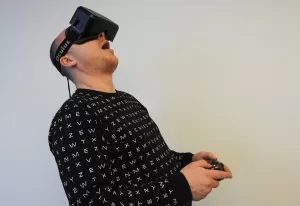
VR isn’t just for gamers anymore. This hardware is finally approaching mass adoption, but without a killer app, it’s just expensive plastic. Developers are racing to close this gap. In addition to immersive gaming, this technology is also used for high-stakes training. Think skydiving, flying and space missions. You can travel to exotic places or sit in the front row at a concert without leaving the sofa.
Practical applications are expanding rapidly.
VR applications in everyday life
Education, journalism, construction and retail are all ripe for disruption. Our goal is to make these experiences tangible. Consider, for example, a French manufacturer that develops VR projectors. It is different from cheap projectors bought from electronics stores. This turns the entire cinema into a giant 180-degree screen. It’s a different kind of immersion. This is not about hiding from the world. It means expanding it.
AR and VR: Where is the industry going?
At the beginning of this year, virtual reality was the undisputed king of technology hype. now? The pace has changed. Pokémon GO is changing the conversation. The next generation of glasses is aimed at augmented reality.
AR superimposes digital images on the real world. It’s no substitute for reality. it strengthens it.
Microsoft has already made great strides with HoloLens. Apple isn’t far behind either. Rumor has it that it has hired several AR and VR experts to build something similar. The direction is unclear. Are we living in a fully simulated or augmented world? The answer is still up in the air.